



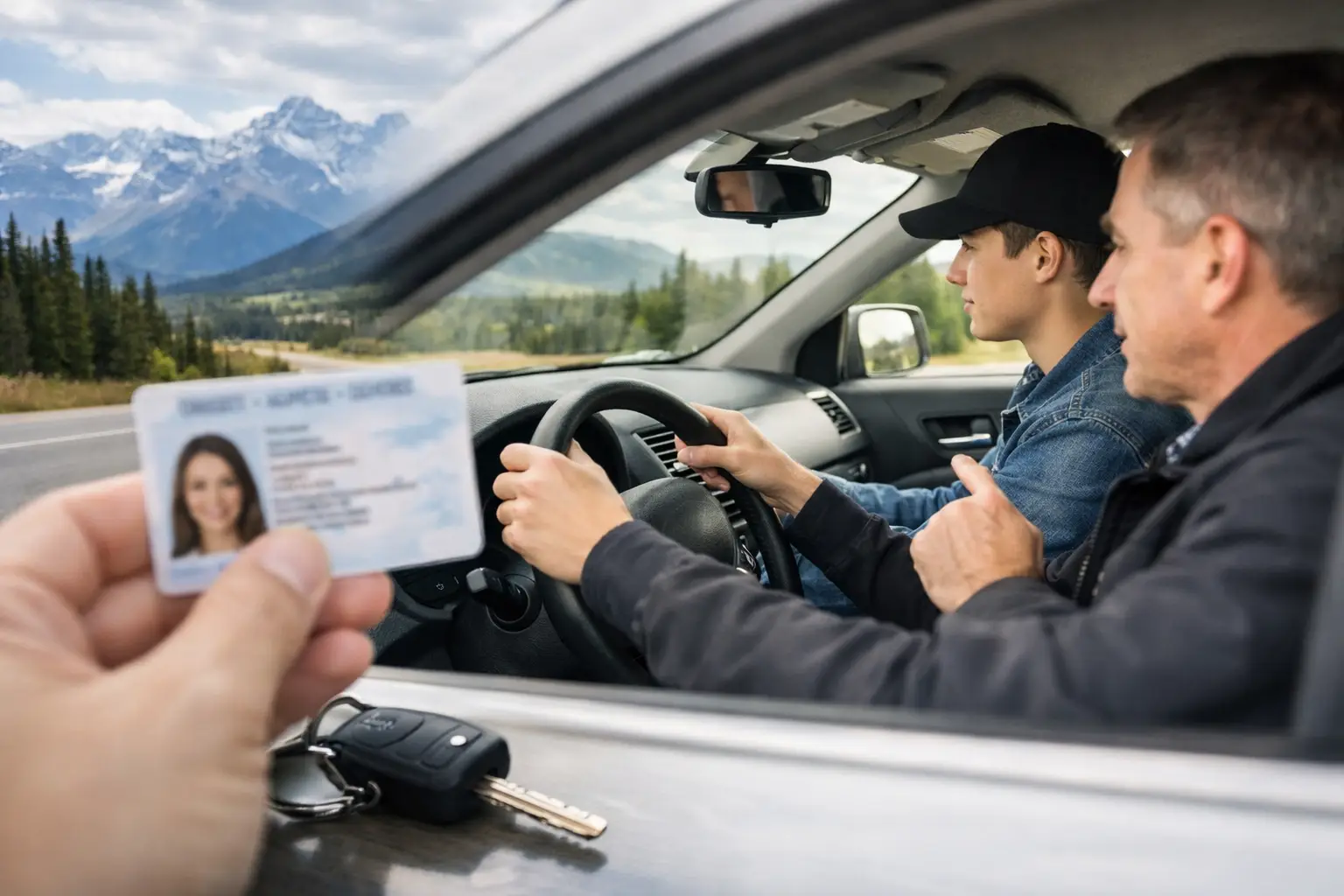
A lot of new drivers hear different versions of Alberta licensing rules from friends, family, and social media. That usually creates more confusion, not more confidence. If you are trying to understand the graduated licensing rules Alberta uses for new drivers, the best approach is to look at the process stage by stage, with the restrictions, waiting periods, and testing requirements clearly laid out.
Alberta uses a graduated system because new drivers do not build judgment, hazard awareness, and vehicle control all at once. Those skills develop over time, with supervised practice first, then independent driving with restrictions, and finally full Class 5 privileges once a driver has enough experience. For teens, first-time adult drivers, and even internationally licensed drivers who are new to Alberta road expectations, that structure matters.
How the graduated licensing rules Alberta uses are set up
The system has three main steps for most new drivers. You begin with a Class 7 learner’s license, move to a Class 5 GDL probationary license, and then upgrade to a full Class 5 license when eligible.
Each stage has a purpose. The learner stage is built around supervision and basic skill development. The GDL stage allows independent driving, but with conditions that reflect the fact that the driver is still gaining experience. The full Class 5 stage removes the probationary restrictions after the driver has shown both time on the road and responsible driving behavior.
That structure may feel slow when you want your full license as soon as possible. But from a safety standpoint, it makes sense. Most new drivers do not struggle because they cannot turn the wheel or use the pedals. They struggle because traffic is unpredictable. Intersections, lane changes, merging, parking lots, school zones, winter conditions, and split-second decisions all demand practice.
Stage 1: Class 7 learner’s license
To get a Class 7 license in Alberta, you must be at least 14 years old and pass the required knowledge test and vision screening. Once you hold a learner’s license, you can drive only under specific conditions.
A Class 7 driver must be accompanied by a fully licensed driver who is 18 or older and sitting in the front passenger seat. The supervising driver must hold a valid non-GDL Class 5 or higher class license. The learner cannot drive between midnight and 5 a.m., and cannot have more passengers than there are seat belts in the vehicle.
The learner stage is where good habits should be built correctly the first time. That includes mirror checks, shoulder checks, speed control, full stops, lane positioning, and early hazard detection. Drivers who rush this phase often carry avoidable errors into the road test and into later independent driving.
You must hold the Class 7 learner’s license for at least one year before taking the road test for the next stage. That waiting period is not just administrative. It is intended to give new drivers time to practice in different traffic, weather, and road conditions.
Stage 2: Class 5 GDL probationary license
After passing the basic road test and meeting the minimum learner period, a driver can move to a Class 5 GDL license. This is the stage many people mean when they say they have their “Class 5,” but it is still a probationary license, not a full one.
With a Class 5 GDL license, you can drive without a supervising driver. That is a major step forward, but it comes with restrictions. You must maintain zero alcohol and zero drug levels while driving. You cannot upgrade beyond the probationary stage until you have met the required time period and maintained a clean enough driving record. In practical terms, this means traffic tickets, demerits, suspensions, and risky behavior can slow down your progress.
For many new drivers, this stage is where confidence starts to grow. It is also where poor habits can quietly settle in if nobody corrects them. Independent driving does not automatically mean polished driving. A driver may be legal to drive alone and still need work on observation, defensive decision-making, highway merging, left turns in heavy traffic, or winter control.
That is why structured training still matters after the road test. Students who continue to practice with clear feedback usually become calmer, safer, and more consistent drivers.
When can you move from Class 5 GDL to full Class 5?
Under Alberta’s current system, a driver in the GDL stage must complete a probationary period before becoming eligible for the full Class 5 license. The exact timing and administrative process can change when provincial rules are updated, so drivers should always confirm current requirements before booking or planning their next step.
What stays consistent is the purpose. The full Class 5 license is meant for drivers who have had time to prove they can operate independently and responsibly. The upgrade is not just about waiting out a calendar. Your driving record matters. Safe choices matter. The way you manage risk every day matters.
If you are close to eligibility, it helps to review your driving history early rather than assume everything is in order. A missed detail can delay an upgrade, especially if there are unresolved penalties or misunderstandings about current provincial policy.
The restrictions that matter most
When people search for graduated licensing rules, they are usually trying to answer one practical question: what am I allowed to do right now?
For Class 7 learners, the biggest limits are supervision, nighttime driving restrictions, and the one-year minimum holding period. For Class 5 GDL drivers, the key issue is that they are still in a probationary stage. That means a stronger expectation of clean, responsible driving before full privileges are granted.
The most common mistake is assuming that passing one road test means the learning process is finished. It is not. Alberta’s graduated model is designed around the reality that new drivers need time to apply the rules under pressure, not just repeat them in a test setting.
Why these rules affect road test preparation
A driver who understands the graduated system usually prepares better for each stage. They know what skills belong in the learner phase, what changes once they start driving alone, and what level of consistency is expected before moving to full licensing.
That changes how practice should be organized. Random driving practice helps less than most people think. A structured approach works better: residential driving first, then busier intersections, then lane changes, then downtown traffic, then highways, then parking, then test-route style review. The same is true for hazard detection. Students improve faster when they are taught what to scan for and when to react.
For anxious drivers, clarity reduces stress. When you know the rules, the timeline, and the standard you are trying to meet, the process feels manageable. That is one reason many students prefer instructor-led training over piecing everything together on their own.
Graduated licensing rules Alberta drivers should not guess on
There are a few areas where guessing causes trouble. One is assuming that another person’s experience from a few years ago still reflects today’s rules. Another is confusing the learner stage with the GDL stage and mixing up the restrictions. A third is overlooking how strongly a poor driving record can affect progress.
Internationally licensed drivers and adults returning to driving should be especially careful here. Even if you have prior experience, Alberta road expectations, signage, winter conditions, school zones, and road test standards may be different from what you are used to. Experience helps, but local readiness still matters.
This is where professional instruction can save time and frustration. A structured program with online theory, scheduled in-car training, and focused road test preparation gives drivers a more predictable path. For students in Calgary, Turn by Turn Driving School is built around that kind of step-by-step progress, with self-paced learning and instructor-led lessons that focus on safety, control, and long-term driving habits.
What new drivers should focus on most
If you are in the graduated system now, focus less on rushing to the next card in your wallet and more on becoming the kind of driver who is ready for it. That means practicing consistently, following restrictions exactly, keeping your record clean, and treating every lesson as skill-building rather than just test prep.
The drivers who succeed over the long term are usually not the ones who learn fastest in one afternoon. They are the ones who build repeatable habits, stay coachable, and take road responsibility seriously. That is the real point of graduated licensing, and it is what turns a new driver into a safe, dependable one.
Comments are closed