



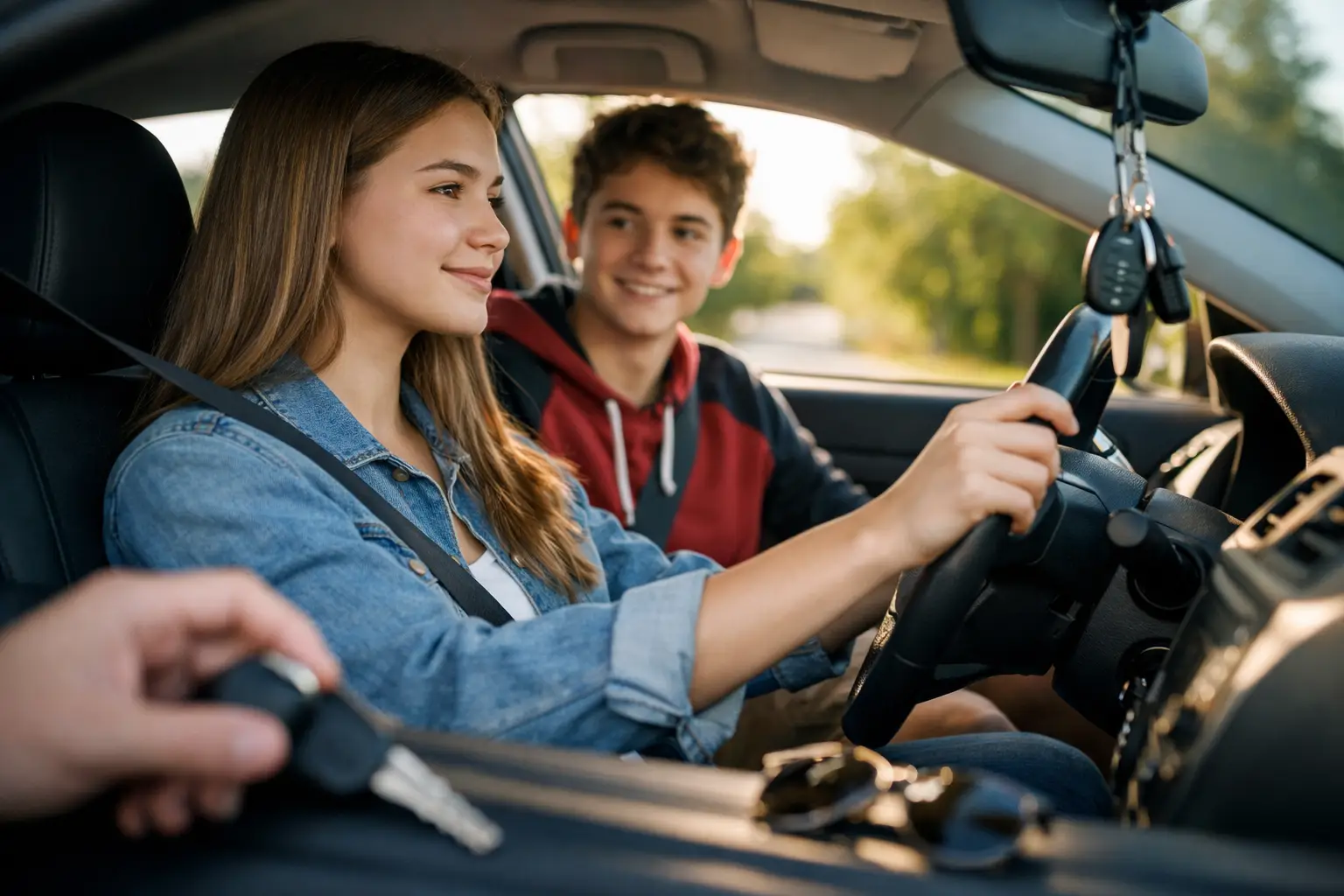
The first few months behind the wheel shape more than test results. They shape judgment. Strong road safety habits for teenagers are not about driving scared – they are about learning how to stay calm, spot risk early, and make consistent decisions when traffic, weather, and other drivers become unpredictable.
For most teen drivers, the challenge is not memorizing rules. It is applying them under pressure. A green light changes, a passenger starts talking, a car brakes hard ahead, or rain reduces visibility in minutes. Safe driving comes from habits that hold up when the road gets busy. That is why structured practice matters. Confidence should be built on repetition, not guesswork.
Why road safety habits for teenagers matter early
Teen drivers are still developing timing, scanning, and hazard recognition. That is normal. Experience teaches you how quickly situations change and how much space, speed control, and focus affect your options.
The early stage of driving is when shortcuts are most dangerous because they can become permanent. Rolling through stop signs, following too closely, checking a phone at a red light, or braking late may seem minor in the moment. Over time, those choices become automatic. Good habits work the same way. If a teen driver learns to scan intersections, check mirrors regularly, and leave space around the vehicle from day one, safer decisions become more natural.
Start with attention before anything else
Put the phone away before the car moves
Distraction is one of the fastest ways to turn a manageable drive into a dangerous one. Teen drivers often know this in theory, but many still underestimate how much attention a quick glance at a screen takes away from the road.
The best habit is simple: set the phone before driving and leave it alone. Silence notifications, start navigation before shifting into gear, and keep the device out of reach if needed. Hands-free does not always mean risk-free. Even mental distraction can reduce reaction time.
Keep passengers from becoming distractions
Friends can make a short drive feel casual, but they also change the driver’s focus. Conversations get louder, jokes start, and attention moves inside the car instead of outside it. A teenager who is still learning should treat passenger management as part of driving, not as a separate issue.
If passengers are too distracting, the right decision is to reset the environment. Turn down the music. Stop the conversation. If necessary, pull over safely. Staying in control of the vehicle includes staying in control of the cabin.
Build a habit of seeing more
Scan ahead, not just at the hood
One of the most valuable skills a new driver can build is looking farther ahead. Many teenagers focus too close to the front of the vehicle, which reduces reaction time. When you scan well down the road, you spot brake lights, turning vehicles, pedestrians, cyclists, and lane changes earlier.
That extra time matters. It creates smoother braking, better lane positioning, and fewer panic responses. Drivers who look farther ahead usually make calmer decisions because they are not constantly reacting late.
Check mirrors with a purpose
Mirror checks should not happen only before a lane change. A safe driver builds a steady rhythm of awareness. That means knowing what is behind, beside, and approaching from the rear before a situation becomes urgent.
A good mirror habit helps with merging, turning, stopping, and responding to aggressive drivers. It also helps teenagers understand that driving is not only about what is in front of them. The safest drivers maintain a full picture of traffic around the vehicle.
Control speed and space every time
Drive at a safe speed, not just the posted speed
Speed limits matter, but conditions matter too. A teen driver who only watches the number on the sign can still be driving too fast for rain, darkness, glare, snow, traffic, or poor road surfaces.
Safe speed means the vehicle stays stable, the driver has time to react, and stopping distance fits the conditions. That sometimes means driving below the limit. It also means resisting the pressure to keep up with faster drivers who are making poor choices.
Leave more following distance than you think you need
Following too closely is common among new drivers because the risk does not feel immediate until traffic stops suddenly. Space is what gives a driver time to think, brake smoothly, or steer away from a hazard.
Teenagers should practice leaving a strong following gap in city traffic and even more on faster roads or in bad weather. If another vehicle cuts in, rebuild the space instead of getting frustrated. Defensive driving is not about winning position. It is about protecting time and options.
Treat every intersection as a risk point
Intersections demand more judgment than many teen drivers expect. Vehicles may turn without warning, pedestrians may step out late, and other drivers may rush yellow lights or ignore right-of-way rules. Many serious mistakes happen because a driver assumes others will do the correct thing.
Approach intersections with a plan. Ease off the accelerator, scan left and right, and be prepared for someone else to make a poor decision. Even with a green light, a quick check matters. A legal right-of-way does not remove the need for caution.
Make seat belts non-negotiable
Wearing a seat belt should happen before the engine starts, every trip, every seat. Teen drivers also need the habit of checking that passengers are buckled too. This is not just about following the law. It is about setting the standard inside the vehicle.
The same goes for seat position, head restraint, and hand placement. Small setup choices affect visibility, reaction time, and control. A vehicle should feel organized before it moves. Rushed starts usually lead to rushed decisions.
Adjust for weather and road conditions
New drivers often discover quickly that dry daylight driving is only one part of the job. Rain changes stopping distance. Snow reduces traction. Wind affects steering. Darkness limits visibility and makes pedestrians harder to see.
The right habit is to adjust early, not after the car starts slipping or visibility drops. Slow down, increase following distance, brake gently, and keep movements smooth. If conditions feel beyond your current skill level, that is not failure. It is judgment. Waiting, rescheduling, or practicing with an instructor can be the safer choice.
For teenagers learning in places with changing seasonal conditions, this matters even more. Turn by Turn Driving School emphasizes hazard detection and defensive driving for exactly this reason. Road readiness is not built only in ideal conditions.
Know when not to drive
One of the most overlooked safety habits is deciding not to get behind the wheel. Fatigue, stress, illness, and emotional distraction can all affect decision-making. Teenagers may not always recognize how much these factors reduce attention and patience.
A safe driver knows when focus is compromised. If you are overly tired, upset, or rushed, your risk level changes even if your technical skills stay the same. Responsible driving includes the ability to delay a trip, ask for help, or choose another option.
Practice consistency, not perfection
Teenagers do not become safe drivers by trying to be flawless. They become safe drivers by repeating the right actions until those actions become automatic. Mirror checks, full stops, speed control, space management, and distraction control are not advanced techniques. They are the basics done well, every time.
That is where structured instruction helps. Random practice can build confidence, but it can also reinforce weak habits. Focused training gives new drivers a chance to correct mistakes early, understand why the correction matters, and repeat the proper technique in real traffic situations.
How teenagers can turn habits into long-term skill
The best road safety habits for teenagers are measurable. Did you scan the intersection? Did you leave enough following distance? Did you set the phone away before driving? Did you adjust speed for weather? Clear habits are easier to repeat and easier to improve.
After each drive, it helps to review one or two decisions. Not every mistake needs a dramatic reaction. Sometimes the most useful progress comes from noticing patterns. Maybe turns are rushed. Maybe stops are inconsistent. Maybe mirror checks are forgotten when traffic gets heavy. Identifying one weakness at a time builds reliable skill faster than trying to fix everything at once.
Teen drivers should also expect confidence to rise in stages. Feeling comfortable on one route does not mean every situation is mastered. Night driving, heavy traffic, freeways, parking lots, and poor weather all add new demands. Real confidence comes from learning each stage with control.
The goal is not to look relaxed while making avoidable mistakes. The goal is to become the kind of driver who stays alert, prepared, and responsible no matter who else is on the road. That habit will outlast any road test.
Comments are closed