



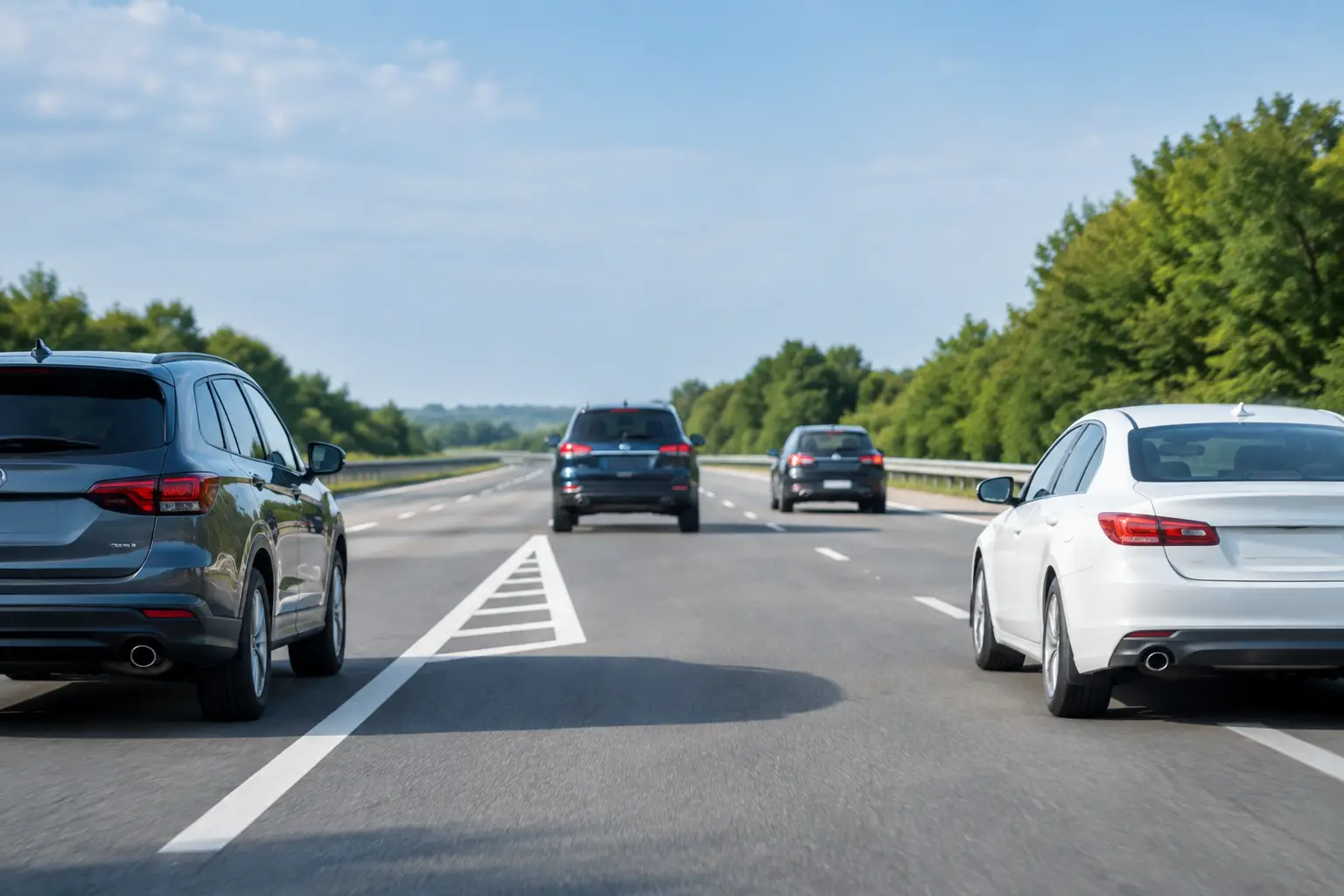
A lane-closure sign is ahead, traffic is slowing, and drivers begin moving out of the closing lane far too early. The result is usually a long backup in one lane and an empty lane beside it. Knowing how to use zipper merging gives you a safer, more predictable way to handle this common situation – especially in construction zones and busy city traffic.
Zipper merging is not about racing ahead or forcing another driver to make room. It is a cooperative traffic pattern: vehicles use both available lanes until the lane closure, then take turns entering the open lane one vehicle at a time. When drivers understand their role and stay calm, traffic moves more evenly and sudden braking is reduced.
What zipper merging means
Picture the teeth on a zipper coming together. One tooth from the left side connects, then one from the right side. A zipper merge works the same way. As two lanes become one, a vehicle from the continuing lane and a vehicle from the ending lane alternate at the merge point.
This approach is most useful when traffic is heavy enough that both lanes are moving slowly or stopping. Using all available road space can shorten the length of the backup behind the lane closure. It also prevents drivers from feeling pressured to cut across multiple vehicles well before the lane ends.
In lighter traffic, you may have enough space to merge early without affecting anyone else. That is fine, provided you signal, check your blind spot, and move over only when there is a safe gap. Zipper merging is not a rule that requires you to drive to the very end of every closing lane. It is a practical technique for congested conditions where alternating vehicles is the safest and most efficient choice.
How to use zipper merging step by step
Start preparing as soon as you see advance warning signs for a lane reduction, construction zone, collision scene, or other obstruction. Read the signs, reduce your speed gradually, and give yourself time to observe what traffic is doing ahead.
If traffic is congested, remain in your lane rather than immediately joining the long line in the open lane. Continue at the speed of traffic and leave a safe following distance. Do not speed past slower vehicles, weave between lanes, or treat the open lane as an invitation to rush ahead. Your goal is to use the available lane space responsibly until the merge point.
As you approach the point where your lane ends, turn on your signal early enough for other drivers to understand your intention. Check your mirrors and blind spot. Then look for the alternating pattern: one vehicle proceeds from the open lane, then one vehicle enters from the closing lane.
If you are in the lane that continues, create space for one vehicle to merge ahead of you. A small adjustment in speed is usually all that is needed. Avoid accelerating to block the other driver. Blocking creates tension, encourages abrupt lane changes, and can lead to a crash.
If you are in the lane that ends, merge smoothly into the available gap. Do not assume another driver has seen your signal or will yield immediately. You still need to confirm that the space is safe before moving over. A signal communicates your plan, but it does not give you the right to force your way into another lane.
Once you have merged, match the speed of traffic and rebuild a safe following distance. The merge is complete only when you are settled in the lane with enough room to react to braking or changing traffic conditions ahead.
A simple rule for both lanes
At a proper zipper merge, each driver has two responsibilities: be predictable and leave room. Predictable drivers maintain a steady speed, signal before changing lanes, and avoid sudden moves. Drivers who leave room make it possible for the alternating pattern to work without hard braking.
This is particularly valuable for new drivers. When traffic feels crowded, it is tempting to focus only on getting your own vehicle through the narrow space. Keep your attention farther ahead. Look at the lane closure, the vehicle in front of you, the vehicle beside you, and the available gap. That wider scan helps you make controlled decisions instead of reacting at the last second.
When zipper merging is appropriate
Zipper merging works best when a lane is ending and traffic is backed up. Common examples include road construction, a lane closed after a collision, and a busy freeway exit where lanes merge into one.
It is less appropriate when markings direct you into a specific lane well in advance, when a police officer or flag person is directing traffic, or when a solid line and local rules restrict lane changes. In a work zone, always follow posted signs, reduced speed limits, cones, and worker instructions. The traffic control plan at the scene takes priority over any general merging technique.
You should also adjust your approach for weather and road conditions. On wet, icy, or snow-covered roads, leave additional space and begin reducing speed earlier. A zipper pattern still requires cooperation, but longer stopping distances mean you cannot rely on quick braking to solve a poor merge decision.
Common zipper merging mistakes
The biggest mistake is treating the closing lane as either forbidden or as a passing lane. Moving over far too early can create an unnecessary backup. Driving aggressively to the front and cutting in without signaling creates a different problem. The correct approach sits between those extremes: use the lane normally, travel at a controlled speed, and merge courteously at the appropriate point.
Another common mistake is following too closely in the continuing lane. If every driver leaves only a few feet between vehicles, no one can enter safely. Maintaining space is not being passive. It is active defensive driving that gives everyone more time and more options.
Some drivers also stop in the ending lane while the lane ahead is still open. Unless traffic conditions require you to stop, continue forward carefully. Stopping early can confuse drivers behind you and may cause them to make sudden lane changes.
Finally, avoid making the merge personal. You may encounter a driver who refuses to alternate, merges too late, or becomes impatient. Do not compete with them. Slow slightly if necessary, protect your space, and focus on preventing a collision. Arriving a few seconds later is always better than creating a dangerous situation.
Build the observation skills that make merging safer
Safe merging depends on more than knowing the pattern. It requires strong observation, speed control, and communication. Before entering a merge area, scan well ahead for signs and brake lights. Check mirrors often so you know where surrounding vehicles are positioned. Keep a proper following distance so you can adjust gradually rather than brake sharply.
Your turn signal should be used before you need the gap, not while your vehicle is already moving sideways. In busy traffic, make eye contact only when possible, but never depend on it. Other drivers may be looking elsewhere, driving larger vehicles with limited visibility, or simply fail to notice you.
For learner and newly licensed drivers, merge practice should include a range of traffic conditions. Begin with quiet lane reductions where you can focus on signaling, mirror checks, blind-spot checks, and smooth speed changes. As your confidence grows, practice in heavier traffic with an experienced instructor who can help you recognize safe gaps and read the flow of vehicles.
Turn by Turn Driving School teaches these decisions as part of a larger defensive-driving approach. The goal is not simply to get through one lane closure. It is to build the judgment, control, and responsibility that help you manage changing road conditions throughout your driving life.
The next time two lanes become one, resist the urge to rush or panic. Read the signs, use the available space appropriately, signal your intention, and take your turn. That calm, controlled approach helps protect you, your passengers, road workers, and every driver sharing the road.
Comments are closed