



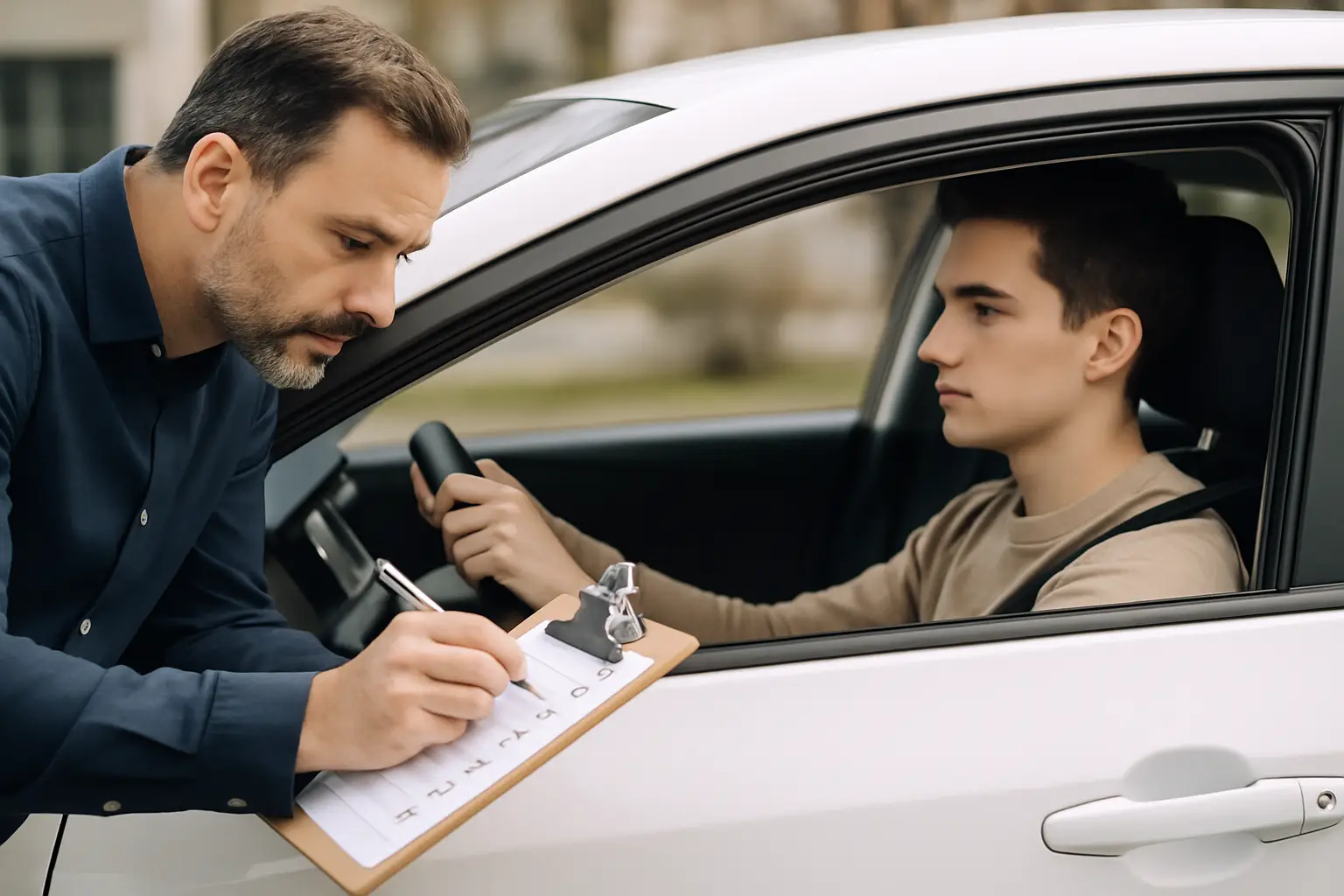
You can usually tell who is ready for an Alberta road test before the car even leaves the parking lot. The “ready” drivers settle in, set up their seat and mirrors without being prompted, check for hazards, and move off smoothly. The drivers who are hoping to get lucky tend to rush the setup, miss a shoulder check in the first minute, and spend the rest of the test trying to recover.
This alberta road test checklist is built to keep you out of that second category. It is not about tricks. It is about controlling the parts you can control: the vehicle, the paperwork, and the repeatable driving habits examiners look for in Calgary and across Alberta.
Alberta road test checklist: what to confirm before you book
Before you even pick a date, make sure you are booking the right test for your licensing stage. Most new drivers are either moving from Class 7 to Class 5 GDL, or from Class 5 GDL to a full Class 5. The route difficulty and expectations are similar, but the pressure is different – especially if you have been driving for a while and bad habits have crept in.
Give yourself enough time to practice in the same areas and traffic conditions you will be tested in. Calgary driving can change quickly based on time of day, construction, school zones, and winter road conditions. If you only practice on quiet residential streets and then test during a busy weekday, it “depends” how well you handle it. The test is designed to measure consistent control, not perfect conditions.
Also confirm you can practice legally. If you are still a learner, you need to follow the rules for that stage, including supervision requirements. Being test-ready is not just skill. It is also making sure your practice has been valid and safe.
Documents and logistics checklist (do these 24 hours early)
The fastest way to start a road test feeling behind is to arrive flustered because you are missing paperwork or you are late. Treat the day before as part of the test.
Bring your driver’s license and any required identification that the registry agent or examiner will request. If you wear glasses or contacts, bring what you need to drive legally and comfortably. If you are an international driver converting or upgrading, double-check which documents apply to your situation so there are no surprises at check-in.
Plan your arrival time with extra buffer for parking and check-in. If you have a warm-up drive, keep it calm and simple. A warm-up is not the time to prove you can handle the hardest left turn in the area. It is the time to reset your habits: smooth stops, full scans, correct speed, and clean lane positioning.
Finally, choose the vehicle you will test in based on familiarity and reliability. Switching cars at the last minute adds mental load. Even small differences – brake sensitivity, steering feel, mirror size – can affect your performance.
Vehicle safety checklist (what examiners notice immediately)
Your vehicle needs to be roadworthy. That includes obvious issues like lights and tires, but it also includes small details that can create a bad first impression or trigger a safety concern.
Start with the basics: working headlights, brake lights, turn signals, and horn. Make sure your windshield is clear and your wipers actually clear water or slush rather than smearing it. Check that your tires are properly inflated and have usable tread. In winter, make sure the car can defrost the windshield quickly.
Inside the vehicle, clear loose items that can roll under pedals. Set your seat so you can fully press the brake and accelerator without stretching, and so your wrists can rest on the top of the steering wheel with a slight bend in your arms. Adjust head restraints and mirrors. Mirrors should minimize blind spots, but remember mirrors do not replace shoulder checks.
Do a quick check for dashboard warning lights. If a warning light is on, do not assume it will be ignored. You want the examiner to focus on your driving, not question whether the vehicle is safe.
Setup checklist at the test site (your first scored minutes)
Many drivers lose points right away because they rush. The start of the test is where you show that you are methodical.
Before moving, confirm the car is in the correct gear, your seatbelt is on, and your parking brake is released when appropriate. Do a full scan: mirrors, then shoulder check as needed. Signal before you leave the parking spot if it affects other traffic.
When backing out, go slow enough that you can stop instantly if something changes. Turn your head and look where you are going. Cameras are helpful, but relying on a camera instead of visually checking around the vehicle is a common mistake.
On-road skills checklist (the habits that decide pass vs. fail)
Examiners are not looking for aggressive confidence. They are looking for safe decision-making, consistent scanning, and control. The key is to make your intentions obvious and your actions predictable.
Observation and scanning
Your eyes should be active the entire time. Check mirrors regularly, especially before braking, changing speed, or changing lane position. Shoulder check every time it matters: lane changes, merges, turning right where a bike lane may be present, pulling over, and leaving the curb.
One of the most common issues in Calgary is failing to manage complex environments – school zones, playground zones, construction, and busy shopping areas with pedestrians. Your checklist here is simple: identify the risk early, reduce speed smoothly, and leave space.
Speed control and following distance
Drive the speed limit when conditions allow, and adjust when conditions do not. Going under the limit for no reason can create risk, but so can “holding the limit” in poor visibility or on icy roads. The examiner wants to see that you can choose a safe speed, not that you can recite a number.
Keep a steady following distance and increase it in rain or snow. A tight following distance forces harsh braking, and harsh braking often leads to missed mirror checks and late decisions.
Intersections and turns
Intersections are where most tests are decided. Approach early, check mirrors, and plan your lane position. Come to a full stop when required, behind the stop line. If your view is blocked, stop again at a safe point to improve your sightline.
For right turns, your sequence should be consistent: signal early, check mirrors, shoulder check for cyclists and pedestrians, reduce speed smoothly, and turn into the correct lane. For left turns, judge gaps carefully and avoid “rushing” the turn just because you feel pressure.
When turning, steer smoothly and finish in the correct lane. Wide turns, cutting corners, or drifting across lanes suggest a lack of control.
Lane changes and merging
Lane changes are a repeatable process. Signal first, check mirrors, shoulder check, then move when there is a safe gap. If the gap is not there, keep your signal on and wait. The wrong move is forcing it and hoping other drivers will accommodate you.
For merging, match the speed of traffic as you enter. Merging too slowly is one of the most common confidence issues for new drivers. If you have enough runway, use it to build speed early so you are not making a last-second decision.
Parking and low-speed control
You may be asked to park or do a maneuver like a hill park. Low-speed control is about patience.
When parking, go slow and use full observation. If you need to correct, correct. A clean correction is better than committing to a poor position. If you are asked to demonstrate hill parking, focus on the wheel direction, securing the vehicle, and checking surroundings before you exit.
Common “automatic fail” situations to avoid
Specific scoring can vary by examiner and location, but some outcomes are consistent because they create immediate risk.
Any time you disobey a traffic control device, roll a stop, speed through a school or playground zone, or cause another road user to brake or change course to avoid you, you are putting the test at risk. The same is true for unsafe lane changes, missing critical shoulder checks, or entering an intersection when it is not safe.
If you make a mistake, do not compound it. For example, if you miss a turn, continue safely and let the examiner redirect you. Trying to “save it” with a sudden lane change is where good drivers fail.
A realistic practice plan that makes this checklist stick
A checklist only works if it turns into habits under pressure. The best preparation is short, focused practice that repeats the same core skills in different environments.
Spend time in residential areas for observation, speed control, and right-of-way. Add busier arterials for lane discipline, lane changes, and managing higher speeds. Include a few sessions in the area around your testing location so the traffic patterns feel normal rather than new.
If you are a returning driver or an internationally licensed driver, the trade-off is often confidence vs. local rules. You may be comfortable handling a vehicle but unfamiliar with Alberta-specific expectations like school zone timing, certain right-turn and lane discipline habits, or how strictly full stops are evaluated. That is where structured coaching helps most.
If you want that structure, Turn by Turn Driving School builds road test preparation into higher-tier packages and organizes in-car lessons in 2-hour blocks, which gives you enough time to practice, debrief, and repeat without rushing.
Day-of checklist (how to stay calm and consistent)
Eat something light, hydrate, and arrive early. Dress for the weather so you are not distracted. Turn your phone fully off or silenced and put it away.
Right before you start, take 30 seconds in the parked car and mentally rehearse your first minute: seatbelt, mirrors, signal, shoulder check, smooth exit. That first minute sets your pace. When you drive like you have time, you usually make better decisions.
Drive the situation in front of you, not the fear in your head. Your goal is not to impress the examiner. Your goal is to show, moment by moment, that you are a safe and responsible driver who can be trusted to make good calls when no one is coaching you.
A helpful closing thought: if you can do your checklist calmly on an ordinary Tuesday, you can do it on test day too – so practice until “ordinary” is exactly how it feels.
Comments are closed