



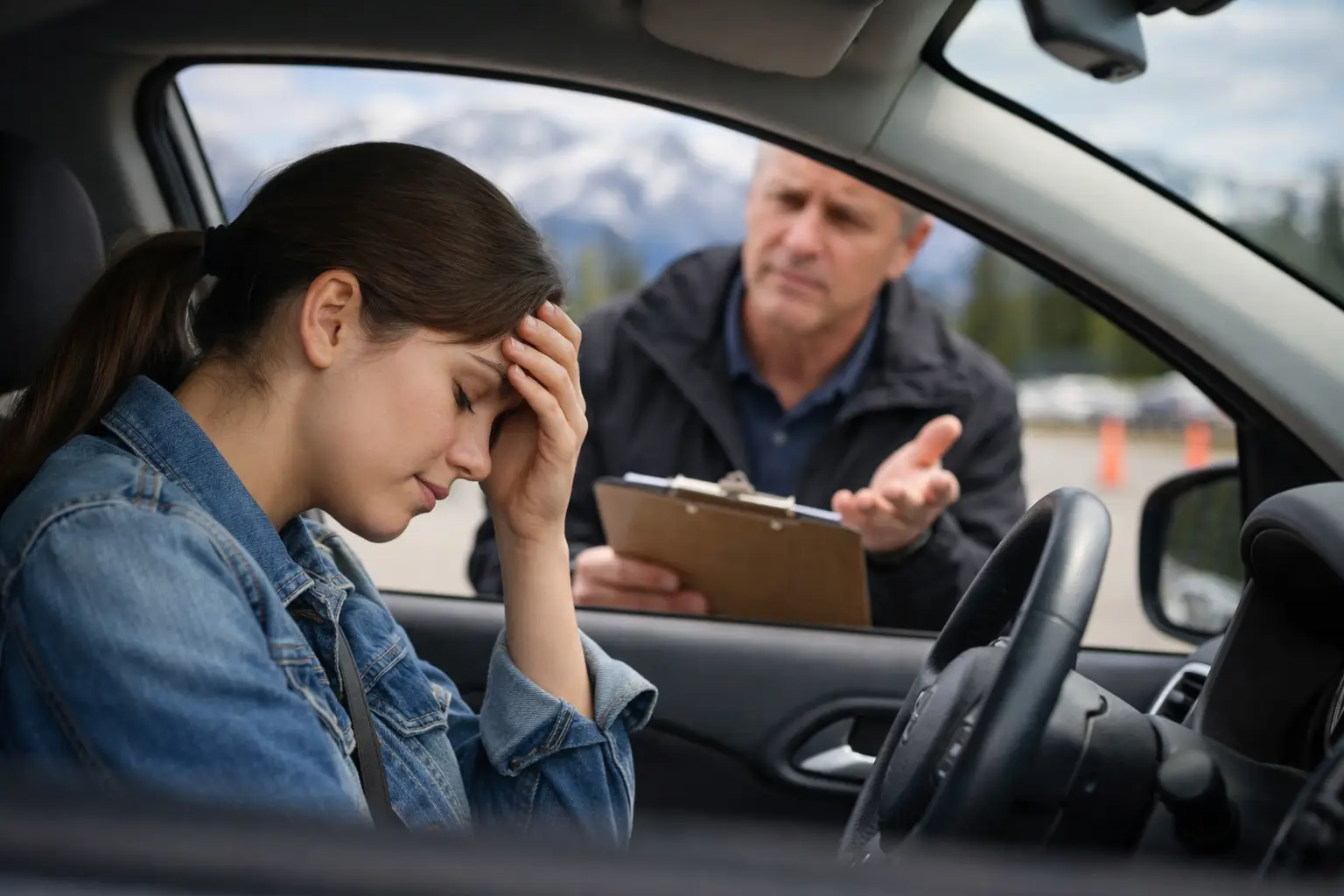
You pull back into the parking lot, turn off the vehicle, and wait for the examiner’s feedback. For many new drivers, this is the moment when the question becomes very real: what happens if you fail Alberta road test, and how quickly can you recover from it? The short answer is that failing a road test does not end your progress. It means you need to correct the issues that showed up during the exam, pay for another test, and come back better prepared.
That may feel frustrating, especially if you practiced for weeks or arranged time off school or work. Still, a failed test is usually a very specific result, not a broad judgment about your driving potential. In most cases, it points to a few repeat problems such as missed shoulder checks, speed control, lane positioning, incomplete stops, or weak observation at intersections.
What happens if you fail Alberta road test on test day
If you fail, the examiner will explain the result and identify the mistakes that affected your score. Sometimes the test continues to the end and you receive feedback afterward. In other cases, a serious safety issue can end the test early. That usually happens when the examiner has to intervene, when a dangerous action puts road users at risk, or when the drive shows a pattern of unsafe decisions.
You do not lose your existing license class just because you failed a road test. If you were taking the test to move from one stage to another, you simply remain at your current licensing stage until you pass. For example, if you hold a Class 7 and fail your Class 5 GDL road test, you stay at the learner stage and keep following those rules. If you already hold a Class 5 GDL and fail the full Class 5 test, you keep your Class 5 GDL until you pass the upgrade.
That distinction matters because many students assume a fail means they are sent backward. In Alberta, that is generally not how it works. A failed road test delays your next step, but it does not erase the progress you have already earned.
Why drivers usually fail the Alberta road test
Most road test failures are not caused by one dramatic mistake. More often, the result comes from several smaller errors that show the examiner you are not yet driving with enough consistency, awareness, or control.
The most common issue is observation. Drivers may check mirrors but skip a shoulder check before changing lanes, turning, or pulling away from the curb. They may look, but not early enough or clearly enough for the examiner to see that the check was completed. In a road test, good habits need to be obvious as well as correct.
Speed management is another frequent problem. Some students drive too fast because of nerves, while others go too slowly and disrupt traffic flow. Both can hurt your result. The examiner is looking for a driver who can read the road, match conditions, and maintain safe, legal speed without constant correction.
Intersections also cause trouble. Rolling stops, stopping beyond the line, turning into the wrong lane, or hesitating too long when it is safe to proceed are all common marks against a driver. Add parking errors or weak lane control, and a borderline drive can quickly become a fail.
Can you retake the test right away?
Usually, no. If you fail, you need to book another appointment and pay the road test fee again. Availability depends on the testing schedule in your area, so the timeline can vary. In busy periods, appointments may fill quickly, which is why many drivers feel the real cost of failing is not just the fee but the lost time.
There may also be a mandatory waiting period before you can retest, depending on the type of test and current provincial rules. Because policies can change, the safest approach is to confirm the current rebooking requirements when you receive your result. Do not rely on secondhand advice from friends who tested months or years ago.
Even when you are eligible to rebook quickly, that does not always mean you should take the next available spot. If the same underlying problems are still there, a fast retest can lead to the same outcome. A short, focused preparation period is often the better decision.
What a failed test costs you
The obvious cost is the next road test fee. But there can be other practical costs as well, especially for students and working adults who need predictable scheduling.
You may need more practice time, another lesson vehicle, time away from work, and another block in your calendar for the retest. If you were counting on passing for school, commuting, or family responsibilities, the delay can affect daily routines. This is why structured preparation matters. Road testing is not just about one appointment. It is part of a licensing timeline, and setbacks are easier to manage when your training is organized.
How to use the examiner’s feedback the right way
After a failed test, many drivers say, “I was just nervous.” Sometimes that is true, but nerves usually expose habits that are not fully established yet. The best response is to turn the feedback into a practice plan.
Start by separating your mistakes into three groups: observation errors, control errors, and decision-making errors. Observation errors include missed mirror checks, missed shoulder checks, and poor scanning. Control errors include rough braking, wide turns, poor parking, and lane drift. Decision-making errors include choosing unsafe gaps, misreading right of way, or failing to adjust to traffic conditions.
This matters because each type of error improves differently. Observation habits need repetition until they become automatic. Control issues improve with coached practice in the vehicle. Decision-making usually improves through guided driving in real traffic, where you learn to read hazards earlier and act with more confidence.
What to do before your next Alberta road test
If you are asking what happens if you fail Alberta road test, the more useful follow-up question is what you should do next so the second attempt goes differently. The answer is not endless random practice. It is targeted correction.
First, practice the exact skills that cost you marks. If lane changes were weak, spend time on mirror use, shoulder checks, timing, and smooth movement into the lane. If intersections were the problem, work on stop position, scanning order, gap judgment, and proper turning lanes. If parking hurt your score, repeat the maneuver until it feels routine rather than stressful.
Second, practice under test-like conditions. That means full drives, not just a few favorite routes. A road test measures consistency from start to finish. You need to manage residential streets, busier roads, signs, school zones, and parking tasks without losing focus halfway through.
Third, get feedback from someone who knows Alberta test standards. Supportive practice with family can help, but it does not always catch the habits that examiners notice immediately. A professional brush-up lesson can save time by identifying the exact reasons a driver is still not test-ready. For many learners, that outside evaluation is what turns uncertain practice into a clear plan.
At Turn by Turn Driving School, this is often where students make the biggest jump. A structured lesson focused on hazard detection, defensive driving, and Alberta road-test expectations helps replace guesswork with measurable improvement.
Should you book lessons after failing?
It depends on why you failed. If the examiner noted one small issue and your overall drive was strong, you may only need a little focused practice before rebooking. But if the test showed repeated problems with observation, speed control, lane position, or confidence in traffic, lessons are usually the more efficient choice.
This is especially true for new drivers, internationally licensed drivers adjusting to Alberta rules, and adults returning to driving after a long break. Experience alone does not guarantee test readiness. The examiner is evaluating Alberta-specific habits, safety standards, and decision-making under normal road conditions.
The goal is not just to pass next time. The goal is to become the kind of driver who can handle everyday driving safely and calmly after the test is over.
How to know when you are actually ready to retest
A lot of drivers rebook based on hope. A better standard is consistency. You are likely ready when you can complete full practice drives without repeated reminders, perform lane changes and turns with clear observation, manage speed naturally, and respond to traffic changes without panic.
You should also be able to recover from small surprises. Real roads are imperfect. A pedestrian may step toward the crosswalk. A driver may slow suddenly. A road test is not about perfection. It is about showing that you can stay safe, controlled, and responsible when conditions shift.
Failing a road test feels personal in the moment, but it is really feedback with a deadline attached. Treat it that way, and the setback becomes useful. One careful round of correction now can build habits that serve you long after you earn your license.
Comments are closed