



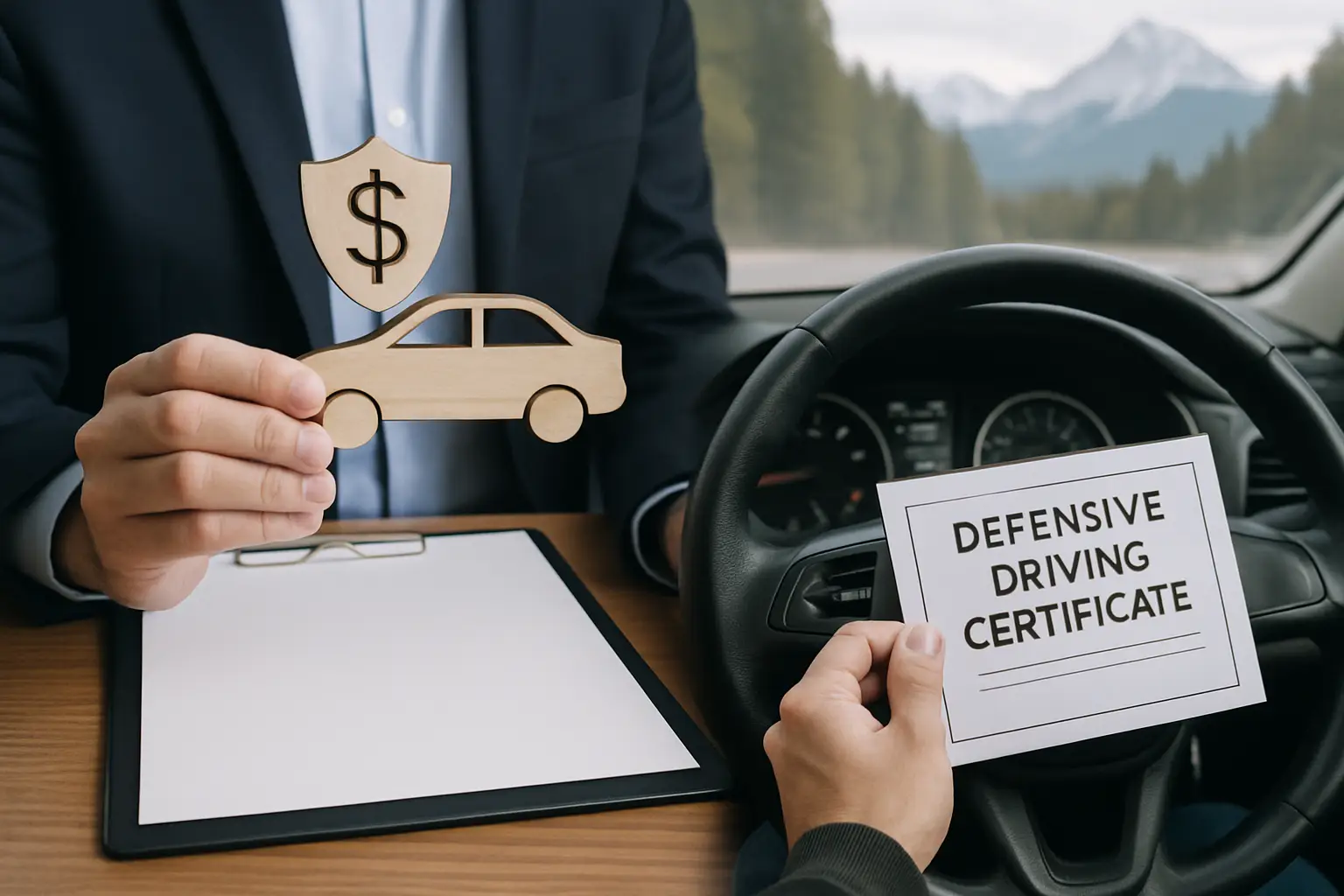
If you are shopping for car insurance in Alberta and you are seeing rates that make you rethink every trip to the grocery store, you are not alone. New drivers, young drivers, and adults coming back to driving after a gap often get quoted higher premiums – even when they are careful and motivated. That is exactly why people ask about a defensive driving course for insurance discount alberta. The idea is simple: prove you are training for safer driving, and you may earn a better rate.
The real answer is a little more specific. Defensive driving courses can help, but discounts are not automatic, not identical across insurers, and not the only benefit. The bigger win is that a good course makes you less likely to crash, get a ticket, or panic when Calgary roads turn unpredictable. That is what protects your record long-term – and your record is what insurance pricing follows.
What “defensive driving” actually means in Alberta
Defensive driving is not “drive slow and hope for the best.” It is a set of repeatable habits that reduce risk even when other drivers are impatient, distracted, or outright aggressive.
In Alberta, the defensive driving standard is practical and scenario-based: space management, scanning ahead, identifying escape routes, and making decisions early rather than late. It also includes adapting to winter conditions, variable speed zones, construction patterns, and high-speed merging. If a course is mostly motivational talk with no real skill framework, it is not doing the job.
A strong defensive driving course teaches you how to spot hazards early (before they become emergencies), how to manage following distance and speed so you have time to react, and how to handle intersections – where many serious collisions start. For new drivers, it also builds consistency, which is what road tests and real-world driving both reward.
Will a defensive driving course reduce your insurance in Alberta?
It depends, and you should go in expecting to confirm details with your insurer. In Alberta, insurers can offer discounts for driver training, but there is no single province-wide rule that says, “Complete Course X, get Y percent off.” Each company sets its own underwriting guidelines.
Here is the most accurate way to think about it: a defensive driving course can make you eligible for a discount, or it can strengthen your profile when combined with other factors like a clean record, limited annual mileage, or being added to a family policy. Some insurers apply the benefit only to certain age groups or to drivers within their first few years of licensing. Others focus more on convictions and at-fault claims than on training certificates.
Even when the discount is modest, the course can still pay for itself if it helps you avoid a single ticket or an at-fault incident. Insurance pricing reacts sharply to those.
What insurers usually want to see from a course
When an insurer recognizes a defensive driving course, they typically want proof that it was structured, legitimate, and completed by the driver being insured. You are usually looking at three things.
First, documented hours. Insurers often prefer courses with a defined classroom component and, when applicable, behind-the-wheel instruction. Second, a completion certificate with the provider’s name, your name, and the completion date. Third, a curriculum that clearly aligns with safe-driving outcomes – hazard recognition, collision avoidance strategies, and rule compliance.
One important trade-off: some “discount-focused” courses are fast and cheap but do not build real skill. You might get a certificate, but you may not gain the judgment that keeps your record clean. If your goal is long-term insurance savings, the best strategy is to choose training that actually changes how you drive.
Questions to ask your insurance company before you enroll
Before you pay for any course, call your insurer (or broker) and ask direct questions. You want clarity upfront so you are not guessing later.
Ask whether they offer any discount for completing a defensive driving course, and whether it must include in-car instruction or if an online-only certificate qualifies. Then ask if the discount applies to your situation specifically – for example, as a Class 5 GDL driver, a newly licensed driver, or an international driver converting experience into Alberta driving history.
Also ask what documentation they need and whether there is a time window. Some companies want the course completed within a certain number of months of licensing or policy start. Others will accept it at renewal. Getting this in writing by email is ideal, but even notes from a phone call can prevent confusion.
What to look for in a defensive driving course (beyond the discount)
A course that is worth your time should feel organized and skill-based. It should tell you exactly what you will learn, how long it takes, and how you will be evaluated.
Look for training that emphasizes scanning habits and space management, not just “rules.” Rules matter, but defensive driving is decision-making under pressure. You want a course that repeatedly connects hazards to actions: what you look for, what you predict, and what you do next.
In Alberta, local conditions are not optional. Calgary drivers deal with sudden weather shifts, glare ice, gravel spray, construction reroutes, and heavy merging on major corridors. A course that acknowledges these realities – and teaches techniques like gentle braking, longer following distance, and early lane positioning – is more likely to change your day-to-day safety.
If in-car training is part of the program, pay attention to lesson structure. Two-hour lessons tend to give enough time to warm up, practice a skill in multiple locations, and finish with feedback you can apply next time. Shorter sessions can work for refreshers, but brand-new drivers often benefit from longer, coached repetitions.
Who benefits most from a defensive driving course in Alberta
New teen drivers often benefit because they are still building judgment. A defensive driving course gives them a framework that replaces guesswork: where to look, how far ahead to plan, and how to stay calm when traffic gets messy.
Young adults upgrading through licensing stages benefit because the course reinforces consistency. That helps with road-test readiness, but more importantly it reduces risky habits that quietly build over time.
Internationally licensed drivers and returning drivers benefit in a different way. Many already have real driving experience, but Alberta road patterns, signage, lane behavior, and winter expectations can be different. Defensive driving training helps translate experience into local predictability, which is what prevents near-misses.
Defensive driving vs. standard driver training: what is the difference?
Standard driver training is often built around basic vehicle control and road test expectations: starts, stops, turns, lane changes, parking, and correct observation routines. Defensive driving goes further into risk management.
The overlap is not a bad thing. For a new driver, it is ideal when a program teaches core skills and defensive habits together, because defensive driving depends on solid basics. If you cannot maintain steady speed or control your lane position, you cannot consistently manage space.
If you already drive and you are simply trying to become safer (or qualify for an insurance benefit), a defensive driving-focused course may be the better fit. If you are preparing for Class 5 GDL or a full Class 5 road test, a program that combines classroom learning with structured in-car sessions usually creates faster, more reliable progress.
How to use your certificate to request an insurance discount
Once you finish the course, do not assume the discount will appear automatically. Submit the certificate to your insurer or broker and ask them to confirm receipt and eligibility.
If you are starting a new policy, provide the certificate during the quoting stage so it is considered immediately. If you are mid-policy, ask whether the discount can be applied right away or if it will take effect at renewal. Keep a copy of your certificate for your records, and note the date you sent it.
If the insurer says the course does not qualify, ask what would qualify. Sometimes the issue is format (online-only vs. blended), lack of documented hours, or missing provider details.
A realistic way to think about “discount” value
A discount is helpful, but it should not be the only yardstick. Insurance is a long game. A clean record over several years typically matters more than a one-time discount.
Defensive driving is one of the few things you can control early. You cannot control your age bracket or Alberta-wide pricing trends. You can control how often you put yourself in high-risk situations like tailgating, late merges, rolling stops, and distracted driving.
That is why we treat defensive driving as an investment in outcomes: fewer close calls, fewer tickets, fewer collisions, and more confidence in real traffic. The best courses do not just tell you to be careful – they teach you how.
Choosing a course in Calgary that fits your schedule
If you are balancing school, work, or family responsibilities, scheduling is often the deciding factor. Look for programs that clearly state their hours and delivery method, and that offer consistent lesson blocks rather than scattered sessions.
For drivers who want structured training with a self-paced online component plus coached in-car instruction, Turn by Turn Driving School offers an insurance reduction driving course designed around defensive driving habits and hazard detection, with convenient online learning and booking at https://turnbyturn.ca.
No matter which provider you choose, match the course to your actual need. If you are anxious behind the wheel, prioritize instructor feedback and practice time. If you are experienced but rusty, choose a refresher format that targets your weak spots. If you are primarily looking for an insurance discount, confirm eligibility first – then pick the course that will still make you a better driver even if the discount is smaller than you hoped.
The safest drivers are not the ones who never make mistakes. They are the ones who build enough space, awareness, and patience that a mistake does not turn into a crash.
Comments are closed