



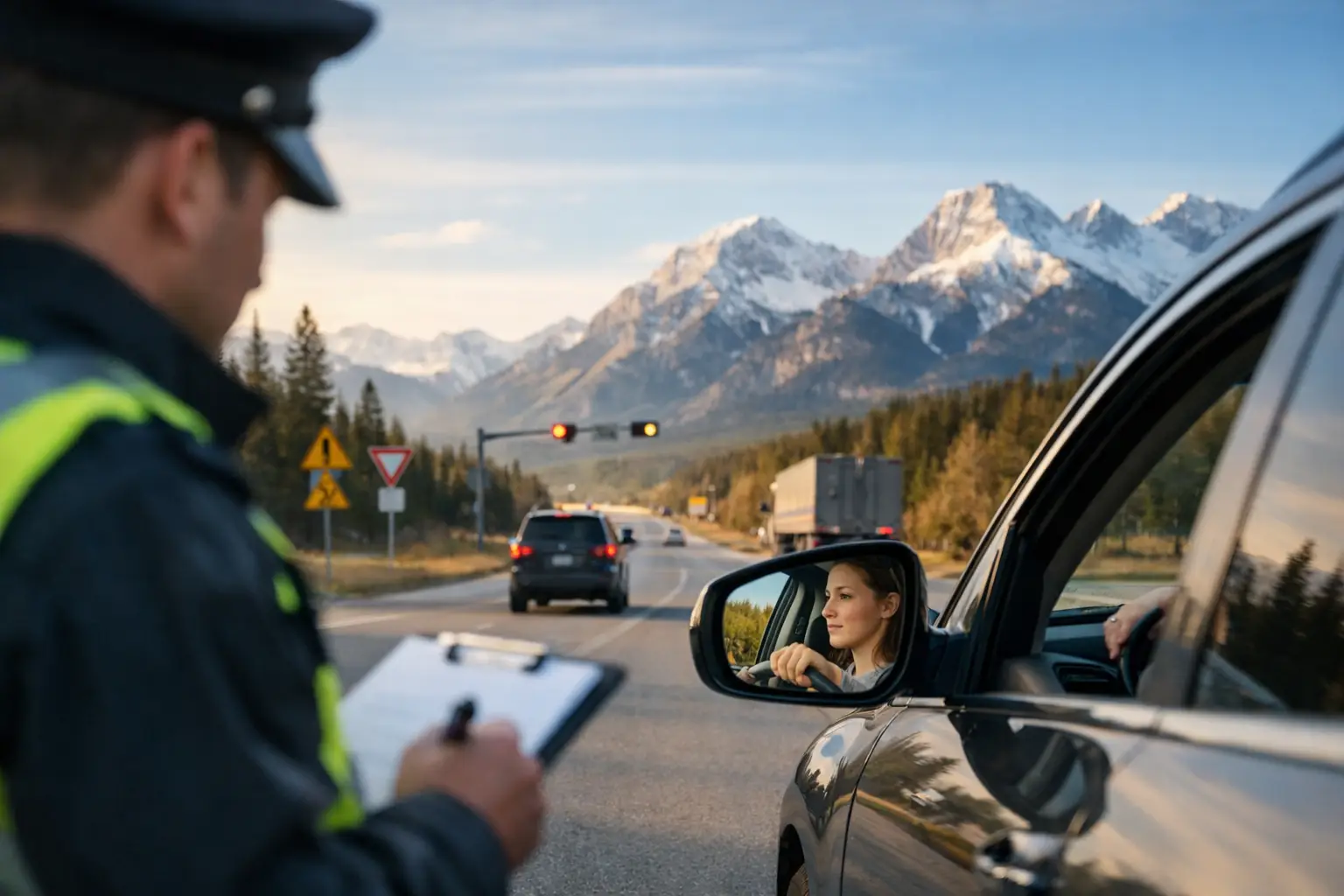
The first time you pull up to a four-way stop with other cars arriving at nearly the same moment, Alberta traffic laws stop feeling theoretical. New drivers often know the basic signs, but hesitation happens when real traffic, weather, pedestrians, and pressure all show up at once. This guide to Alberta traffic laws for beginners is built to make those rules easier to apply on actual roads, not just memorize for a test.
If you are working toward a license in Alberta, the goal is not to collect random facts. It is to understand how the law shapes safe decisions. Good drivers do not just react to what is directly in front of them. They scan early, know who has the legal right-of-way, control speed to match conditions, and avoid choices that create risk.
Guide to Alberta Traffic Laws for Beginners: Start With Licensing
Before getting deep into road rules, it helps to understand the licensing path. Most beginners start with a Class 7 learner’s license. That stage allows you to drive only under specific conditions, including having a qualified supervising driver with you. There are also limits around alcohol, nighttime driving for some drivers depending on the conditions of their license, and the number of passengers in certain cases under graduated licensing rules.
The next step for most new drivers is Class 5 GDL, which allows independent driving but still comes with restrictions compared to a full Class 5 license. After meeting the time and eligibility requirements, drivers can move to a full Class 5. These stages matter because Alberta traffic laws are not only about what happens on the road. They also define who can drive, under what conditions, and what level of responsibility applies at each stage.
If you are new to Alberta from another country, some rules may feel familiar, but local expectations can still be different. That is especially true around school zones, winter driving, right turns on red, and how road test examiners assess lane position, observation, and full stops.
Speed Limits Are Simple Until Conditions Change
Most beginners think speed law means staying under the posted limit. That is only part of it. In Alberta, the posted speed sets the maximum in normal conditions, but drivers are still required to adjust speed for weather, visibility, traffic flow, and road surface.
That means driving at the speed limit during heavy snow, black ice, or dense fog can still be unsafe and, in some situations, unlawful if it shows a lack of due care. On the other hand, driving far below the normal speed without reason can also create problems by disrupting traffic and increasing conflict with other vehicles.
School zones and playground zones deserve extra attention. These areas are where many new drivers lose focus because they are watching for signs but not scanning for children, crossing guards, or parked cars with doors opening. The law sets the speed rule, but safe driving requires reading the whole environment.
Right-of-Way Is Where Many Beginners Get Stuck
Right-of-way rules sound clear when written on a page. In traffic, they feel less clear because other drivers are not always predictable. Alberta law establishes who should proceed first, but beginners also need to understand that having the right-of-way does not remove the duty to avoid a collision.
At a four-way stop, the first vehicle to stop should generally go first. If two vehicles stop at the same time, the vehicle on the right usually has priority. When turning left, you must yield to oncoming traffic unless you clearly have a protected turn. At uncontrolled intersections, the vehicle on the right often has the legal advantage, but speed, visibility, and road design still matter.
Pedestrians complicate this in a good way because the law expects drivers to stay alert and yield where required. If a pedestrian is legally crossing, your job is not to negotiate with hand gestures or hope they speed up. Your job is to stop fully and give them space.
This is one of the biggest differences between passing a written test and driving well. The law gives structure. Defensive driving adds timing, patience, and judgment.
Lane Use, Turns, and Signaling
Many beginner errors are not dramatic. They are small habits that signal poor control, such as drifting within a lane, turning wide, cutting corners, or signaling too late. Alberta traffic laws require drivers to stay in the correct lane, signal lane changes and turns properly, and complete turns into the appropriate lane where required.
A right turn should usually be made from the rightmost lane into the rightmost available lane, unless signs or markings direct otherwise. A left turn depends on the road layout, but lane discipline matters throughout the turn, not just at entry. New drivers often focus so much on steering through the turn that they forget to check for pedestrians, cyclists, or adjacent vehicles.
Signaling is another area where timing matters. A signal given at the last second does not help other road users. The purpose is communication. You are showing intention early enough that others can respond safely.
Distracted Driving Laws Are Strict for a Reason
Alberta treats distracted driving seriously, and beginners should too. Holding, texting on, typing on, or using a handheld phone while driving is prohibited. The same goes for other distractions such as entering information into a device or engaging with screens in ways not permitted by law.
Hands-free does not mean risk-free. A legal action can still be unsafe if it pulls your attention away from the road. New drivers already have a high mental workload. Adding a phone conversation, navigation setup, or playlist change can reduce awareness fast.
The safest approach is simple. Set your route before moving, silence notifications, and keep both hands available for control. If something needs your full attention, pull over legally and safely first.
Seat Belts, Alcohol, and Basic Legal Responsibility
Some traffic laws are straightforward, but the consequences are not. Seat belts are required, and drivers are responsible for making sure passengers are properly secured where the law requires it. For new drivers in graduated licensing stages, alcohol restrictions are especially strict. Zero tolerance means zero.
This is an area where there is no gray zone worth testing. If you are driving, do not drink. If you are tired, distracted, upset, or pressured by passengers, treat that as a safety issue too. Alberta traffic law sets the minimum standard, but responsible driving means recognizing when you are not in the right condition to be behind the wheel.
Parking, School Areas, and Everyday Mistakes
A lot of tickets happen when the car is barely moving or not moving at all. Parking too close to a crosswalk, stopping where signs prohibit it, blocking a driveway, or failing to understand time-limited parking rules can all lead to violations.
School and playground areas are another common problem for beginners because the environment changes quickly. Buses stop. Children move unpredictably. Parents pull in and out without much warning. You need slower speed, wider scanning, and more patience than you might expect.
These are not advanced driving situations. They are everyday ones. That is exactly why they matter so much.
How Beginners Can Actually Learn Alberta Traffic Laws
The most effective way to learn the rules is to connect them to real driving situations. Reading the handbook matters, but it works better when paired with structured practice. That means learning how to approach intersections, judge gaps, manage mirror checks, perform shoulder checks, and respond to hazards with coaching instead of guesswork.
A good training process builds in stages. First you learn the rule. Then you practice it in a low-pressure setting. After that, you apply it in busier traffic, different road types, and changing weather. That progression builds confidence without cutting corners on safety.
For many students, especially nervous first-time drivers or internationally licensed drivers adjusting to Alberta roads, instructor-led lessons make the difference. Turn by Turn Driving School focuses on that step-by-step approach so students can move from online theory to real-road execution with more control and less confusion.
A Practical Mindset for New Drivers
The best beginner mindset is not to ask, “Can I get away with this?” It is to ask, “What is the safest legal choice here?” That shift changes everything. It leads to earlier braking, better following distance, cleaner lane changes, and fewer rushed decisions.
Traffic laws are not there to make driving harder. They create predictability. Predictability gives everyone more time and space to react. When you understand the rules and practice them consistently, driving starts to feel less stressful and much more manageable.
Give yourself permission to learn carefully. The strongest drivers are not the ones who rush through the process. They are the ones who build safe habits early and keep them for life.
Comments are closed