



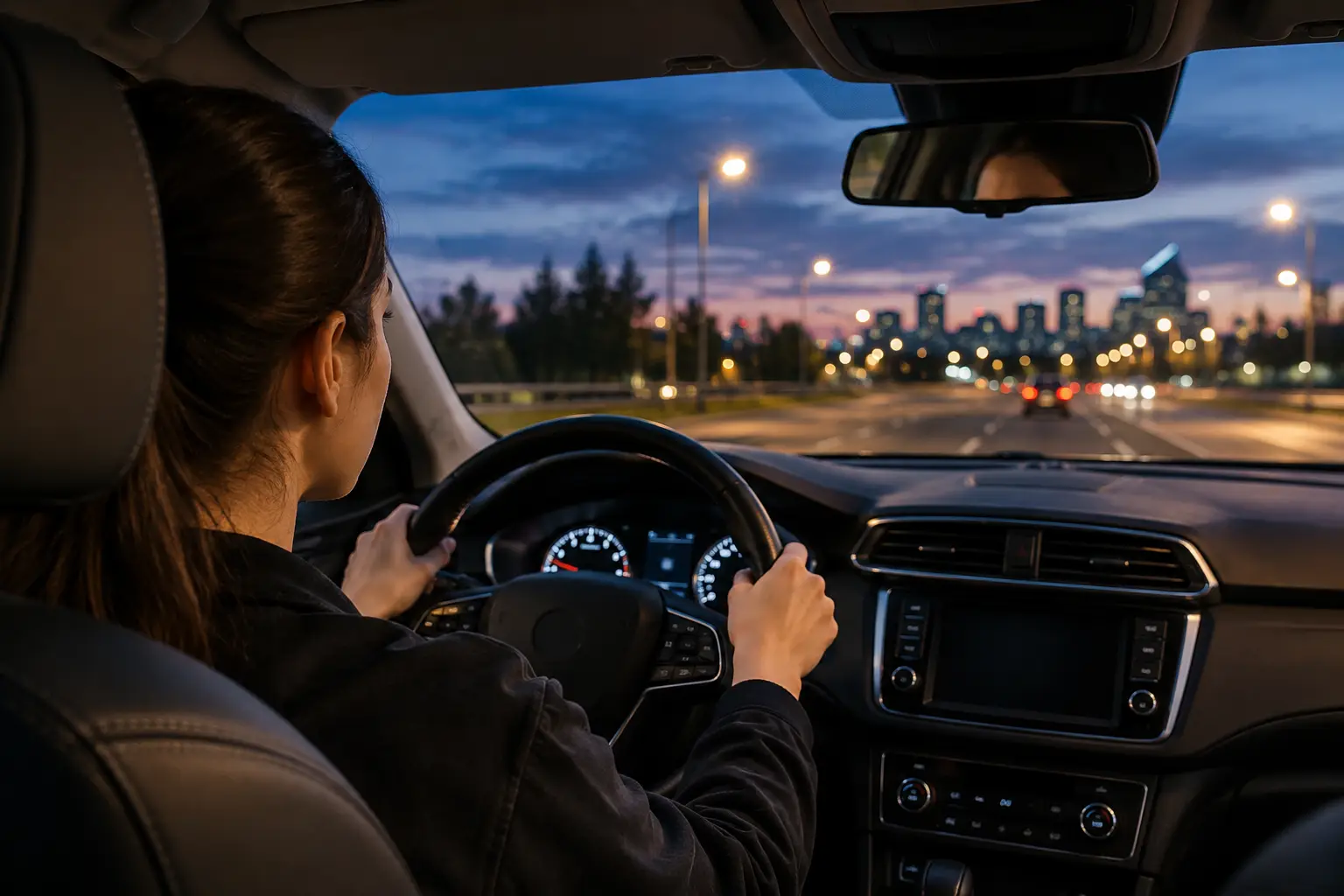
A familiar Calgary route can feel completely different after sunset. Lane markings are harder to read in rain, pedestrians appear later than expected, and bright headlights can make a simple left turn feel demanding. Night driving lessons Alberta learners choose should turn those moments into practical, repeatable decisions – not leave drivers to figure them out alone.
For a new driver, nighttime practice is not about being fearless. It is about learning to reduce risk: choosing a safe speed, looking farther ahead, managing glare, and giving yourself more time to respond. Structured instruction provides a controlled way to develop those habits before driving after dark becomes part of regular school, work, or family travel.
Why Night Driving Requires Different Skills
At night, your headlights limit how far you can see. A hazard that would be obvious during the day – a cyclist near the curb, a vehicle slowing ahead, black ice at an intersection – may only become visible when you are much closer. The same speed that feels comfortable in daylight can leave too little time and distance to brake smoothly.
Depth perception and peripheral vision also change in low light. Oncoming headlights can temporarily reduce your ability to see details, especially on wet pavement. Streetlights, illuminated signs, and reflections create visual clutter. New drivers sometimes focus too closely on the bright area directly in front of the vehicle, missing information farther down the road.
That is why a good lesson focuses on observation before reaction. Your instructor can coach you to scan well ahead, check mirrors with purpose, identify escape routes, and recognize when visibility calls for a slower speed. These are defensive-driving habits that protect you in every condition, but they become especially valuable after dark.
What Night Driving Lessons in Alberta Should Cover
Night training should be planned, not treated as a regular daytime lesson that happens to run late. The route, traffic level, weather, and student experience all matter. A first evening lesson may begin on familiar, well-lit roads before moving to busier intersections, residential areas, or higher-speed routes when the student is ready.
Headlight Use and Visibility
Drivers need more than a reminder to turn on their lights. They need to understand when headlights must be used, how to switch between low and high beams without affecting other road users, and how dirty lenses or a fogged windshield reduce visibility. They should also learn to check that taillights are working, because being seen from behind matters as much as seeing ahead.
When faced with oncoming glare, looking toward the right edge of the road can help a driver maintain position without staring directly into the lights. An instructor can correct lane position early, before a nervous driver begins drifting toward the center line or shoulder.
Speed, Following Distance, and Stopping Space
Posted speed limits remain the maximum allowed under ideal conditions. They are not always the right speed for darkness, rain, snow, construction zones, or limited sightlines. Night instruction helps students connect speed to what they can actually see and stop for.
Following distance deserves special attention. A vehicle ahead can hide potholes, debris, pedestrians, or icy patches until the last second. Leaving more space gives you a clearer view of the road and room to make calm decisions. Smooth braking is safer than sudden braking, particularly when pavement is wet or temperatures are near freezing.
Intersections, Pedestrians, and Roadside Hazards
Many nighttime risks occur at lower speeds. A pedestrian wearing dark clothing may blend into a background. A driver waiting to turn may misjudge an approaching vehicle. A parked car door can open near a curb lane. In Alberta, changing weather can add snowbanks, slush, and reduced lane visibility to the same situation.
Students should practice approaching intersections with a full visual search, even when the light is green. They should learn to anticipate pedestrians at marked and unmarked crossings, watch for cyclists, and avoid assuming another driver has seen them. Defensive driving means preparing for the reasonable mistake of another road user.
Managing Distractions and Fatigue
Darkness can make drivers more tired, particularly after a full day at school or work. A tired driver may miss signs, react slowly, or become overly dependent on navigation prompts. Before an evening lesson, students should arrive rested, wear any glasses or contact lenses they need for driving, and set their route before moving the vehicle.
Phones should be put away. Music, passengers, and climate controls can wait until the vehicle is safely parked. For a learner, fewer distractions create more attention for steering, lane position, mirrors, and traffic conditions.
Alberta Licensing Restrictions Still Matter
Night practice must match the driver’s licensing stage. Class 7 learners in Alberta have a nighttime restriction and cannot drive between midnight and 5 a.m. They also need to follow the conditions attached to their learner license whenever they are behind the wheel. An evening lesson should be scheduled with enough time to complete the drive well before that restriction begins.
Class 5 GDL drivers have different responsibilities and restrictions, including zero alcohol requirements. Whether you are preparing for the Class 5 GDL road test, working toward a full Class 5 license, or returning to driving after time away, safe decisions after dark begin with knowing which rules apply to you.
A professional instructor can help you build experience within those rules. That does not mean every lesson has to take place at night. Daytime sessions remain essential for core skills, road positioning, parking, merging, and traffic-law application. Evening practice becomes most useful after a student has enough basic control to benefit from the added challenge.
How Structured Lessons Build Calm, Not Overconfidence
Practicing with a parent or friend can be valuable, but informal practice often follows the same familiar routes and habits. A trained instructor is focused on identifying small errors before they become automatic: braking too late, looking only at the vehicle ahead, entering a turn too quickly, or failing to adjust to glare.
At Turn by Turn Driving School, in-car training is built around progressive, instructor-led lessons rather than one-size-fits-all drives. Students can use 24/7 online booking to plan lessons around school and work schedules, then build real-road experience in manageable two-hour sessions. This structure gives learners time to absorb feedback and return with a clear goal for the next drive.
Night instruction is also not a shortcut to road-test readiness. Road tests evaluate the driving skills and decisions required during the test itself, while nighttime practice prepares drivers for a common real-life condition. The value is long-term confidence: being able to leave an evening shift, pick up a family member, or drive home after an event with the same attention and control used during the day.
When to Schedule an Evening Driving Lesson
The right time depends on your current skill level, comfort, and the season. In winter, darkness arrives earlier, which can make early-evening scheduling more practical. It can also introduce snow, ice, and reduced visibility. Those conditions may be useful for an experienced learner with an instructor, but they are not the best starting point for someone still learning basic turns and braking.
If you are anxious about night driving, say so before the lesson begins. A responsible plan might start in a well-lit area, include familiar intersections, and gradually add more complex traffic situations. Confidence should come from demonstrated skill, not from being pushed into conditions you are not ready to manage.
Before each evening drive, clean the windshield inside and out, clear snow and ice completely, confirm your lights are operating, and give yourself extra travel time. Small preparations improve visibility and reduce the pressure to rush. The goal is simple: finish every drive with sound judgment, steady control, and the habits of a safe, responsible driver for life.
Comments are closed