



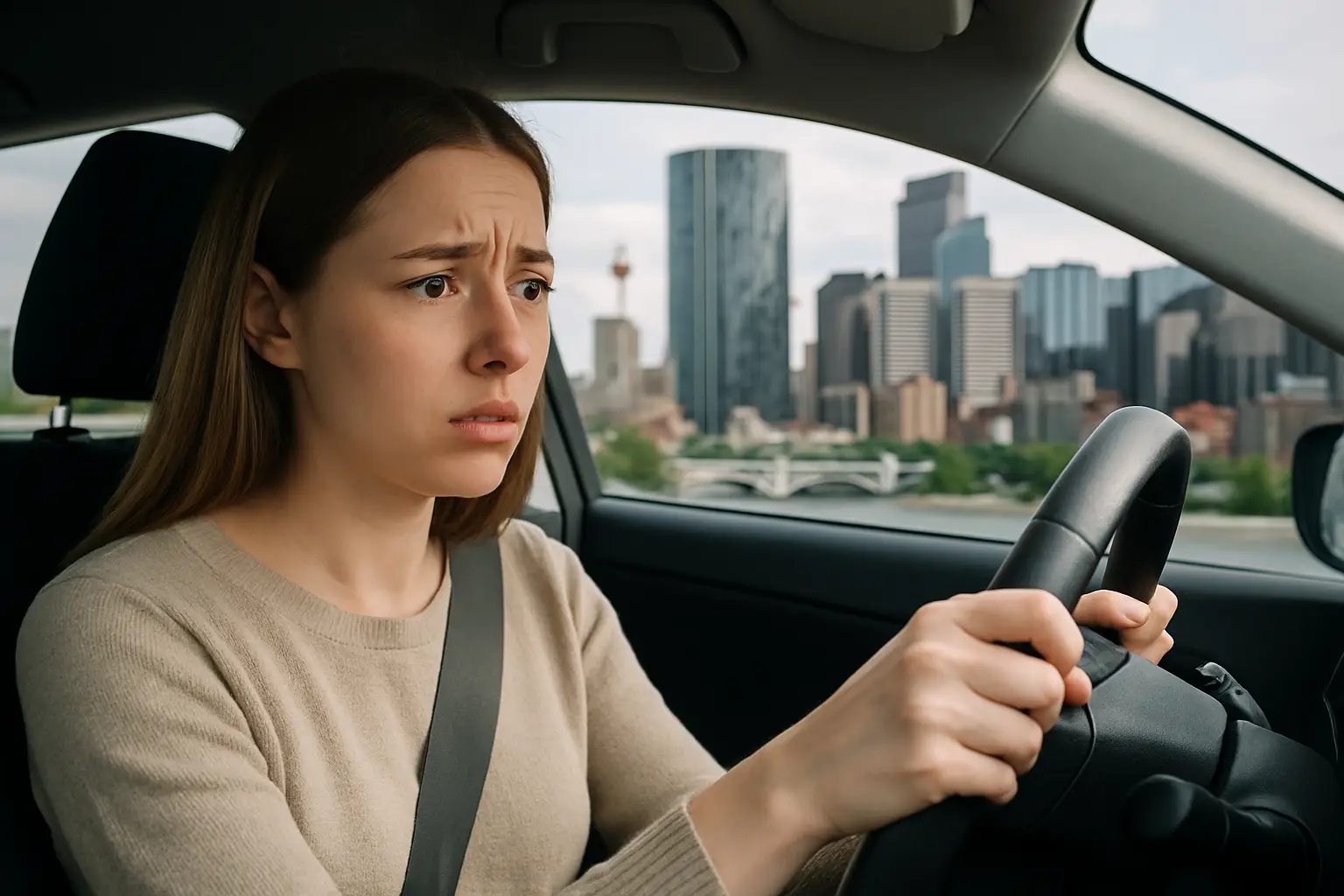
If your hands tighten on the steering wheel the moment you think about Deerfoot Trail, you are not alone. A lot of adults in Calgary put off driving for years because the risk feels high, the traffic feels fast, and the fear of making a mistake feels personal.
Nervousness is not a character flaw. It is a predictable response to a skill that mixes speed, rules, other people’s decisions, and real consequences. The good news is that driving anxiety responds well to structure. When practice is paced correctly and coached by an experienced instructor, confidence shows up the same way any other skill does – through repetition, clear feedback, and gradual exposure.
Why adults get nervous behind the wheel
Most nervous adult drivers have a logical origin story. Some never learned as teens. Some had a collision, a close call, or a scary winter drive years ago. Others drove in another country and are now adapting to Alberta rules, signage, and local road habits.
There is also a specific kind of adult pressure that teens do not carry. Adults tend to feel they “should already know this,” and that shame can make every stall, missed turn, or awkward merge feel bigger than it is. Anxiety then spikes, which makes reaction time worse, which reinforces the fear.
Driving instruction for adults works best when it treats anxiety as a training variable, not as drama to push through.
What “driving lessons for nervous adults Calgary” should actually include
Not all lessons are built for anxious learners. For nervous adults, the win is not just logging hours. It is building predictable control in the situations that trigger you.
A strong program typically starts with low-pressure fundamentals: seat and mirror setup, steering control, smooth braking, lane positioning, and scanning habits. You want your basics to become automatic so your brain has room to handle traffic.
Then the lessons should progress in difficulty on purpose. Quiet residential streets first, then busier collectors, then multi-lane roads, then higher-speed merges. If a lesson jumps straight to your biggest fear, you might survive it, but you will not retain much. Skill builds fastest when your stress level is elevated but manageable.
Finally, nervous adults benefit from instructor language that is direct and calm. “Slow down” is not enough. You need specific cues like “ease off the gas, cover the brake, check your center mirror, then your left mirror, then shoulder check.” Clear steps reduce panic.
The first lesson: how to make it feel manageable
A good first lesson is not a surprise test. It is an assessment and a plan.
Expect your instructor to ask about your history: whether you have a Class 7 learner’s permit or an existing license, what you are nervous about, and what you want to achieve (Class 5 GDL, full Class 5, brush-up, or road test preparation). This matters because the route and coaching style should match your starting point.
You should also expect a controlled start. That often means spending time parked to get your seating position correct, mirrors set properly, and steering technique squared away. For anxious drivers, those setup steps are not “extra” – they are the foundation of feeling in control.
If you are worried about looking foolish, say it out loud. Professional instructors hear it every week, and naming it removes a lot of pressure.
A practical path that builds confidence, not just comfort
Confidence is not avoiding difficult roads. It is being prepared for them.
Most nervous adults do best with a step-by-step training path that includes:
First, low-speed control: turning right and left smoothly, stopping gently, maintaining lane position, and learning how to scan intersections.
Next, predictable traffic: quiet routes where you can practice right-of-way, lane changes, and timing without feeling rushed.
Then, complex situations: busier intersections, construction zones, school areas, and multi-lane lane changes with real traffic flow.
Finally, test-level skills: consistent observation habits, safe following distance, smooth speed control, and decision-making under time pressure.
The trade-off is that gradual exposure can feel slow at first. But it is usually faster overall because you are not spending half your lesson in fight-or-flight mode.
Calgary-specific stress points (and how lessons should handle them)
Calgary has a few patterns that commonly trigger nervous adult drivers.
High-speed merges and lane changes are at the top of the list, especially on Deerfoot Trail, Crowchild Trail, and Stoney Trail. The fix is not “be brave.” It is learning a repeatable sequence: early mirror checks, consistent signal timing, building speed to match traffic, and committing when you have a safe gap. In-car coaching helps because your instructor can call the steps in real time.
Winter conditions are another major anxiety driver. Even if you are reading this in summer, Calgary weather changes fast. A safety-first lesson plan should cover longer following distances, smooth braking, gentle steering, and recognizing when conditions are beyond your current skill level.
Construction and lane shifts also stress people out because the road markings feel temporary and confusing. Lessons should include practice in reduced-speed zones and shifting lanes while maintaining calm, accurate lane position.
Choosing the right lesson format: why structure matters
Nervous adults often try to “practice more” with a friend or family member. Sometimes that works, but it depends on the coach. Informal practice can accidentally reinforce bad habits like late shoulder checks, rolling stops, or over-cautious hesitation.
Structured instruction gives you a consistent standard. It also gives you documentation of progress: what you did, what you improved, and what to focus on next. That matters when anxiety makes you forget your wins.
Many adults do best with 2-hour lessons rather than short sessions. The first 20 minutes often goes to warming up. Once you settle in, you can make real progress – and end the lesson on a successful repetition instead of rushing.
If you want a clear pathway, a package model can be helpful because it removes the constant decision of “should I book another lesson?” and replaces it with a plan.
Road test nerves: train the skill and the pressure
A lot of adult anxiety spikes around the road test, even when basic driving is improving.
The reality is that the test is partly a skills check and partly a consistency check. Nervous drivers tend to know the rules but rush or freeze under observation. Road test preparation should include mock-test routes, timed decision-making, and habit-building that holds up under stress.
The best preparation is boring in the right way. You are training repeatable behaviors: full stops, proper lane selection, consistent scanning, safe gap judgment, and calm speed control. When those are automatic, your mind has less to worry about.
If you are upgrading within Alberta licensing stages, make sure your plan matches your goal (Class 5 GDL vs full Class 5). The right focus and feedback depends on what you are being evaluated on.
What to look for in an instructor if you are anxious
For nervous adults, instructor fit matters as much as curriculum.
You want someone who teaches defensively, explains the “why,” and corrects mistakes without adding emotional heat. Direct feedback is good. Harshness is not.
You also want an instructor who can scale difficulty. If you are ready for busier roads, they should push you appropriately. If you are overwhelmed, they should de-escalate and rebuild the skill on an easier route, then reattempt. That balance is the difference between progress and burnout.
Finally, look for convenient scheduling. Anxiety gets worse when you go weeks between lessons and feel like you are starting over each time.
A structured option in Calgary
If you are looking specifically for driving lessons for nervous adults Calgary learners can follow step-by-step, Turn by Turn Driving School offers structured packages that combine a self-paced 15-hour online classroom module with bundled 2-hour in-car lessons, plus higher-tier road test preparation and refresher options. For many adults, that clear sequence reduces uncertainty and makes it easier to stay consistent.
How to know you are making progress (even if you still feel nervous)
Nervous drivers often wait to “feel confident” before they believe they are improving. That can be misleading. Confidence usually lags behind skill.
Instead, watch for objective changes: your braking gets smoother, your turns become consistent, you remember to scan without being prompted, and you recover faster after a mistake. Another big sign is that your attention shifts outward – from worrying about your hands and feet to noticing hazards early.
You can still feel nervous and be getting safer. The goal is not to eliminate every anxious thought. The goal is to drive with control and good judgment even when you feel pressure.
The next time you consider postponing lessons because you are “not ready,” treat that as a signal to make the plan smaller, not to quit. One calm, structured session can do more for your confidence than months of avoidance. You do not need to become a fearless driver. You need a repeatable process that makes you a safe one.
Comments are closed