



The first real winter drive of the season usually tells the truth fast. A route that felt easy in dry weather suddenly demands more stopping distance, smoother steering, and much better judgment. If you are asking how to prepare for winter driving, the goal is not just getting through one snowy day. It is building habits that help you stay calm, controlled, and responsible every time road conditions change.
For new drivers, returning drivers, and anyone still building confidence, winter driving is less about bravery and more about preparation. The safest drivers do not wait until they are sliding at an intersection to think about traction. They prepare the vehicle, adjust expectations, and make earlier, smarter decisions.
How to prepare for winter driving before you leave
Winter driving starts before the engine does. A few minutes of preparation at home can prevent poor visibility, loss of control, and unnecessary stress once you are on the road.
Start with tires. If your tread is worn, your stopping distance increases and your grip drops quickly on snow and ice. Winter tires make a real difference because they are designed to stay flexible in low temperatures and provide better traction than all-season tires. They do not make you invincible, but they do give you more control when accelerating, braking, and turning.
Next, check your windshield washer fluid. In freezing conditions, you need fluid rated for winter temperatures. If you use the wrong type, it can freeze and leave you without a clear windshield when road spray starts covering the glass. Your wiper blades also need to be in good shape. If they streak or chatter, replace them before the weather gets worse.
Battery strength matters more in winter than many drivers realize. Cold weather reduces battery performance, and a weak battery may fail on the morning you need it most. If your car has been slow to start, do not ignore it. The same goes for your lights, defroster, heater, and brakes. Winter is not the season for delayed maintenance.
Fuel level is another simple but important detail. Try to keep your tank at least half full during cold weather. This reduces the chance of being stranded with little heat, and it gives you more flexibility if traffic slows down or weather turns worse than expected.
Build a winter emergency kit you will actually use
A winter kit should be practical, not oversized. You are preparing for delays, reduced traction, and low visibility, not packing for a camping trip.
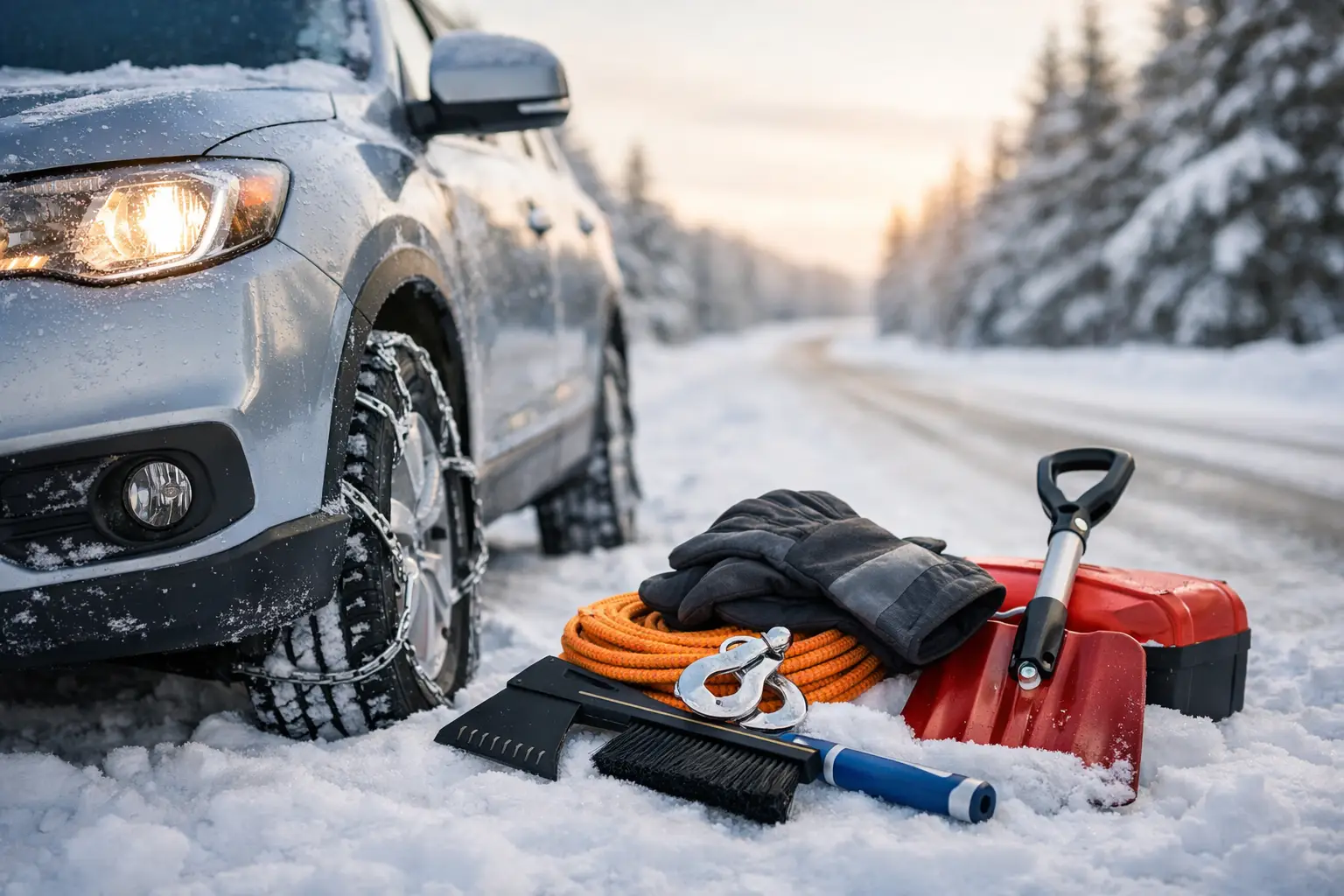
Keep a snow brush and ice scraper in the vehicle at all times. Add a small shovel, warm gloves, a blanket, a flashlight, booster cables, and a phone charger. It is also smart to keep traction aid such as sand or kitty litter if you drive in areas where getting stuck is common. If you travel longer distances, water and a few packaged snacks are worth keeping in the car.
What matters most is access. If your scraper is buried under bags in the trunk, it will not help you at 7 a.m. when your windshield is frozen over. Keep the essentials easy to reach.
Visibility is a safety skill, not a small detail
One of the biggest winter mistakes is driving with limited visibility because the driver is in a hurry. A small patch cleared on the windshield is not enough. Snow left on the roof can slide forward when you brake and block your view. Snow left on the hood, lights, mirrors, and rear window reduces your awareness and makes it harder for other drivers to read your movements.
Clear the entire vehicle before driving. That includes all windows, mirrors, headlights, taillights, and the roof. Let the defroster do part of the work, but do not rely on heat alone. If windows are fogging inside, adjust the defroster and ventilation before moving.
In winter, seeing and being seen are equally important. Turn on your headlights in snow, low light, or blowing conditions, even during the day. This is a simple step that helps other drivers recognize your position sooner.
How to prepare for winter driving with the right mindset
The biggest adjustment in winter is mental. Many collisions happen because drivers try to drive the same way they do in dry conditions. Winter roads do not forgive late braking, fast turns, or sudden lane changes.
Leave earlier than usual. If you are rushed, you are more likely to follow too closely, brake too late, and force decisions you would not make under normal conditions. Winter driving requires patience. You may need to reduce speed well below the posted limit, and that is often the right choice.
It also helps to expect less grip than the road appears to offer. A surface may look wet but actually be icy, especially on bridges, shaded areas, ramps, and residential roads with packed snow. If temperatures are near freezing, conditions can change block by block.
Confidence should come from good habits, not from assuming you can handle anything. That distinction matters, especially for newer drivers.
Smooth inputs matter more than speed
When traction is limited, every input needs to be gentler. Accelerate gradually so the tires can grip. Brake earlier and with lighter pressure. Turn the wheel smoothly instead of making sudden corrections.
This is where many anxious drivers actually improve once they understand the pattern. Winter driving rewards calm, deliberate movement. If you treat every stop, start, and turn as something you set up in advance, the vehicle stays more stable.
Following distance should also increase. In dry weather, a standard gap may feel adequate. In winter, it often is not. Give yourself much more space from the car ahead so you have time to slow down without panic braking. If another driver cuts into that space, ease off and rebuild it.
Hills and intersections need extra planning. On an uphill section, maintain steady momentum without over-accelerating. At intersections, begin slowing down early and test traction gently before you need a full stop. If the car starts to skid, looking where you want to go and easing off harsh inputs usually helps more than reacting aggressively.
Understand what your vehicle can and cannot do
Drivers sometimes assume all-wheel drive solves winter conditions. It helps with getting moving, but it does not change the laws of physics. It does not shorten braking distance on ice, and it does not guarantee cornering grip.
Anti-lock brakes, traction control, and stability control are valuable safety systems, but they are support tools, not substitutes for judgment. You still need appropriate speed, proper following distance, and smooth control. Technology can assist a prepared driver. It cannot rescue careless habits every time.
If you are unsure how your vehicle responds in snow, practice in a safe, open area when conditions allow and where it is legal to do so. Feeling how ABS works or how the car reacts to light skidding can reduce panic later. Structured instruction can help even more because an experienced, licensed instructor can teach you how to read conditions, manage space, and correct mistakes before they become dangerous. For drivers in Calgary who want that kind of step-by-step support, Turn by Turn Driving School focuses on defensive driving, hazard detection, and real-road confidence building.
Know when not to drive
Part of learning how to prepare for winter driving is recognizing when preparation is not enough. If visibility is near zero, roads are heavily iced, or a major storm warning is in effect, delaying the trip may be the safest decision.
That is not weakness. It is responsible driving.
For essential trips, check conditions before you leave and allow extra travel time. Tell someone your route if you are heading farther out. If conditions worsen while driving, slow down, increase following distance, and avoid sudden route changes unless they clearly improve safety.
New drivers should practice winter driving on purpose
Winter skills improve faster when practice is intentional. Start in lower-risk conditions, such as daylight hours on plowed roads with moderate traffic. Focus on one or two skills at a time, like gentle braking, controlled turns, and scanning farther ahead.
As confidence builds, add more complexity gradually. Night driving, busier roads, parking lots with snow buildup, and lane changes in slush all require slightly different judgment. Trying to learn everything at once usually creates more tension than progress.
This is why structured lessons help many new and returning drivers. A clear progression, professional feedback, and scheduled in-car practice can make winter driving feel manageable instead of unpredictable.
Winter roads demand respect, not fear. Prepare the car, give yourself more time, and drive with the kind of control that keeps small problems from turning into bigger ones. That is how safe, responsible driving starts to feel natural in every season.
Comments are closed