



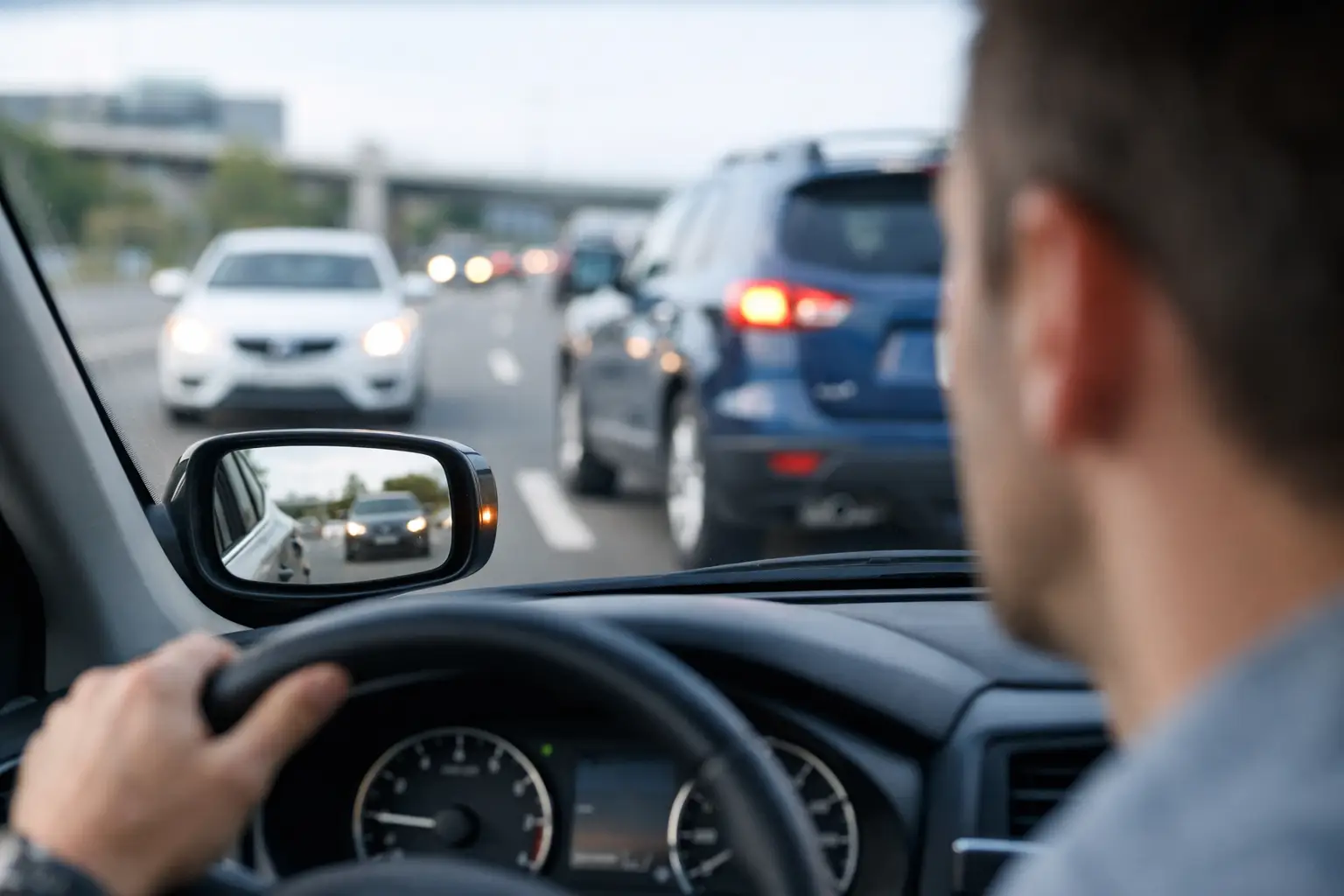
One missed shoulder check can turn an otherwise solid drive into a failed test. That is why a clear lane change checks Alberta road test checklist matters so much. Examiners are not looking for dramatic movements or exaggerated scanning. They want to see a safe, consistent routine that proves you notice hazards, communicate early, and move only when the space is actually clear.
For many new and returning drivers, lane changes feel harder on the road test than turns, stop signs, or parking. The pressure is different. You are moving at speed, traffic is changing around you, and every check has to happen in the right order. The good news is that lane changes are teachable. Once the sequence becomes a habit, your driving looks calmer, more controlled, and much more test-ready.
Lane Change Checks Alberta Road Test Checklist
A proper lane change is not just one glance and a signal. In Alberta, examiners typically expect a sequence that shows planning, observation, communication, and smooth vehicle control. In simple terms, your checklist is this: check the road ahead, check mirrors, signal, do a shoulder check in the direction of travel, and then move when safe.
That order matters. If you shoulder check too early, the traffic picture may change before you move. If you signal too late, you are not giving other drivers enough warning. If you focus only on the lane beside you and forget the road ahead, you may drift or miss a slowdown in front of you.
A strong lane change usually looks like this in real time. You maintain a steady speed, scan ahead, confirm your mirrors, turn on your signal early enough to communicate intention, quickly shoulder check the blind spot, and then move one lane over with smooth steering. After the lane change, you cancel the signal if needed and continue scanning normally.
What the examiner is really watching
Most students think the examiner is counting head movements. That is only part of it. What they are really assessing is whether your observations match your actions.
If you signal left but do not shoulder check left, that is a problem. If you shoulder check correctly but drift toward the line before the lane is clear, that is also a problem. If your checks are technically there but your speed drops suddenly and confuses traffic behind you, the lane change may still be marked poorly.
Examiners want to see that you can manage several tasks at once without losing control of the vehicle. That includes holding your lane before the move, keeping a safe following distance, staying close to the speed of traffic when appropriate, and making one clean movement instead of wandering between lanes.
This is where anxious drivers often lose marks. They know they need mirrors and a shoulder check, but they become so focused on the test item that they stop driving naturally. Safe driving is always the priority. The checks support the maneuver. They should not replace it.
The step-by-step routine to practice
Start by scanning well ahead. Before you think about moving over, know what is happening in front of you. If traffic is slowing, if an intersection is close, or if a pedestrian zone demands extra attention, it may not be the right time to change lanes.
Next, check your mirrors. Your rearview mirror helps you understand traffic behind you overall, and your side mirror gives you a better view of the lane you want to enter. Mirrors do not show everything, which is why they are never enough on their own.
Then signal. Signal before you move, not while you are moving. Give other drivers time to react. On a road test, early communication shows planning. Signaling at the last second looks rushed.
Now do the shoulder check. This must be quick and purposeful. Turn your head enough to clearly check the blind spot in the direction you are moving. Then bring your eyes back forward. A shoulder check that is too small may not convince the examiner you actually looked. One that is too long can pull your attention away from the road ahead.
If the lane is clear, make one smooth lane change. Keep both hands in proper control, steer gradually, and avoid sudden speed changes unless traffic conditions require it. Once established in the new lane, continue normal scanning and maintain appropriate speed.
Common mistakes that cost marks
The most common mistake is skipping the shoulder check. Many drivers rely on mirrors because they feel faster and easier, but the blind spot is exactly where another vehicle, cyclist, or motorcycle can disappear from mirror view.
Another common mistake is checking too early. A driver signals, shoulder checks, hesitates, and then moves several seconds later without checking again. Traffic can change quickly. If there is a delay, you may need to restart the observation process.
Late signaling also causes problems. The point of a signal is to communicate intent before the maneuver starts. If the vehicle is already drifting when the signal comes on, the signal has lost much of its value.
Some drivers slow down too much before changing lanes. Others speed up aggressively. Either extreme can make the maneuver look unsafe. Usually, the goal is to maintain a steady, appropriate speed that fits traffic conditions.
There is also the issue of poor timing. Even a technically correct lane change may be a bad choice if it happens in an intersection, near a crosswalk, beside merging traffic, or in a place where road markings restrict movement. Good judgment matters as much as the mechanical sequence.
Lane change checks in different road test situations
Not every lane change on the test will feel the same. On a quiet residential road, there may be less traffic, but you still need the full routine. Examiners do not excuse missing checks just because the road appears empty. They want to see habits, not guesses.
On busier city roads, timing becomes more important. You may need to plan earlier, signal sooner, and match the pace of surrounding traffic more carefully. If the gap is not safe, wait. A delayed lane change is better than a forced one.
Near parked cars, your lane change may feel more like moving around an obstruction. The same principles still apply. Check ahead, mirror, signal, shoulder check, and move only when safe. Examiners pay close attention here because cyclists and passing vehicles can appear quickly.
If the examiner gives an instruction close to an intersection, stay calm and use judgment. If a lane change cannot be completed safely, continue through and make the adjustment when it is legal and safe. It is better to miss a turn than create a hazard.
How to make the routine look natural on test day
The goal is not to perform a checklist like a robot. The goal is to show a repeatable safety habit. That takes practice at full driving speed, not just memorization.
A useful approach is to use the same rhythm every time you change lanes during lessons or private practice. Think: ahead, mirrors, signal, shoulder check, move. Repeating that exact sequence builds consistency under pressure.
It also helps to practice with commentary in your own head. Quietly naming the steps can keep you organized without distracting you. After enough repetition, the routine becomes automatic and your driving looks more confident.
Students who are returning to driving after time away often know the rules but struggle with timing and flow. New drivers may understand the flow but forget one of the checks. In both cases, structured practice matters. That is one reason many learners in Calgary use professional road test preparation through Turn by Turn Driving School. A trained instructor can spot whether the problem is observation, timing, steering, or confidence, and correct it before test day.
A quick mental checklist before every lane change
If you want one simple version to carry into the test, use this: Is it necessary, is it legal, is it safe, and have I shown it clearly? That frame keeps you from rushing.
Necessary means you are changing lanes for a real reason, such as following the route or avoiding an obstacle. Legal means road markings, signs, and location allow the movement. Safe means the gap is there and your checks confirm it. Shown clearly means your signal, lane position, and smooth steering communicate your intentions to everyone around you.
That is the difference between passing a maneuver and showing mature driving judgment. The examiner is not just grading one lane change. They are deciding whether you can manage real traffic with safety and control.
A clean lane change comes from routine, not luck. Practice the sequence until it feels calm, visible, and consistent, and your road test will feel a lot more manageable.
Comments are closed