



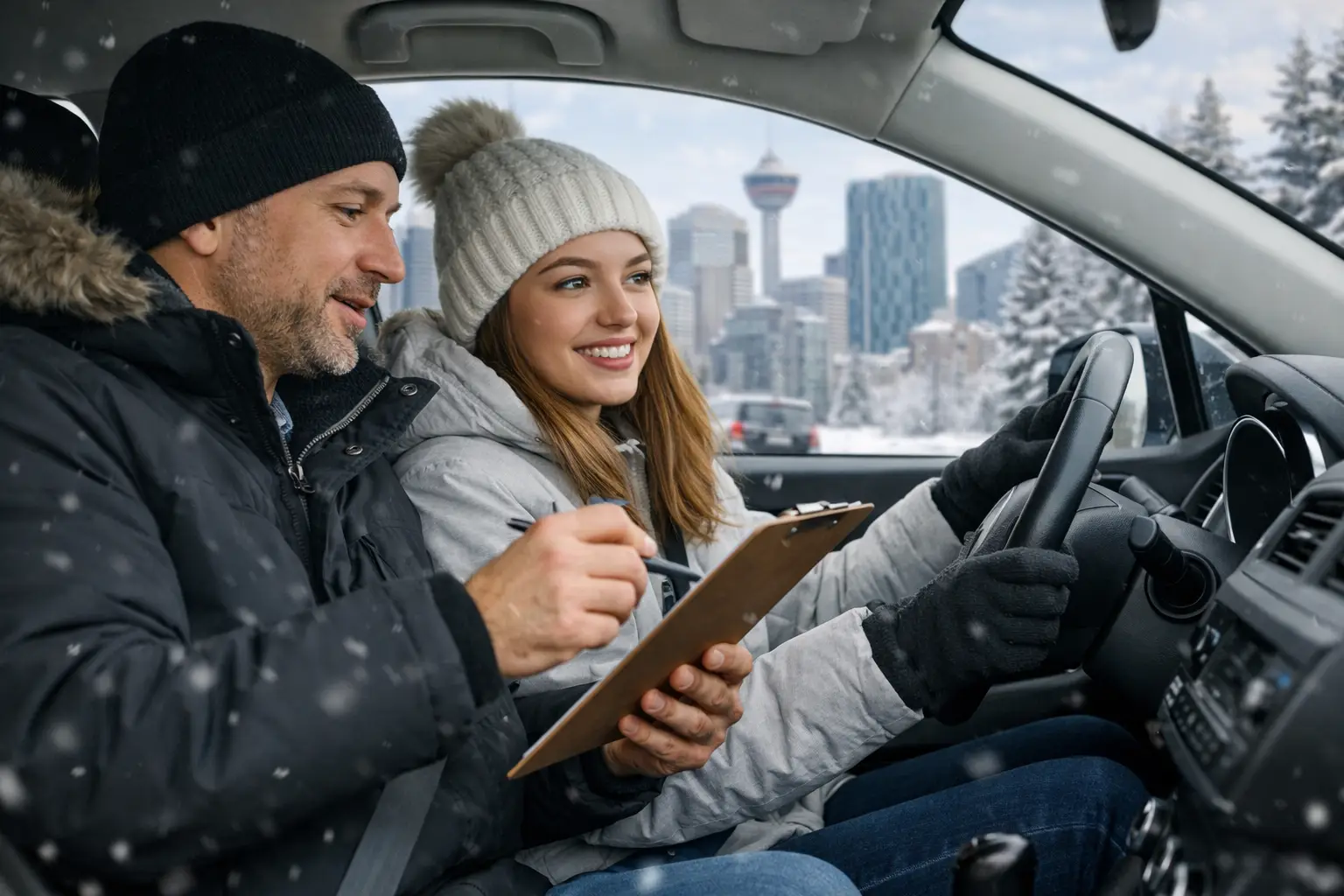
A Calgary winter lesson can begin on dry pavement and finish with blowing snow, icy intersections, and reduced visibility. That is exactly why learning in winter can be valuable. Knowing how to prepare for Calgary winter driving lessons helps you arrive calm, equipped, and ready to focus on the skills that keep drivers safe when road conditions change quickly.
Winter driving is not about being fearless or trying to prove you can handle a skid. It is about building controlled habits: looking farther ahead, leaving more space, braking early, and making decisions before a hazard becomes urgent. With proper preparation and instructor-led practice, winter conditions become a practical learning environment rather than a reason to panic.
Start With a Safe, Winter-Ready Vehicle
If your driving lesson uses a school vehicle, confirm the pickup details and arrive ready to drive. If you are using your own vehicle for a lesson, refresher session, or road test preparation, its condition matters before you leave the driveway.
Your tires are the first priority. Winter tires provide better grip in cold temperatures, snow, and slush than all-season tires, even when roads look mostly clear. Check that the tires are properly inflated and have adequate tread. A vehicle with poor traction limits what you can safely practice, especially when starting on an incline, turning at an intersection, or stopping behind traffic.
Clear all snow, frost, and ice from the windshield, side windows, rear window, mirrors, roof, hood, and lights. Clearing only a small patch of windshield is not enough. You need a full view of pedestrians, cyclists, lane markings, and vehicles approaching from the side. Snow left on the roof can slide forward during braking and block your view without warning.
Before the lesson, make sure the heater, defroster, windshield wipers, headlights, brake lights, and washer fluid are working. Calgary roads can become wet and slushy quickly, and spray from other vehicles may reduce visibility. Keep a snow brush and ice scraper in the vehicle. A charged phone, warm blanket, gloves, and extra washer fluid are sensible additions for longer winter drives.
Dress for Control, Not Just Warmth
Winter clothing can affect your ability to operate the vehicle. Wear warm layers that allow you to turn your head, move your arms, and adjust your seating position comfortably. A heavy coat may be fine for walking to the vehicle, but it can make the seat belt sit incorrectly or restrict your movement behind the wheel. If needed, remove or loosen it once the vehicle is warmed up.
Choose footwear with a secure sole and enough flexibility to feel the brake and accelerator pedals. Bulky winter boots can make it harder to apply smooth pressure, while slippery footwear can slide at the wrong moment. Bring gloves for clearing snow or waiting outside, but avoid driving with gloves that reduce your feel of the steering wheel.
If you wear prescription glasses, bring them. Winter glare from snow and low-angle sunlight can be intense, particularly near sunrise or sunset. Sunglasses may also help on bright days, but do not rely on them when visibility is already poor.
Arrive Early and Settle In Before Moving
A winter lesson should not begin with rushing. Plan to be ready 10 to 15 minutes before your scheduled pickup or meeting time. This gives you time to dress appropriately, locate your license, clear your vehicle if necessary, and send a message if weather or traffic creates a legitimate delay.
Bring your valid Alberta driver’s license or learner’s permit, as required for your stage of training. If you are new to Alberta, an internationally licensed driver, or returning to driving after time away, tell your instructor what experience you have and what concerns you. A good lesson plan should reflect your current skill level, not assume that every student needs the same starting point.
When you enter the vehicle, take time to set your seat, mirrors, steering wheel position, and climate controls. Your instructor can help you establish a safe driving position. You should be able to fully press the brake pedal, see clearly over the dashboard, and reach the steering wheel with a slight bend in your arms. These details matter more in winter because smooth steering, braking, and observation are essential.
Know the Winter Skills You Will Practice
Calgary winter driving lessons should focus on repeatable defensive-driving habits, not dramatic maneuvers. Your instructor may adjust the route and lesson objectives based on road conditions. A fresh snowfall calls for different choices than a cold, dry day with black ice risk.
Build Space Into Every Decision
On snow or ice, stopping distances increase. The correct following distance depends on visibility, traffic speed, tire condition, and the amount of traction available, but winter requires more room than a dry summer road. Create that space early rather than braking late and hoping the vehicle stops in time.
Look well ahead for brake lights, crosswalks, changing signals, buses, and vehicles preparing to turn. Early observation gives you time to release the accelerator gradually and brake smoothly. It also reduces the need for sudden steering inputs, which can cause a loss of traction.
Practice Smooth Inputs
Winter driving rewards patience. Accelerate gently, brake progressively, and steer with measured movements. Fast acceleration can make the drive wheels spin. Hard braking may activate the anti-lock braking system or cause a skid if traction is limited. Sudden steering can upset the vehicle when crossing packed snow, slush, or ice.
If your vehicle begins to slide, your instructor will teach you how to stay focused, look where you want the vehicle to go, and make controlled corrections. The goal is not to memorize a one-size-fits-all response. Front-wheel drive, rear-wheel drive, all-wheel drive, vehicle speed, and road surface can all change how a vehicle reacts. The best first defense is avoiding unnecessary speed and abrupt inputs in the first place.
Learn How Winter Changes Intersections
Intersections deserve extra attention because vehicles are stopping, turning, and accelerating in close proximity. Begin slowing earlier than usual. Watch for shiny patches, packed snow in tire tracks, and slush near the curb lane. Do not assume an approaching driver can stop simply because their light has turned red.
When making a turn, reduce speed before entering the turn, then use light acceleration only when the vehicle is straightening out. This helps maintain traction and gives you more control if the surface is slick.
Prepare Mentally for Changing Conditions
Many new drivers feel tense in winter because conditions are unpredictable. The answer is not to avoid asking questions or pretend you are more comfortable than you are. Tell your instructor if you are nervous about hills, lane changes, freeway driving, nighttime visibility, or icy parking lots. Clear communication allows instruction to match your needs while keeping the lesson safe and productive.
Expect some lessons to involve slower speeds, route changes, or more time spent practicing observation and space management. That is not lost time. It is professional decision-making. Severe weather may also require a lesson to be rescheduled for safety, especially when visibility is very poor or roads have become hazardous. Flexibility is part of responsible winter training.
Before each lesson, check the forecast, but also look outside. Calgary weather can shift quickly. Wind, snow squalls, sudden temperature drops, and freeze-thaw cycles may create icy roads even when the forecast appears manageable. Leave with enough time that you never feel pressured to speed.
Use Each Lesson to Build a Repeatable Routine
The strongest winter drivers do not rely on luck or confidence alone. They use the same preparation routine every time: check conditions, clear the vehicle fully, adjust their position, plan extra travel time, and drive with more space. These habits support road test readiness, but their real value continues long after licensing day.
Turn by Turn Driving School helps students practice defensive driving, hazard detection, and controlled decision-making through structured in-car instruction. Whether you are working toward your Class 5 GDL license, preparing for a road test, or returning to driving after time away, winter lessons can help turn cautious practice into dependable skill.
The next time snow starts falling before your lesson, do not treat it as a setback. Arrive prepared, listen closely, and give yourself permission to learn at a safe pace. Every controlled stop, early observation, and well-planned turn is progress toward becoming a safe, responsible driver for life.
Comments are closed