



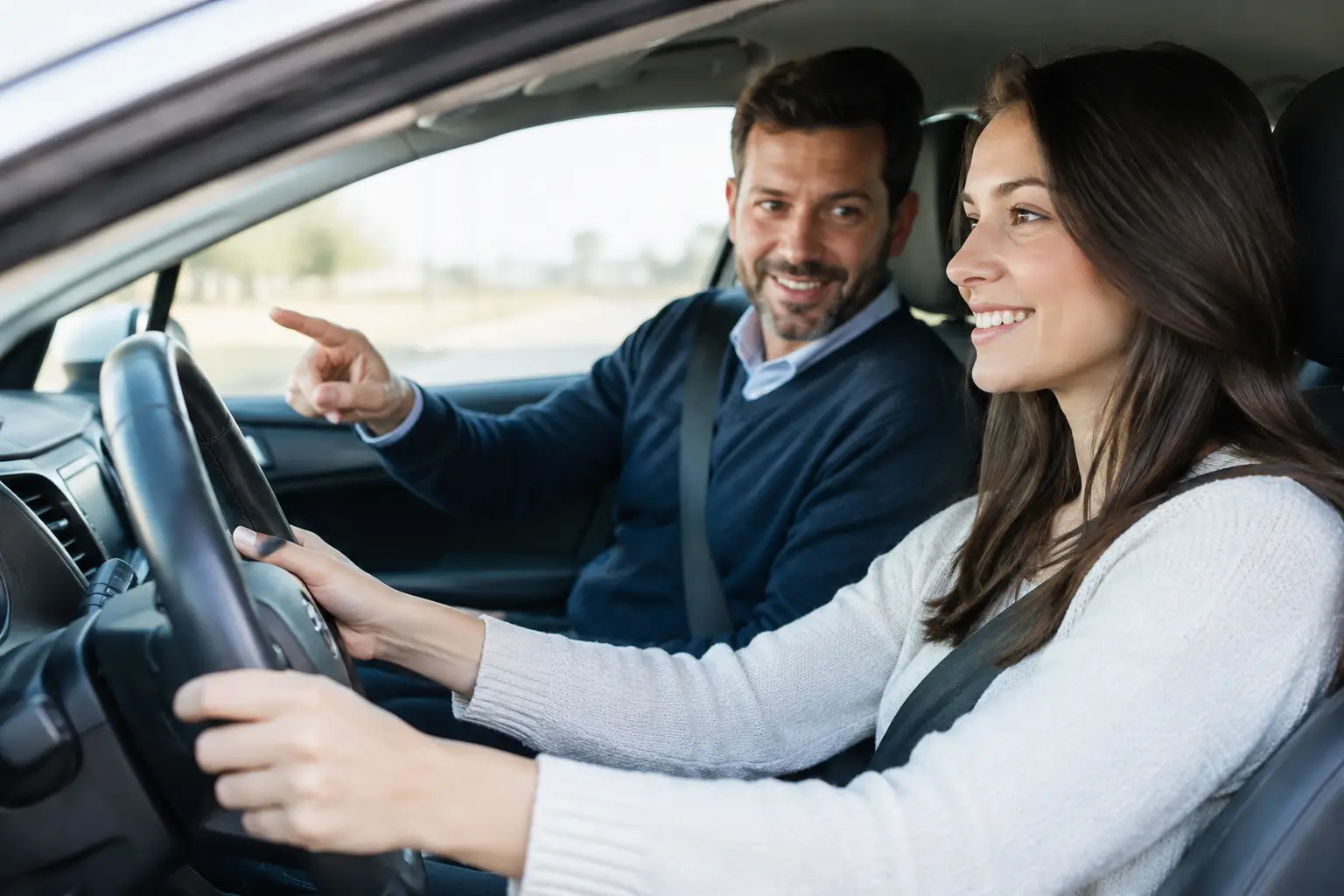
A left turn across busy Calgary traffic can expose every gap in a new driver’s preparation. It is not enough to know which pedal is the brake or how to complete a three-point turn. A qualified driving instructor teaches a student how to read traffic, manage pressure, and make controlled decisions before a risky situation develops.
That difference matters on a road test, but it matters even more after the license is issued. The goal of professional training is not simply to help a student pass once. It is to build safe, responsible drivers for life.
A driving instructor teaches judgment, not just maneuvers
Many new drivers begin with the visible skills: steering smoothly, parking, changing lanes, and following signs. Those skills are essential, but they are only the starting point. Good driving depends on judgment – where to look, when to slow down, how much space to leave, and when not to proceed.
A structured lesson gives students time to practice that judgment in real traffic. An instructor can point out a pedestrian nearing a crosswalk, a vehicle preparing to merge, or a gap that looks open but is not truly safe. Over time, students learn to scan farther ahead and recognize developing hazards without needing every risk identified for them.
This is especially valuable for learners who have practiced mostly with family or friends. Informal practice can build familiarity, but it can also repeat habits that are not aligned with current Alberta road rules or road-test expectations. A licensed instructor provides consistent feedback based on safe driving standards, not personal preference.
Lessons should follow a clear progression
Confidence grows when each lesson has a purpose. A student who is still working on smooth braking should not be rushed into complex highway merging. At the same time, a student who is comfortable only on quiet residential streets needs a plan to move forward.
Professional instruction should progress from vehicle control to traffic interaction, then to more demanding conditions. Early lessons may focus on observation, steering, braking, intersections, and basic lane position. Later sessions should introduce busier routes, lane changes, uncontrolled intersections, higher-speed roads, parking, and the situations commonly evaluated during an Alberta road test.
Two-hour in-car lessons work well because they create enough time to review, practice, correct, and repeat. A student can make a mistake, understand why it happened, and apply the correction in a similar situation while the lesson is still underway. Short drives often end just as a learner becomes comfortable enough to work on the skill.
The pace will still vary. A teenager driving for the first time may need more repetition at intersections, while an experienced driver returning after years away may need support with modern traffic patterns and confidence. The right instructor adjusts the lesson without lowering the safety standard.
Defensive driving must be practiced in real conditions
Defensive driving is not a phrase to memorize for an online course. It is an active process of looking ahead, leaving room, anticipating mistakes, and choosing the safest response.
For example, an instructor should teach a learner to create following distance that changes with speed, weather, visibility, and traffic flow. In winter conditions, a distance that feels generous on dry pavement may still be too short. On a multilane road, defensive driving also means avoiding another driver’s blind spot, checking mirrors before braking, and expecting sudden lane changes near exits.
Students should understand that having the right of way does not guarantee that another road user will yield. A safe driver checks before entering an intersection, even when the signal is green. That habit protects people far beyond the road-test route.
Road-test preparation should not be last-minute cramming
A road test measures whether a driver can operate safely and independently. It can be stressful, particularly for a Class 5 GDL driver preparing to advance or a first-time applicant who has heard conflicting advice from friends.
The best preparation starts well before the test date. Students need repeated practice with the core behaviors an examiner can observe: complete stops, proper shoulder checks, controlled turns, lane selection, speed management, parking, and awareness around pedestrians and cyclists. They also need to understand that one correct maneuver does not offset a pattern of rushed decisions or missed observations.
A focused road-test preparation lesson can be useful near the end of training because it identifies remaining issues under realistic conditions. It should not be treated as a shortcut around foundational practice. If a driver struggles to maintain lane position, judge gaps, or scan effectively, more coaching is the responsible choice.
Turn by Turn Driving School builds this progression into structured packages that pair self-paced online learning with in-car instruction across multiple days. That format gives students a clear pathway from rules and theory to controlled, real-road application, while online booking helps busy students fit lessons around school and work.
The classroom and the car should support each other
Online learning offers flexibility, particularly for students balancing classes, jobs, or family commitments. A self-paced classroom module lets learners review signs, rules, and defensive-driving concepts at a manageable pace. But knowledge must then show up behind the wheel.
If a student learns about blind spots online, the in-car lesson should show them how to set mirrors, complete shoulder checks, and recognize when another vehicle may not see them. If the classroom covers right-of-way rules, the practical lesson should include real intersections where the student can decide when to proceed and explain why.
This connection makes training more useful than simply collecting required hours. It helps students translate information into habits. A learner who understands a rule but cannot apply it while managing traffic is not yet ready to rely on that knowledge alone.
Returning and internationally licensed drivers need local guidance
Not every student is starting from zero. Some drivers have held a license in another country. Others have not driven for several years and want to return safely. Their needs can be different from those of a first-time teen driver, but professional instruction remains valuable.
An internationally licensed driver may have strong vehicle control yet need to adapt to Alberta signage, speed expectations, right-of-way practices, school zones, winter driving, and local road-test procedures. A returning driver may understand the rules but feel anxious in heavy traffic or on high-speed routes. In both cases, a brush-up lesson should begin with an honest assessment rather than assumptions.
The instructor’s role is to identify strengths, correct unsafe habits, and create a practical plan. Sometimes a few targeted sessions are enough. In other cases, especially after a long break from driving, a more gradual approach produces better control and less pressure.
What students should expect from professional instruction
A good lesson should feel calm, focused, and specific. Students should know what they are practicing, receive direct feedback, and leave with a clear idea of what to work on before the next session. Feedback should address both what went wrong and how to correct it.
Professional instruction also means accountability. An instructor should not push a student into a road test simply because a date is available. Readiness depends on consistent safe performance, not one strong drive. Likewise, instructors should challenge students when they are ready rather than allowing them to remain comfortable on the same easy route.
The strongest sign of progress is not that driving feels effortless immediately. It is that the student becomes more deliberate: checking earlier, slowing sooner, choosing safer gaps, and recovering calmly when conditions change. Those are the habits that make a driver dependable when nobody is sitting in the passenger seat to give directions.
A license gives a person permission to drive. Careful instruction gives them a reason to trust their own decisions when the road becomes busy, unfamiliar, or unpredictable.
Comments are closed