



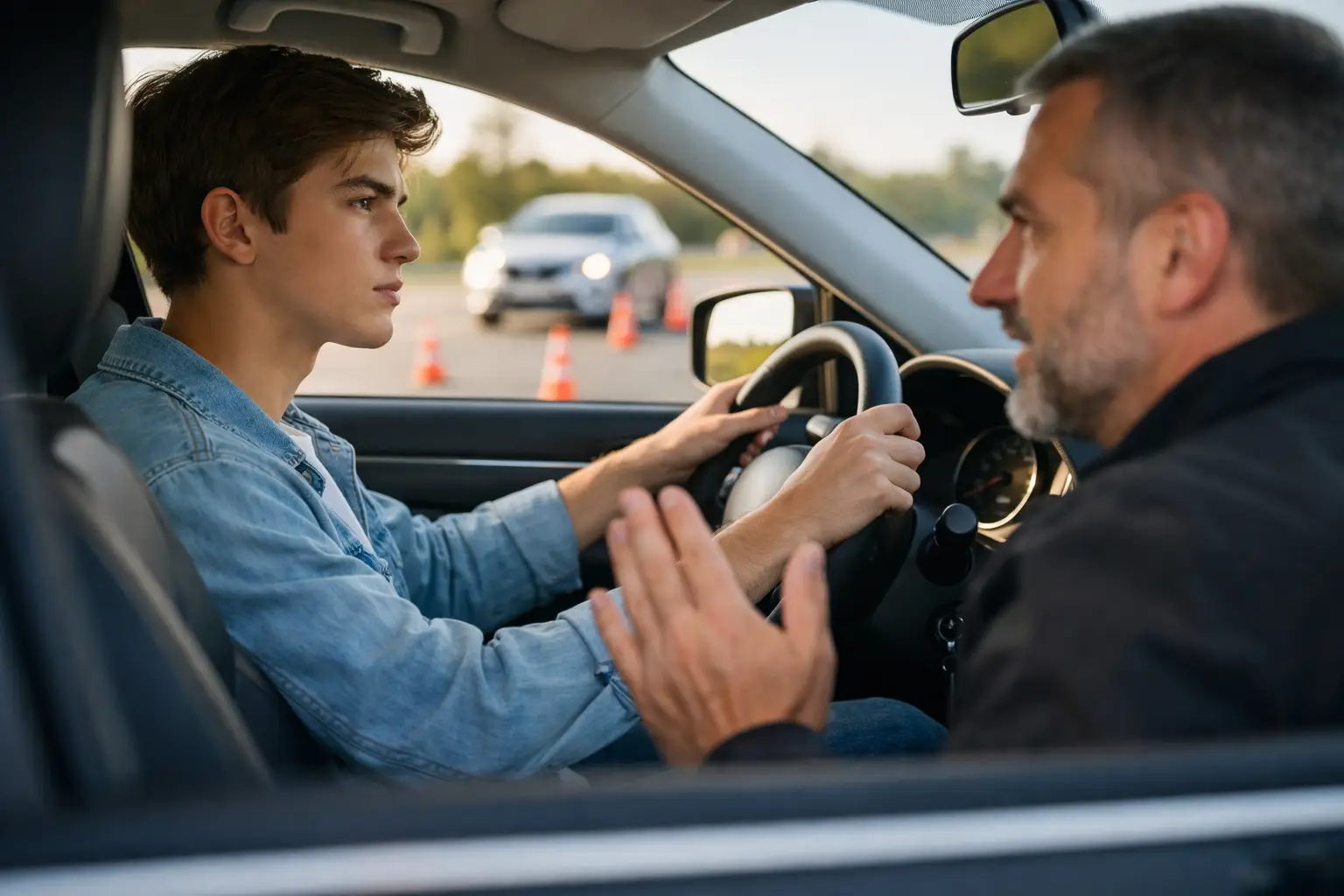
A teenager can do everything right at a green light and still be the one dealing with a driver who runs red. That is why defensive driving for teenagers matters from the first hour behind the wheel, not after a close call. New drivers do not just need to know the rules. They need to recognize risk early, make calm decisions, and stay in control when traffic does something unexpected.
For teens, the challenge is rarely one single skill. It is managing speed, mirrors, signs, pedestrians, cyclists, parked cars, and pressure from other drivers at the same time. A structured approach helps. When students learn in a step-by-step way, they start to see driving as a process of observation, prediction, and response rather than just steering and braking.
What defensive driving for teenagers really means
Defensive driving is not timid driving. It is controlled, alert, and deliberate driving. A defensive teen driver watches for hazards before they become emergencies, leaves enough following distance to react, checks intersections even with the right of way, and expects that other road users may make poor decisions.
That mindset matters because teenagers are still building driving experience. They may react well in a quiet neighborhood, then feel overloaded in heavier traffic, at complex intersections, or in poor weather. Defensive habits reduce that overload. Instead of reacting late, the driver learns to scan sooner, identify problems earlier, and make smaller, safer adjustments.
There is also a confidence benefit. Real confidence does not come from feeling fearless. It comes from knowing what to look for and what to do next. Teens who are taught defensive driving properly tend to feel more settled because they are not relying on guesswork.
Why teenage drivers face different risks
Teen drivers are capable of becoming excellent drivers, but they begin with one obvious disadvantage: limited seat time. Experience teaches pattern recognition. An experienced driver notices a car edging forward at a stop sign and predicts that it may pull out. A new driver may not read that clue quickly enough.
Teenagers also face social pressure that older drivers may not feel as strongly. Friends in the car, pressure to keep up with traffic, and the urge to avoid looking hesitant can all affect judgment. Sometimes the risky choice is not aggressive driving. Sometimes it is simply refusing to slow down because the driver behind seems impatient.
Then there is distraction. Phones are the obvious issue, but distraction also includes conversations, music, navigation, and stress. For a new driver, even a quick glance away from the road can create a serious gap in awareness. Defensive driving teaches teens to protect their attention as carefully as they protect their lane position.
The habits that matter most
The best defensive drivers do a few basic things consistently. They scan well ahead instead of staring just over the hood. They check mirrors often enough to know what is happening behind and beside them. They keep space around the vehicle so they have time to respond.
Following distance is one of the biggest examples. Teens often underestimate how little time they have when traffic stops suddenly. Leaving more space feels unnecessary until it is needed. The same goes for speed control. Driving at the limit is not always the safe choice if visibility is poor, roads are wet, or traffic flow is unstable.
Intersection awareness is another major skill. Many collisions happen where roads meet, and new drivers often focus only on the traffic light or the car ahead. Defensive drivers check left, right, and ahead, watch for late yellow decisions, and stay ready for pedestrians or turning vehicles that do not follow the expected path.
Lane changes deserve the same level of discipline. Mirrors alone are not enough. A proper check includes mirror use, signal timing, and a shoulder check before movement. Teens who rush this process usually are not being careless on purpose. They are trying to do everything quickly. Good instruction slows the process down until it becomes accurate and repeatable.
Defensive driving in real conditions
A teenager may look comfortable in daylight on dry roads, then feel completely different in rain, darkness, or heavy traffic. That does not mean the student is not progressing. It means conditions change the level of demand.
Wet roads increase stopping distance. Night driving reduces depth perception and makes hazards harder to identify early. Busy parking lots require low-speed control, patience, and constant observation. School zones, downtown turns, and multilane roads all test different parts of a teen driver’s attention.
This is where structured training makes a difference. Students need exposure to different traffic environments with instructor feedback that is immediate and specific. A teen might hear, “You braked in time, but you saw the hazard late,” or, “Your turn was legal, but your approach speed was too fast for the crosswalk.” That kind of coaching helps students connect the rule to the real-world situation.
How parents can support defensive driving without adding pressure
Parents play a major role in shaping habits, but practice only helps when it is calm and consistent. If every drive turns into a lecture, most teens will focus on avoiding criticism instead of learning. Clear expectations work better than constant correction.
It helps to practice one priority at a time. One drive can focus on lane position and mirror checks. Another can focus on smooth stops and following distance. Short, purposeful sessions usually teach more than a long drive filled with too many instructions.
Parents also need to model the same standards they expect. If a teen is told to avoid phone use, signal early, and stop fully, those habits should be visible in the family car every day. New drivers notice the gap between what adults say and what adults actually do.
There is also value in professional instruction because it removes some emotional friction. Teens often respond better when expectations come from a trained instructor with a clear lesson plan. Turn by Turn Driving School takes that structured approach seriously because safer habits are easier to build when the training is consistent from classroom learning to in-car lessons.
Why formal training improves defensive driving for teenagers
Informal practice has value, but it often depends on who is teaching and what they remember to cover. Professional training is different. It follows a sequence. Students learn not only what to do, but why it matters, when it matters most, and how to repeat it under pressure.
A strong program combines theory with road application. Hazard detection, speed management, right-of-way decisions, and visual scanning should not stay as abstract concepts. They need to be practiced in traffic, corrected in the moment, and reviewed until they become habits.
This is especially important for nervous drivers. Anxiety usually gets worse when expectations are vague. It gets better when students know the skill being practiced, the standard they are working toward, and the next step after that. A structured lesson format gives teens a clear path from beginner mistakes to road-ready performance.
Signs a teen is learning the right way
Progress is not just about parking well or passing a road test. A defensively trained teen starts to comment on traffic risks before the instructor points them out. They ease off the gas when visibility narrows. They notice stale green lights, crowded crosswalks, and drivers who look uncertain at merges.
You also see smoother control. Good defensive driving often looks less dramatic because the driver is avoiding last-second decisions. Braking becomes more gradual, turns are better planned, and lane changes happen with more awareness and less hesitation.
That said, improvement is rarely perfectly linear. A teen may do very well one day and seem less confident the next, especially in unfamiliar conditions. That is normal. What matters is whether the driver is building repeatable judgment, not just having occasional good drives.
The goal is not just passing a test
A road test matters, but it is only one checkpoint. The bigger goal of defensive driving for teenagers is long-term safety and responsibility. A newly licensed driver will face situations no lesson can reproduce exactly. What training can do is prepare them to slow down, assess the risk, and make sound decisions without panic.
That is what creates safe, responsible drivers for life. Not bravado. Not shortcuts. Not the hope that experience will somehow fix bad habits later. The best time to build defensive habits is at the beginning, when students are still forming how they think behind the wheel.
If a teen learns early to stay alert, manage space, and expect the unexpected, they carry those skills into every school commute, highway merge, rainy evening, and busy intersection ahead. That kind of preparation stays valuable long after the license is issued.
Comments are closed