



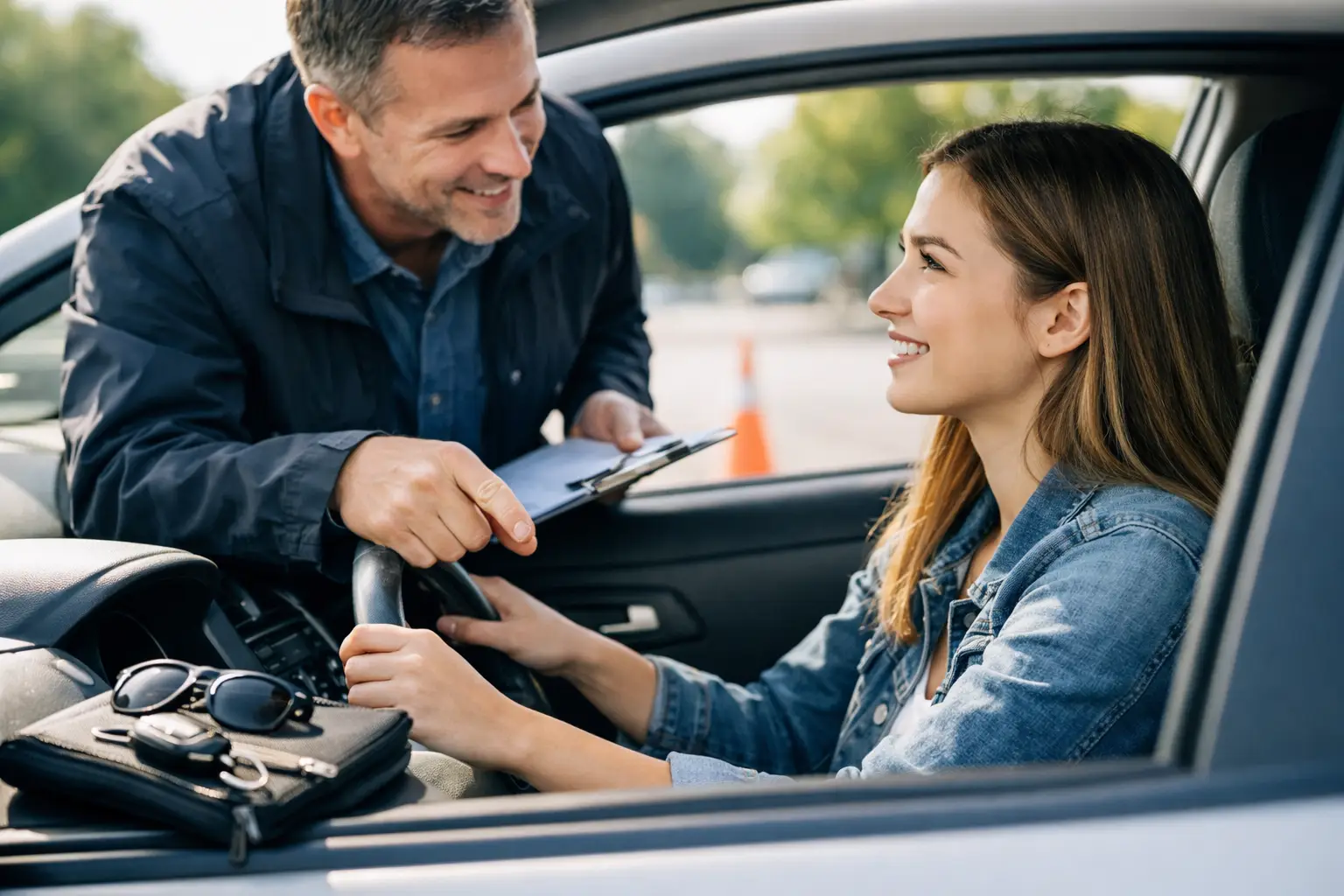
Your first driving lesson is not a road test, and your instructor does not expect you to arrive already knowing how to drive. The purpose of the lesson is to establish safe habits from the beginning: correct seating, controlled steering, effective observation, and calm decision-making. Knowing how to prepare for first driving lesson can replace a lot of pre-lesson nerves with a clear plan.
For new Alberta drivers, the goal is not simply to get the vehicle moving. It is to start building the awareness and responsibility required for every drive that follows. A little preparation helps you use your lesson time well and gives your instructor the information needed to support you at the right pace.
Confirm the practical details before lesson day
Start by checking your booking time, pickup location, and any instructions provided by your driving school. Plan to be ready a few minutes early. Rushing to meet your instructor can make an already unfamiliar experience feel more stressful.
You will need your valid Alberta learner’s license, commonly called a Class 7 license, before operating the vehicle. Keep it somewhere secure and easy to find, such as a wallet or card holder. If you wear prescription glasses or contact lenses for driving, bring them and use them. Your license conditions must be followed every time you drive, including during professional instruction.
If your lesson begins at home, make sure the pickup area is accessible and safe. If it begins at school, work, or another location, choose a clear, legal meeting point where the instructor can stop without creating a hazard. Let the school know in advance if your pickup details change.
Get a proper night’s sleep
Driving asks more of your attention than most new learners expect. You will be watching traffic, listening to instruction, checking mirrors, judging speed, and learning vehicle controls at the same time. Fatigue makes all of that harder.
Try to get enough rest the night before and eat something light before the lesson. Avoid arriving overly hungry, dehydrated, or loaded with caffeine. A steady, alert state is more useful than trying to force yourself into feeling energized.
Wear clothing that supports safe control
You do not need special driving clothes, but what you wear affects how comfortably and safely you can operate the pedals and steering wheel. Choose clothing that lets you sit, turn your upper body, and move your legs freely.
Footwear matters most. Wear flat, secure shoes with a thin enough sole to feel the brake and accelerator properly. Running shoes are often a practical choice. Avoid high heels, loose slides, heavy boots that limit ankle movement, or footwear that could slip off around the pedals.
Bring a light jacket if Calgary weather is unpredictable, but avoid bulky outerwear that makes it difficult to sit back against the seat or move your shoulders. You should be able to wear your seat belt comfortably and turn your head fully for shoulder checks.
Know what your first driving lesson will cover
Many anxious learners imagine being placed directly into fast traffic. A structured first lesson is normally more controlled than that. Your instructor will assess your experience, explain the plan, and begin in an environment that matches your current ability.
Before moving, expect to learn or review the vehicle setup. This includes adjusting the seat, head restraint, steering wheel, and mirrors; locating the signals, wipers, lights, parking brake, and defrost controls; and understanding the basic dashboard indicators. You will also learn the correct seating position and hand placement for controlled steering.
From there, early instruction may include smooth starts and stops, steering through simple turns, maintaining lane position, checking mirrors, signaling, and making shoulder checks. The exact sequence depends on your experience level, traffic conditions, weather, and how quickly you demonstrate control. A learner who has never driven may begin in a quiet area. Someone with family practice may move sooner into more varied roads.
That flexibility is a strength of professional instruction. You do not need to perform at someone else’s pace. You need to make safe decisions at your own developing level.
Prepare your mindset, not just your documents
Feeling nervous before driving for the first time is normal. It usually means you understand that driving carries real responsibility. The goal is not to eliminate every nervous feeling. The goal is to keep those feelings from taking over your attention.
Give yourself permission to be a beginner. You may stall, brake too firmly, forget a signal, or need a reminder about mirror checks. Those are learning moments, not proof that you cannot drive. Your instructor is there to identify errors early, explain why they matter, and help you correct them before they become habits.
It also helps to avoid making the lesson a performance for a parent, friend, or social media audience. Keep the focus on the instructor’s directions and the road environment. Confidence comes from repeated safe actions, not from trying to look experienced on day one.
Tell your instructor what you are worried about
At the beginning of the lesson, be honest about your experience. Say whether you have never sat behind the wheel, have practiced in a parking lot, have driven in another country, or are returning after a long break. Mention any concern that could affect your comfort, such as busy intersections, highway traffic, left turns, winter driving, or anxiety about making mistakes.
Clear communication allows your instructor to adapt the lesson while maintaining safety. It also prevents assumptions. A student who says, “I have practiced, but I am not comfortable with turns,” gives the instructor a useful starting point.
Ask questions when a direction is unclear. Good driving instruction is not about memorizing commands. It is about understanding the reason behind a scan, a space cushion, a speed choice, or a lane position. That understanding is what helps you make sound decisions when an instructor is no longer beside you.
Review a few basics, but do not overload yourself
You do not need to study every road rule the night before your lesson. Trying to memorize an entire driver’s guide can create more pressure than confidence. If you have time, review a few essentials: common signs and signals, right-of-way concepts, speed limits, and the importance of scanning ahead.
Your online classroom learning can support what happens in the vehicle, especially when it covers defensive driving, hazard detection, and Alberta road rules. Still, treat the first in-car lesson as a chance to connect that knowledge with real movement, real traffic, and real decision-making.
One useful concept to keep in mind is that safe driving is active. You are not just reacting when something goes wrong. You are looking well ahead, checking mirrors regularly, leaving space, and noticing potential hazards before they become urgent. That habit takes time to develop, which is why consistent multi-day lessons and supervised practice matter.
Set realistic goals for the lesson
A productive first lesson does not need to end with perfect parking or complicated traffic maneuvers. A better goal is to leave with a clearer understanding of the vehicle and one or two skills that feel more controlled than they did at the start.
For example, you may aim to become comfortable adjusting the vehicle, making smooth stops, or completing turns with proper observation. Your instructor may identify a different priority based on what they see. Accept that guidance. Building the right foundation first is more valuable than rushing ahead to advanced skills.
After the lesson, take a few minutes to reflect. What instruction helped? Which action felt difficult? What should you practice next time? Write down a short note if that helps you remember. If you will practice with a supervising driver between lessons, share the specific skills your instructor recommends rather than simply driving without a plan.
Plan for changing Calgary conditions
Alberta driving conditions can change quickly. Rain, snow, glare, ice, construction, and reduced visibility all affect how a first lesson is taught. Check the weather before you leave, but do not assume a lesson must be canceled because conditions are less than perfect. With an Alberta-licensed instructor, appropriate conditions can provide valuable supervised experience in adjusting speed, following distance, and observation.
That said, safety comes first. Your school will make the appropriate decision if conditions are severe or travel is unsafe. Be reachable before your appointment and follow any scheduling instructions you receive.
Turn by Turn Driving School approaches first lessons as the starting point for safe, responsible driving for life. Arrive rested, bring your license, wear secure footwear, and be ready to listen and ask questions. The rest does not have to be perfect before you get in the driver’s seat – it is what you are there to learn.
Comments are closed