



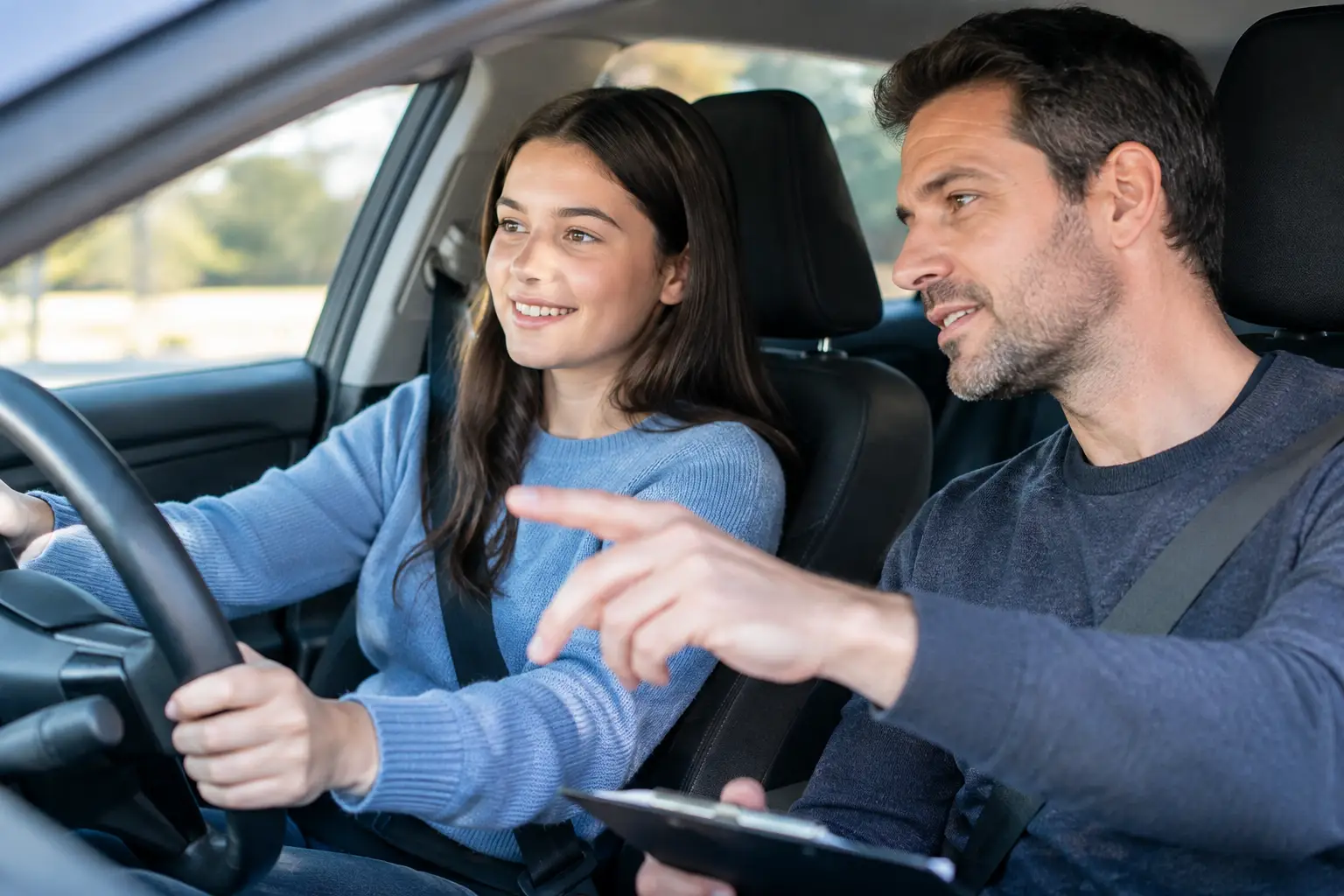
A calm parking lot, an experienced instructor, and a supportive family member can all play a valuable role in a new driver’s progress. Instructor family practice works best when each person has a clear job: the instructor teaches correct technique and road-test standards, while family practice gives the student safe repetition between lessons.
For Calgary learners preparing for Alberta’s Class 5 GDL road test, more driving time is helpful only when it reinforces the right habits. Repeating an uncontrolled turn, rushed lane change, or incomplete shoulder check can make a student less prepared, not more. A structured plan keeps practice productive and helps drivers build confidence without guessing what “good driving” looks like.
Why Instructor Family Practice Builds Better Drivers
Professional lessons and family practice solve different parts of the learning process. An Alberta-licensed driving instructor can identify the small errors that new drivers often miss: stopping too far from an intersection, entering a lane too early, braking too late, or failing to scan far enough ahead. In-car lessons also introduce students to progressively more demanding traffic situations with clear coaching.
Family members provide something equally valuable: additional time behind the wheel. A two-hour lesson can teach a maneuver correctly, but a student may need several more drives to make that skill feel natural. Short, focused practice sessions help turn instruction into consistent habits.
The challenge is that family members may have driving habits that differ from current road-test expectations or Alberta traffic rules. Many experienced drivers developed their routines years ago. They may use an informal rolling stop, steer one-handed, or give directions too late for a nervous learner to process. That does not mean family practice should be avoided. It means practice should follow a shared plan.
Start With a Clear Practice Role
Before the first home practice drive, agree on what the supervising driver will do and what they will not do. The goal is not to create a second instructor with a different teaching style. The goal is to give the student a calm, predictable environment to repeat skills already introduced in professional lessons.
The supervising driver should choose a route that matches the student’s current ability. For an early learner, that may mean a quiet residential area, a low-traffic industrial road, or an empty parking lot where they can practice steering, braking, parking, and observation. A student who has already practiced city driving with an instructor may be ready for busier intersections, lane changes, and higher-speed roads.
Keep directions short and early. Instead of saying, “Turn right here, watch that car, slow down, do not forget your signal,” give one instruction at a time: “At the next intersection, turn right.” The student needs time to scan, signal, position the vehicle, and complete the turn with control.
If a situation becomes too difficult, it is appropriate to pull over safely and reset. Pushing through panic does not build confidence. Successful practice usually feels slightly challenging, not overwhelming.
Confirm Supervision Requirements
Learners must follow Alberta’s current licensing and supervision rules whenever they practice. Requirements can vary by license stage, so families should confirm that the supervising driver is eligible and that the vehicle is properly insured, registered, and safe to operate.
The student should also carry the appropriate license and follow all restrictions that apply to that license stage. Family practice is not a substitute for understanding Alberta’s Graduated Driver Licensing requirements. It is an opportunity to apply them responsibly.
Use a Simple Plan After Every Lesson
The most effective family practice happens soon after an instructor-led lesson. Ask the student what they learned, what felt difficult, and what their instructor asked them to continue practicing. This keeps the practice session connected to their training rather than turning into an unplanned drive around the neighborhood.
A useful session has one primary goal and one secondary goal. For example, the primary goal may be smooth, complete stops at controlled intersections. The secondary goal may be consistent mirror checks before slowing down. On another day, the focus might be left turns at traffic lights and proper lane position.
Avoid trying to correct every detail at once. New drivers are already managing speed, steering, signs, other vehicles, pedestrians, and navigation. If the supervising driver comments on every movement, the student may stop processing what matters most. Address the highest-priority safety concern first, then choose one or two habits to improve on the next drive.
A short written note after practice can help. Record the route, road conditions, skills practiced, and one improvement for next time. This gives the student a visible record of progress and helps family members see whether the learner is ready for more complex driving.
Practice Skills in the Right Order
New drivers build confidence faster when practice progresses from simple tasks to real traffic decisions. Parking lots and quiet streets are useful starting points, but students eventually need controlled exposure to the situations they will encounter on Calgary roads and during a road test.
Begin with vehicle control: smooth braking, gentle acceleration, steering through turns, correct lane position, signaling, and mirror use. Once these actions require less conscious effort, move to intersections, residential driving, school and playground zones, and routine lane changes.
The next stage may include heavier traffic, multi-lane roads, merging, changing lanes around buses or large vehicles, and managing busy commercial areas. Weather and visibility should also be part of the plan. Calgary drivers need to understand how rain, snow, ice, darkness, glare, and reduced visibility affect following distance, braking, and speed choice.
Not every practice drive needs difficult conditions. A student who is still learning basic control should not be placed in rush-hour traffic or on icy roads simply to gain experience. The right level of challenge depends on the student’s readiness, their instructor’s guidance, and the conditions that day.
Keep Feedback Calm and Specific
The tone inside the vehicle matters. A learner who expects criticism may become tense, brake abruptly, or stop making decisions. A calm supervising driver helps create the same controlled mindset students need when driving independently.
Use specific feedback based on what happened. “You checked your mirror before braking, which gave the driver behind us more warning” is more useful than “Good job.” Likewise, “Start your shoulder check before moving toward the lane line” is clearer than “Watch your blind spot.”
When correcting an error, describe the safer alternative without turning the moment into an argument. For example: “That stop was a little late. Next time, begin easing off the accelerator earlier so you can brake smoothly before the line.” This teaches the student what to do next time.
Family members should also avoid comparing the learner to siblings, friends, or their own early driving experiences. Progress is not always linear. A student may perform well one day and struggle the next because of fatigue, unfamiliar traffic, weather, or nerves. Consistent coaching matters more than a perfect drive.
Know When to Return to an Instructor
Family practice is excellent for repetition, but it should not be used to work through confusion that continues from drive to drive. If a student repeatedly struggles with lane changes, uncontrolled intersections, parallel parking, highway merging, or speed management, an instructor can diagnose the cause and provide a structured correction.
Professional feedback is especially useful before a road test. Students often feel ready because they can drive familiar routes with family, but a road test requires them to demonstrate safe decisions on unfamiliar roads while managing examiner directions and test-day nerves. A road test preparation lesson can identify habits that may affect the result before test day.
Turn by Turn Driving School combines instructor-led in-car training with a self-paced online classroom program so students can connect road rules, hazard detection, and defensive driving decisions with real-road practice. Families can support that progress by reinforcing the same safe routines between lessons.
The strongest new drivers are not the ones who simply log the most hours. They are the ones who use each practice drive with purpose, accept feedback, and build the calm judgment needed to drive safely and responsibly for life.
Comments are closed