


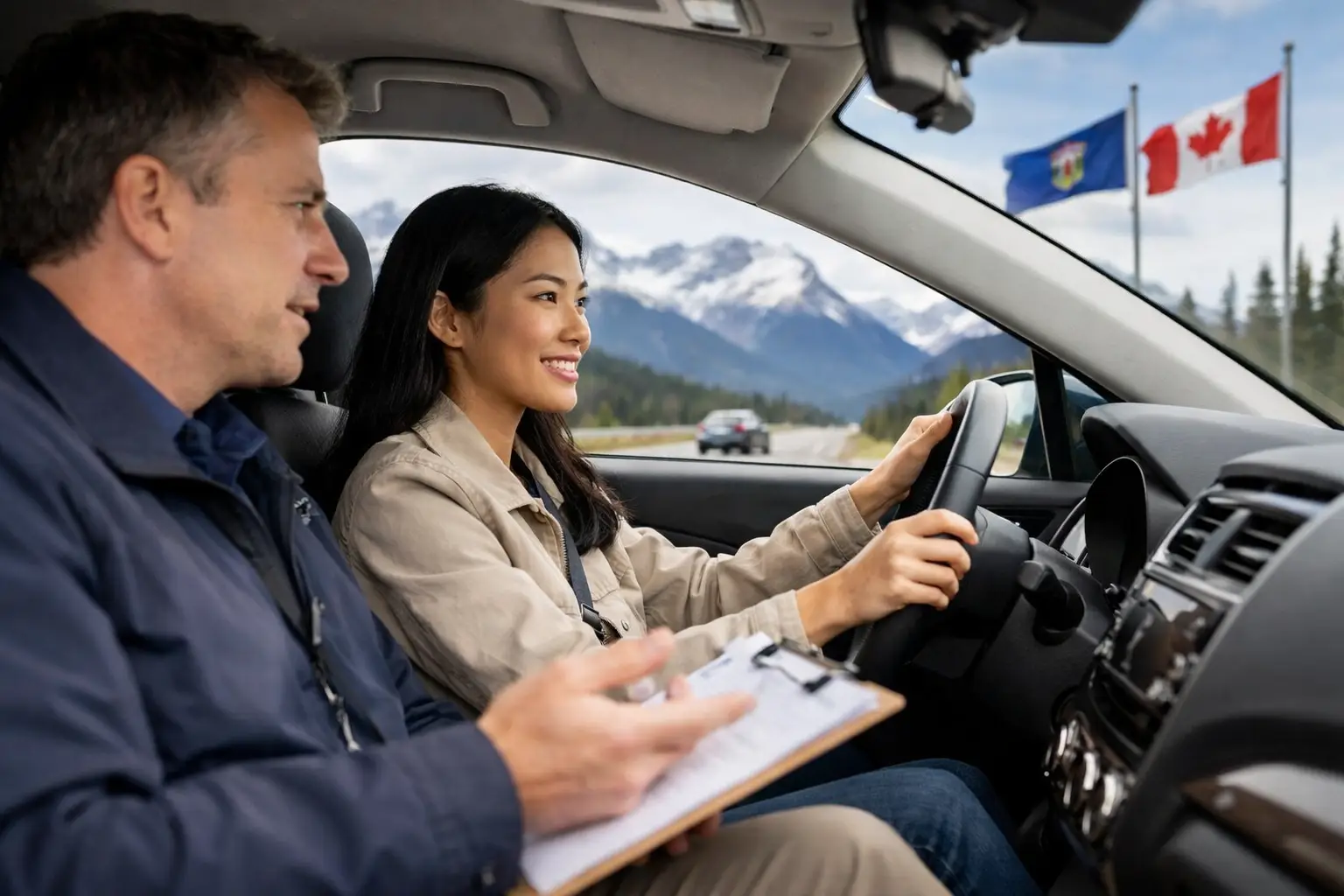
A valid license from another country can show that you have driving experience. It does not automatically mean Alberta traffic patterns, winter conditions, road-test expectations, or right-of-way rules will feel familiar. So, can international drivers take lessons in Alberta? Yes. In fact, focused in-car instruction is often one of the most practical ways to turn prior experience into confident, safe driving on Calgary roads.
International drivers take lessons for different reasons. Some are preparing for an Alberta road test. Others can legally drive for a limited period but want help adjusting before commuting, driving with family, or handling busy roads independently. A refresher lesson can identify the habits that transfer well and the areas that need attention before they create risk.
Can International Drivers Take Lessons in Alberta?
Yes. Alberta driving schools can provide lessons to internationally licensed drivers, visitors, newcomers, and experienced adults returning to driving. The right lesson depends on your goal: becoming familiar with Alberta driving rules, preparing for a knowledge or road test, improving confidence, or building safe habits for local conditions.
You do not need to be a complete beginner to benefit from professional instruction. Many experienced drivers find that the hardest part is not vehicle control. It is understanding what Alberta expects at intersections, in school and playground zones, at uncontrolled crossings, during lane changes, and on a road test.
An instructor can assess your starting point instead of assuming you need the same training as a first-time driver. That matters because a driver with years of experience may need a targeted brush-up lesson, while someone who has driven only occasionally may benefit from a more structured plan with several two-hour sessions.
Your Foreign License and Alberta Driving Rules
Your ability to take lessons is separate from your legal ability to drive independently in Alberta. Requirements can vary based on your country of licensing, immigration or residency status, the class of license you hold, and how long you have been living in Alberta.
Some newcomers may be eligible to exchange a license from certain jurisdictions. Others may need to complete Alberta testing. Visitors may be allowed to drive for a period with a valid license from home, sometimes with additional documentation such as an International Driving Permit when the license is not in English or French. Because these rules and exchange agreements can change, confirm your current status with an Alberta registry agent before making decisions about your licensing timeline.
Driving lessons remain valuable in either situation. Even if you are eligible to exchange your license, training can help you adapt to local rules and reduce the stress of driving in an unfamiliar city. If you need to earn an Alberta Class 5 license, lessons provide a direct way to practice the skills that evaluators look for.
Bring the right documents to your first lesson
Before booking, be ready to discuss the license you currently hold, your driving history, and your objective. Bring your valid driver’s license and any required identification or licensing documents. If you already have an Alberta learner’s license, bring that as well.
A professional driving school will also need to confirm that you are legally permitted to operate the training vehicle. Being clear about your status from the start helps your instructor recommend the appropriate lesson or package and prevents surprises close to a road test.
Why Experienced Drivers Still Need Alberta-Focused Training
Drivers do not carry rules from one country to another unchanged. Small differences can have major consequences. A driver may be used to different lane discipline, turning rules, pedestrian priority, traffic-circle behavior, speed-sign conventions, or parking expectations.
In Calgary, drivers also need to prepare for conditions that may not exist where they learned. Snow-packed residential streets, reduced visibility, black ice, sudden temperature changes, and longer braking distances require calm judgment and early decisions. Defensive driving is not simply driving slowly. It means scanning ahead, managing space, recognizing hazards early, and maintaining control when another road user makes an unexpected move.
A lesson gives you a controlled setting to correct habits without putting friends, family, or other road users in a difficult position. Your instructor can explain the reason behind a correction, then have you repeat the maneuver until it becomes consistent. That is particularly useful for shoulder checks, merging, parallel parking, left turns across traffic, and approaching intersections with limited visibility.
What International Driver Lessons Should Cover
A strong refresher program should begin with an assessment drive. This is not about criticizing prior experience. It is about identifying what is already working and building a practical plan around what Alberta roads demand.
For many international drivers, the first lesson focuses on observation, speed control, lane position, signs and signals, intersection approaches, and right-of-way decisions. From there, training can move to busier routes, lane changes, merging, residential driving, parking, and road-test routes where appropriate.
Road-test preparation should include more than memorizing a route. Test examiners assess safe, legal, controlled driving throughout the appointment. You need to demonstrate clear observation, proper signaling, smooth braking, appropriate speed selection, complete stops, correct turns, and sound decisions around pedestrians and traffic.
At Turn by Turn Driving School, brush-up and refresher lessons are designed for experienced and internationally licensed drivers who want Alberta-specific guidance. Lessons are delivered by Alberta-licensed instructors, with practical coaching focused on defensive driving, hazard detection, and real-road confidence.
Choosing Between a Refresher Lesson and a Full Course
The right level of training depends on your experience and licensing goal. A single refresher lesson may be enough if you are a confident, active driver who needs help understanding local expectations before driving regularly or taking a test.
A multi-lesson plan is often the better choice if you have not driven recently, feel anxious in traffic, are unfamiliar with winter driving, or have been unsuccessful on a previous road test. More time allows you to practice, receive feedback, and return to the same skills after you have had time to absorb the instruction.
A full driver education package can make sense if you are beginning Alberta’s graduated licensing process or need structured support from theory through in-car training. These programs typically combine online classroom learning with scheduled driving lessons, creating a clear path from rules and regulations to real-road execution.
There is a trade-off to consider. A short program may cost less and solve a specific problem quickly, but it cannot replace repeated practice when several core skills need work. The goal is not to purchase more hours than you need. It is to choose enough instruction to drive safely and meet your licensing objective with confidence.
How to Prepare for Your First Alberta Lesson
Come ready to learn rather than ready to prove you already know how to drive. That mindset makes progress faster. Tell your instructor about the side of the road you drove on previously, the type of vehicle you normally use, any past collisions or near-misses that affected your confidence, and the date of any upcoming road test.
Wear comfortable footwear that allows you to feel the pedals properly. Avoid booking a lesson immediately after a long flight or overnight shift if possible. Driving in an unfamiliar environment requires concentration, and fatigue can make it harder to absorb corrections.
Between lessons, review Alberta signs and rules, then practice only within the conditions of your license and with an appropriate supervising driver if required. Focus on one or two instructor recommendations at a time. Consistent observation and controlled speed will do more for your safety than trying to perfect every maneuver in one day.
Build Confidence Before You Need It
International driving experience is valuable, but safe driving in Alberta requires local knowledge, sound judgment, and habits that hold up under pressure. Professional instruction gives you an opportunity to adapt before a difficult intersection, icy morning, or road test exposes a gap in your preparation.
The best time to take a lesson is not after confidence has dropped. It is when you are ready to make Alberta roads feel familiar, predictable, and manageable.
Comments are closed