



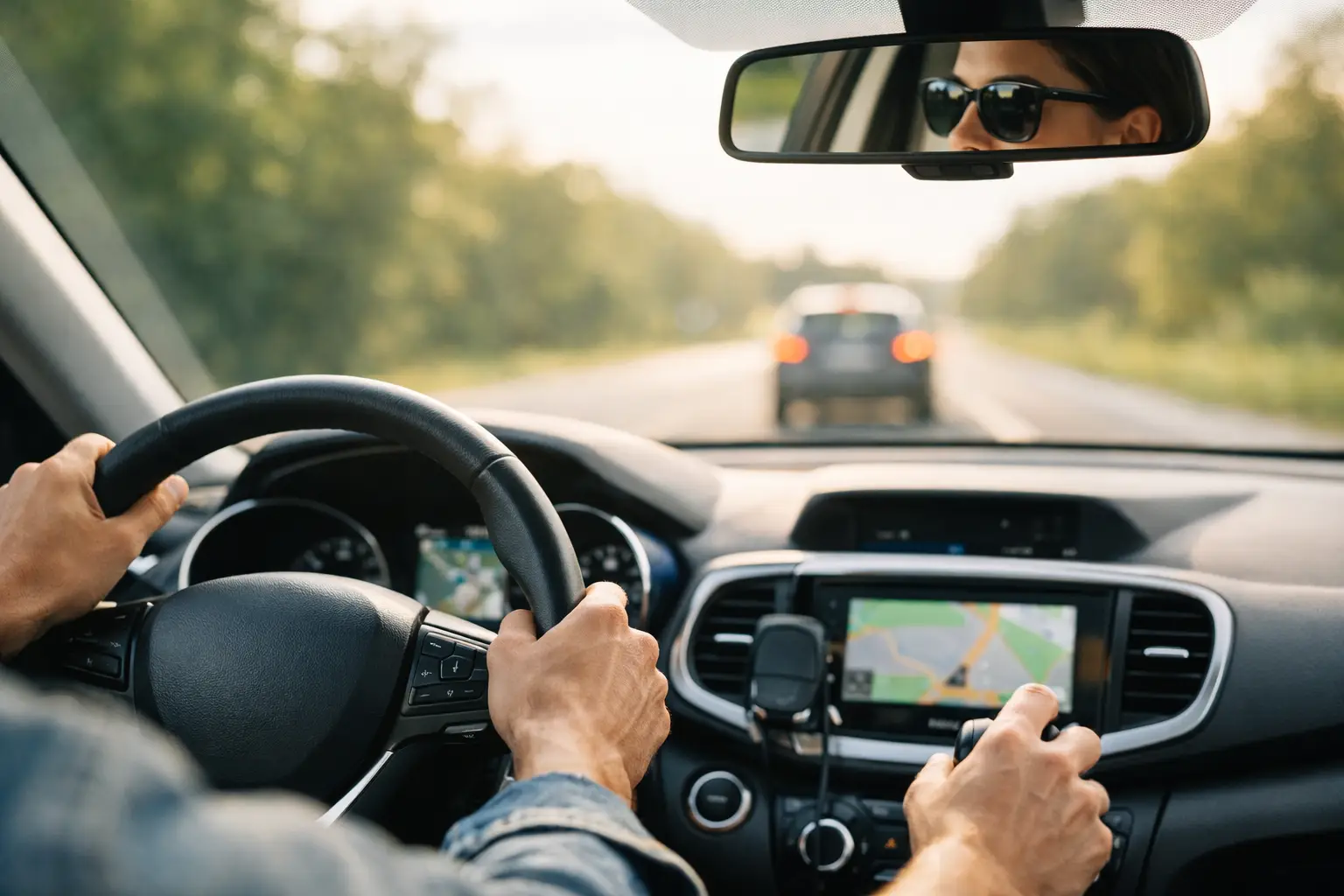
A safe drive is usually decided before the vehicle moves. The seat is adjusted, the mirrors are set, the phone is put away, and the driver has a plan for the first few minutes. Learning how to build safe driving routines means turning those small choices into habits you can rely on when traffic is busy, weather changes, or nerves start to rise.
For new drivers, routines reduce the number of decisions you must make at once. For returning or internationally licensed drivers, they create a practical way to align familiar driving skills with local roads, signs, and expectations. The goal is not to drive cautiously in a way that holds up traffic. The goal is to drive with safety, control, and consistent awareness.
Start Every Trip the Same Way
A repeatable pre-drive routine gives you a stable starting point. Do it before leaving a parking spot or curb, not while rolling toward the exit.
Begin by adjusting your seat so you can fully press the brake pedal without stretching and can hold the steering wheel with a relaxed bend in your arms. Set the head restraint near the back of your head. Then adjust your mirrors to limit blind spots, fasten your seat belt, and confirm that passengers are secured.
Next, remove distractions before driving. Set navigation, choose music, place your phone out of reach, and make sure loose items will not slide under the pedals. If you need to answer a message or change your route, pull over safely first. A hands-free call can still take attention away from traffic, so it is usually better to wait.
Finish with a 360-degree check. Look ahead, check the rearview and side mirrors, and scan around the vehicle for pedestrians, bikes, shopping carts, animals, or vehicles that may be moving nearby. This matters most in parking lots, residential streets, and school areas, where hazards can appear quickly and from either side.
Build Safe Driving Routines Around Your Vision
Safe drivers do not stare at the bumper of the vehicle ahead. They keep their eyes moving with purpose. This gives them time to recognize a problem early and respond smoothly instead of reacting at the last second.
Use a simple visual pattern: look far ahead, check mirrors, return your attention ahead, and scan intersections and roadside areas. On a clear road, look well beyond the next vehicle so you can spot slowing traffic, changing lights, construction, or a developing backup. Your mirrors should be checked regularly, especially before braking, turning, changing lanes, or reducing speed.
At intersections, do not assume a green light guarantees a clear path. Scan left, center, and right as you enter. Watch for drivers turning across your lane, cyclists continuing straight, and pedestrians stepping into a crosswalk late. When a light turns green, take a moment to confirm cross traffic has stopped before proceeding.
Blind-spot checks are equally routine. Mirrors show a great deal, but they cannot show every vehicle, cyclist, or motorcycle beside you. Signal early, check mirrors, shoulder-check in the direction you intend to move, and then make one smooth lane change when space is available. Avoid drifting or moving halfway into another lane while deciding.
Give Yourself Space to Make Good Decisions
Following distance is one of the most useful safety habits a driver can build. It creates time to see, think, and act. When the road is dry and visibility is good, choose a fixed object ahead and make sure there is a meaningful gap between the vehicle in front passing it and your vehicle reaching it. Increase that gap when conditions are less predictable.
Rain, snow, ice, darkness, glare, heavy traffic, and unfamiliar roads all require more space and a lower speed. In Calgary and surrounding areas, winter conditions can change quickly. A route that was dry in the afternoon may become slick after sunset, especially on bridges, ramps, shaded streets, and intersections.
Space also applies to the sides and rear of your vehicle. Avoid driving beside another vehicle for long periods when you can safely move ahead or fall back. If someone follows too closely, do not brake suddenly to make a point. Keep your focus forward, increase your own following distance, and change lanes or allow the driver to pass when it is safe.
Make Speed Control a Habit, Not a Guess
Speed limits set a legal maximum for suitable conditions. They are not a promise that the posted number is always safe. A responsible driver matches speed to visibility, traffic flow, road surface, and the amount of information they can process.
Build a routine of checking your speedometer after turns, lane changes, entering a new road, and coming down a hill. These are common moments when speed gradually rises without the driver noticing. In school zones, playground areas, construction zones, and residential neighborhoods, look actively for signs and adjust early rather than braking sharply at the last moment.
Smooth braking is another routine worth practicing. Lift off the accelerator early when you see a red light, stopped traffic, or a tight turn ahead. This gives drivers behind you a clearer signal and reduces the need for abrupt braking. It also helps you maintain better vehicle control on wet or icy pavement.
Use a Reliable Routine for Turns and Lane Changes
Turns and lane changes combine several skills: observation, signaling, speed control, positioning, and judgment. A consistent sequence prevents missed steps.
For either maneuver, begin early. Check mirrors, signal with enough notice for others to understand your intention, and scan for pedestrians, cyclists, and vehicles in blind spots. For a turn, move into the correct lane well before the intersection, slow to an appropriate speed, and look through the turn toward where you want the vehicle to go. Keep your steering smooth and finish in the correct lane.
For a lane change, do not rely on another driver to create room. Wait for a safe gap, maintain a steady speed where possible, and move decisively but gradually. If the gap disappears, stay in your lane and try again later. Missing an exit is inconvenient. Making a rushed lane change is unsafe.
Practice Hazard Detection on Every Drive
Hazard detection is the skill of noticing what could become a problem before it becomes an emergency. It is central to defensive driving and grows through deliberate practice.
As you drive, quietly identify potential hazards: a vehicle waiting to turn left, a child near the curb, a parked car with occupants inside, tire spray reducing visibility, or a driver approaching an intersection too quickly. Ask yourself, “Where could I go if this changes?” You may not need to take action, but preparing early keeps your decisions calm.
New drivers sometimes focus so hard on staying centered in their lane that they miss the larger traffic picture. If that sounds familiar, start with shorter practice drives on familiar routes. Repeat the same route at different times of day, then add more complex situations such as busier intersections, freeway merges, parking lots, and nighttime driving. Skill develops best when the challenge increases gradually.
Plan for Conditions, Not Just the Destination
A safe routine includes a quick plan before longer trips. Check the weather, allow extra time, and choose a route you understand. If you are unfamiliar with an area, review the route before leaving so navigation instructions do not become a distraction at a complicated intersection.
Vehicle readiness matters too. Keep fuel or battery charge at a sensible level, ensure windows and lights are clear, and use tires appropriate for the conditions. In winter, clear all snow and ice from the vehicle, not just a small section of the windshield. Snow left on the roof can slide forward under braking and block your view.
There are times when the safest decision is to delay a trip, choose another route, or ask for help. This is not a lack of confidence. It is sound judgment. Driving independently includes knowing when conditions exceed your current experience.
Review, Practice, and Improve
After a drive, take one minute to reflect. Did you miss a mirror check before braking? Did a busy intersection make you uncertain? Were you too close to the vehicle ahead? Choose one skill to improve on the next drive rather than trying to correct everything at once.
Structured instruction can make this process much clearer. An experienced instructor can identify habits you may not notice, explain Alberta road-test expectations, and provide practice in the situations that challenge you most. At Turn by Turn Driving School, lessons are designed to connect defensive-driving theory with real-road decision-making, helping students build confidence without skipping the fundamentals.
Safe driving routines are not about being perfect on every trip. They are about returning to the same dependable actions: prepare before moving, scan continuously, leave space, control speed, and make decisions early. Practice those actions until they feel natural, and they will support you long after the road test is over.
Comments are closed