



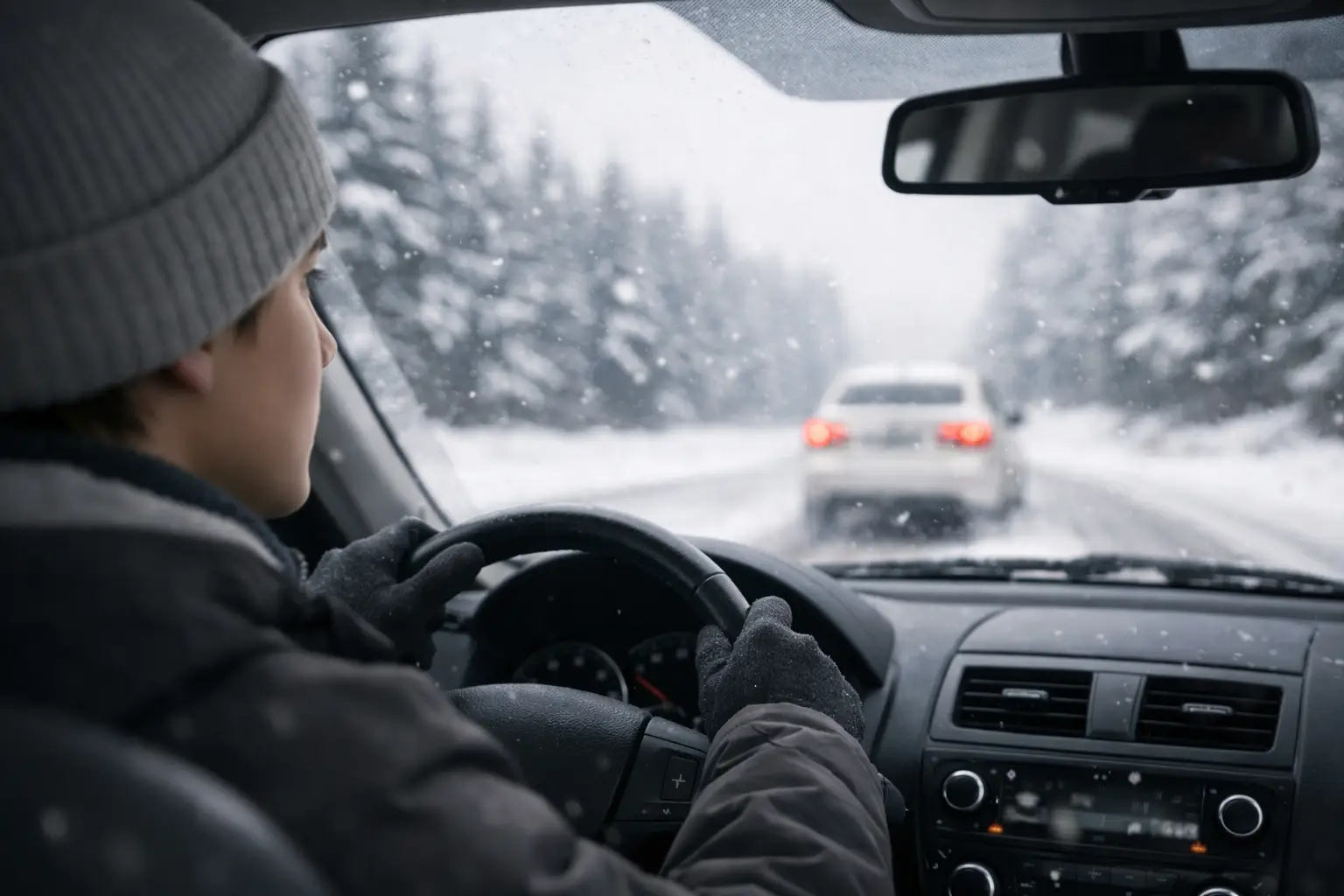
A light snowfall can make a familiar route feel completely different. Lane markings disappear, stopping distances increase, and another driver’s sudden movement can leave little time to react. Winter driving is not about being fearless in poor conditions. It is about preparing early, slowing down deliberately, and making controlled decisions before a hazard becomes an emergency.
For new drivers, winter conditions can feel unpredictable because the vehicle may respond differently than it does on dry pavement. The right habits give you more time, more space, and more control. Those habits also build the defensive-driving mindset needed for safe, responsible driving throughout the year.
Prepare Your Vehicle Before Winter Driving
Safe decisions begin before you shift into drive. A vehicle that is poorly maintained can turn an ordinary winter trip into a stressful situation, especially when temperatures drop or roads are covered in packed snow.
Start with tires. Winter tires are designed to stay flexible in cold temperatures and provide stronger traction on snow and ice than all-season tires. They are a worthwhile investment for drivers who face regular winter conditions. Check tire pressure regularly, because cold temperatures can lower it. Also make sure the tread is in good condition. Tires cannot grip the road effectively when they are worn down.
Your windshield, wipers, lights, and fluid levels need equal attention. Clear all snow and ice from the windshield, side windows, mirrors, roof, hood, and lights before leaving. Clearing only a small viewing area is not enough. Snow left on the roof can slide forward during braking, block your windshield, or blow onto vehicles behind you.
Keep an emergency kit in the vehicle. It should include warm clothing, gloves, a blanket, a flashlight, a phone charger, water, basic first-aid supplies, a snow brush and ice scraper, jumper cables, and a small shovel. If you become stuck or delayed, these items can make a difficult situation safer while you wait for help.
Adjust Your Driving for Snow and Ice
The main adjustment for winter driving is simple: reduce your speed and increase your following distance. But doing that consistently requires discipline. Posted speed limits are set for ideal conditions, not for an icy road, reduced visibility, or a lane covered in slush.
Leave substantially more room behind the vehicle ahead. On dry pavement, you may use a shorter following interval. In snow, ice, or freezing rain, you need several extra seconds of space to brake gradually. If the vehicle in front stops suddenly, your distance is what gives you the option to respond calmly rather than panic-brake.
Make every steering, braking, and acceleration input smooth. Fast movements can break traction. Accelerate gently from a stop, ease into turns, and brake early with steady pressure. Avoid using cruise control on slippery roads because it can delay your ability to react when traction changes.
Intersections, bridges, overpasses, shaded streets, and ramps deserve extra caution. These areas often freeze first or remain icy longer than other sections of road. Black ice can be especially dangerous because it may look like wet pavement. If the road surface looks glossy, dark, or unusually smooth, assume traction may be limited and reduce speed before you reach it.
Brake Early and Let Safety Systems Help
Many newer vehicles have anti-lock braking systems, traction control, and stability control. These systems can help you maintain control, but they do not create traction where none exists. They are a safety backup, not permission to drive too fast for the conditions.
If your anti-lock braking system activates, keep firm, steady pressure on the brake pedal and look where you want the vehicle to go. Do not pump the brakes. You may feel vibration or hear a pulsing sound from the pedal, which is normal during ABS operation.
When approaching a stop sign or red light, begin slowing much earlier than usual. Test the road surface carefully in a safe, open area by applying the brakes gently. If the vehicle takes longer to slow than expected, adjust immediately by reducing speed and increasing the distance around you.
See Clearly and Expect Other Drivers to Make Mistakes
Visibility is one of the most challenging parts of winter driving. Snowfall, fog, road spray, early darkness, and glare from headlights on wet pavement can all reduce what you can see. Turn on your headlights whenever visibility drops, even during the day. This helps other drivers see you as well.
Use low beams in snow, fog, or heavy precipitation. High beams can reflect back from falling snow or fog and make it harder to see. Keep your windshield washer fluid filled with a winter-rated product, and use defrost settings before the glass fogs up completely.
Defensive driving means looking well ahead, checking mirrors regularly, and identifying escape routes. In winter, this matters even more. Watch for vehicles that are following too closely, changing lanes abruptly, or approaching intersections too quickly. You cannot control their choices, but you can leave yourself room to avoid being trapped by them.
Avoid driving in another vehicle’s blind spot, particularly near large trucks and buses. They need more distance to stop and may throw snow spray that blocks your view. Pass only when visibility and road conditions allow a safe, deliberate maneuver.
Know What to Do if You Skid
A skid can feel alarming, but overcorrecting usually makes it worse. The first response is to stay calm, look in the direction you want the vehicle to travel, and ease off the accelerator. Keep both hands on the steering wheel and steer smoothly rather than making sudden, sharp corrections.
If the rear of the vehicle begins sliding, turn the steering wheel gently in the direction the rear is moving. For example, if the rear slides right, steer right until the vehicle begins to straighten. Avoid slamming on the brakes, because braking hard can further reduce traction and make recovery more difficult.
If the front tires lose grip and the vehicle does not turn as expected, reduce acceleration, straighten the steering wheel slightly, and allow the tires to regain traction. Once they do, steer gently toward your intended path. These skills are easier to learn in a controlled setting with a qualified instructor than during a real roadside emergency.
Plan the Trip and Know When to Wait
Good winter drivers make choices before the trip starts. Check the forecast, road conditions, and visibility. Build extra time into your schedule so you do not feel pressured to speed or take unnecessary risks. Let someone know where you are going if conditions are severe or the trip takes you outside the city.
There are times when the safest choice is not to drive. Freezing rain, whiteout conditions, poor visibility, or roads that have not been cleared can make even a short trip high risk. Being responsible behind the wheel includes recognizing when your current experience level, vehicle condition, or the weather does not support a safe trip.
If you become stuck, avoid spinning the tires aggressively. Clear snow from around the tires and exhaust pipe, use gentle acceleration, and try to rock the vehicle carefully only if it is safe to do so. If you must wait in the vehicle, keep the exhaust area clear to reduce the risk of carbon monoxide entering the cabin.
Build Winter Skills Before You Need Them
Reading about winter conditions helps, but controlled practice builds confidence. A professional lesson gives new, returning, and internationally licensed drivers the chance to practice braking, scanning, space management, and hazard response with direct coaching. Turn by Turn Driving School helps students develop those practical habits through structured, instructor-led training focused on safety and real-road readiness.
Start with low-risk practice in a safe location, then gradually work up to quiet residential streets, busier roads, and changing weather conditions. Do not treat your first snowfall as a test of confidence. Treat it as an opportunity to slow down, apply what you have learned, and make the next safe decision.
Comments are closed