


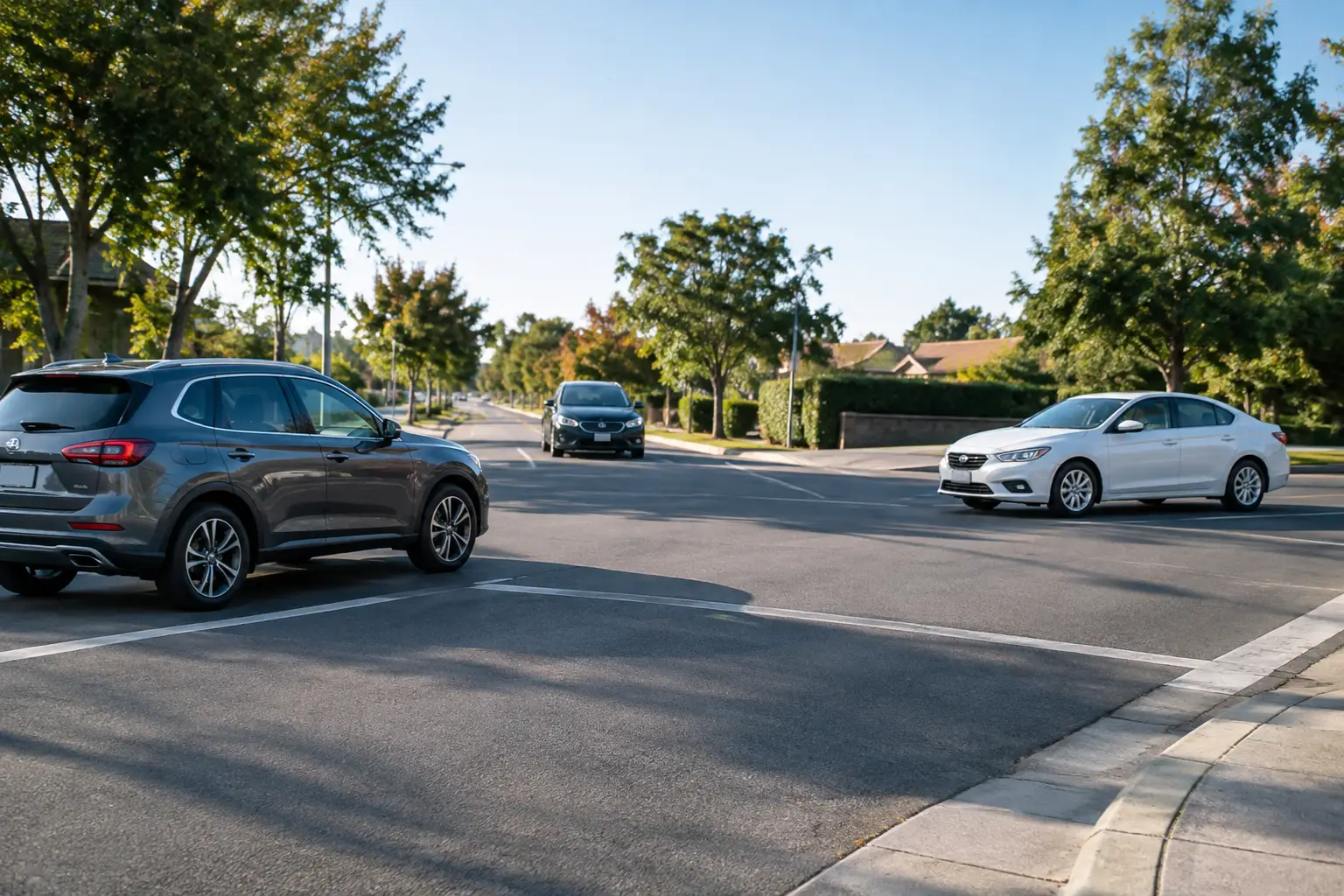
An uncontrolled intersection can look simple: no traffic lights, no stop signs, and often no painted instructions telling you who goes first. That is exactly why new drivers need a clear process to handle uncontrolled intersections safely. These locations require you to slow down, scan carefully, communicate your intentions, and make a calm right-of-way decision before entering.
For Calgary drivers, uncontrolled intersections are especially common in residential neighborhoods and quieter streets. You may encounter parked vehicles, children near driveways, cyclists, poor sightlines, snowbanks, or another driver who is also unsure of the right-of-way rule. Safe driving is not about rushing to prove you were there first. It is about creating enough time and space to prevent a collision.
What Is an Uncontrolled Intersection?
An uncontrolled intersection is a meeting point between roads with no traffic signal, stop sign, yield sign, or traffic officer directing vehicles. It may involve two roads crossing, a T-intersection, or a lane entering from the side.
Do not confuse an uncontrolled intersection with a four-way stop. At a four-way stop, every driver must come to a complete stop and follow an established order. At an uncontrolled intersection, drivers may not be required to stop, but they are always required to yield when necessary and avoid a crash.
The absence of signs does not mean the intersection has no rules. It means the driver must recognize the situation, apply the right-of-way rules, and use defensive driving judgment.
The Basic Right-of-Way Rule
When two vehicles arrive at an uncontrolled intersection at approximately the same time, the driver on the left must yield to the driver on the right. This is the basic rule most new drivers learn first.
However, real driving situations are rarely perfectly timed. One vehicle may be approaching faster, another may already be entering the intersection, or a driver may hesitate. In these moments, do not treat right-of-way as something to take. Think of it as something another driver gives you when the path is clearly safe.
If another vehicle has already entered the intersection, yield. If you are turning left and an approaching vehicle is going straight or turning right, yield unless that driver has a sign requiring them to stop or yield. If visibility is limited, reduce your speed enough that you can stop before entering the crossing path.
A useful habit is to ask: “If the other driver makes a mistake, do I have room to avoid them?” If the answer is no, you are moving too quickly for the conditions.
How to Handle Uncontrolled Intersections Step by Step
A structured approach helps reduce hesitation and makes your actions more predictable to other road users. Begin preparing before you reach the intersection, not when your vehicle is already in it.
1. Identify the intersection early
Look ahead for crossing streets, road openings, parked vehicles, sidewalks, and vehicles approaching from either side. Some uncontrolled intersections have no obvious warning signs, particularly on quiet residential roads.
As you approach, check whether the road you are on continues straight, curves, or meets another roadway at an angle. A T-intersection can create confusion because one driver may be traveling on the through road while another is approaching from the road that ends. Drivers entering or crossing the through road must yield.
2. Reduce speed and cover the brake
You do not need to stop at every uncontrolled intersection when the view is clear and no traffic is present. But you should reduce speed enough to assess the area and stop if needed. Move your foot from the accelerator to the brake area as you approach. This gives you faster response time if a vehicle, pedestrian, cyclist, or animal appears.
Your speed should depend on visibility. A wide, open intersection on a clear day may allow a smoother approach. A narrow street blocked by parked SUVs, tall hedges, snowbanks, or darkness requires a much slower entry.
3. Scan left, right, then left again
Use an active visual search pattern. Look left, then right, then left again before entering. The final look left matters because traffic from that direction will reach you first in a standard crossing intersection.
Do not make one quick glance and assume the road is clear. A small motorcycle, bicycle, or pedestrian can be harder to see than a full-sized vehicle. In winter, a driver may also be unable to stop quickly on icy pavement even if they appear to be traveling slowly.
Continue scanning as you enter. Conditions can change in seconds, particularly near schools, playgrounds, bus stops, and busy residential areas.
4. Decide who must yield
If another vehicle arrives at the same time, yield to the vehicle on your right. If you arrive first and have a clear view, you may proceed cautiously. If another driver is already moving into the intersection, let them go even if you believe you technically have the right-of-way.
This is not giving up your rights. It is defensive driving. A few seconds of patience is always less costly than a side-impact collision.
Be particularly careful when another driver waves you through. A hand gesture may be well intentioned, but it does not confirm that every lane, crosswalk, or approaching vehicle is clear. Check the full intersection yourself before moving.
5. Enter smoothly and keep moving
Once you have confirmed it is safe and it is your turn to proceed, enter with steady acceleration. Do not stop midway through the intersection unless an emergency makes it necessary. Hesitation after you have committed can confuse other drivers and increase risk.
Keep your steering controlled and your attention ahead. If you are turning, complete the turn into the correct lane while watching for pedestrians and cyclists crossing your path.
Common Mistakes New Drivers Make
The most common error is entering too quickly because the intersection appears empty. Limited sightlines can hide a vehicle until the last moment. Slow down before the intersection, not after you notice a problem.
Another mistake is assuming every driver understands or follows the same right-of-way rule. A driver may be distracted, unfamiliar with the area, impatient, or simply mistaken. Your job is not to correct their behavior with your vehicle. Your job is to protect your space and avoid conflict.
Some learners also focus so intensely on cars that they overlook pedestrians. At uncontrolled intersections, pedestrians may cross at corners even where there are no painted crosswalk markings. Scan sidewalks and roadway edges before turning or proceeding straight.
Finally, avoid using eye contact as your only confirmation. Tinted windows, glare, poor weather, and driver distraction can make eye contact unreliable. Vehicle position, speed, signals, and available space provide better information.
Uncontrolled Intersections in Winter and Low Visibility
Calgary weather can change how you approach any intersection. Snow, slush, ice, fog, darkness, and dirty windshields reduce the time available to identify hazards. In these conditions, start slowing down earlier and leave extra space around your vehicle.
Snowbanks can be especially challenging because they block your view of cross traffic. Ease forward slowly only when necessary to improve your sightline, while remaining prepared to brake. Never assume an unseen vehicle will yield or be able to stop on a slippery road.
At night, look for headlights, reflections, movement, and shadows near the intersection. Do not rely solely on seeing a vehicle’s body. If you cannot see far enough to make a safe decision, reduce your speed further.
Build the Habit Before Your Road Test
Road examiners look for observation, speed control, proper yielding, and confident decision-making. They are not expecting you to force your way through an intersection because you know a rule. They want to see that you recognize risk and make safe choices.
Practice uncontrolled intersections in different conditions: quiet residential streets, busier neighborhood routes, daylight, darkness, and poor weather when safe to do so. During professional in-car instruction, an Alberta-licensed instructor can help you identify sightline problems, improve your scanning pattern, and correct hesitation before it becomes a habit.
Turn by Turn Driving School teaches intersection decisions as part of a wider defensive driving approach: see hazards early, leave yourself an escape option, and make actions predictable for everyone around you. That approach supports more than road test preparation. It helps build safe, responsible drivers for life.
The next time you approach an intersection without signs or signals, give yourself permission to slow down. A careful scan, a clear yield decision, and a smooth entry are small actions that protect you, your passengers, and everyone sharing the road.
Comments are closed