



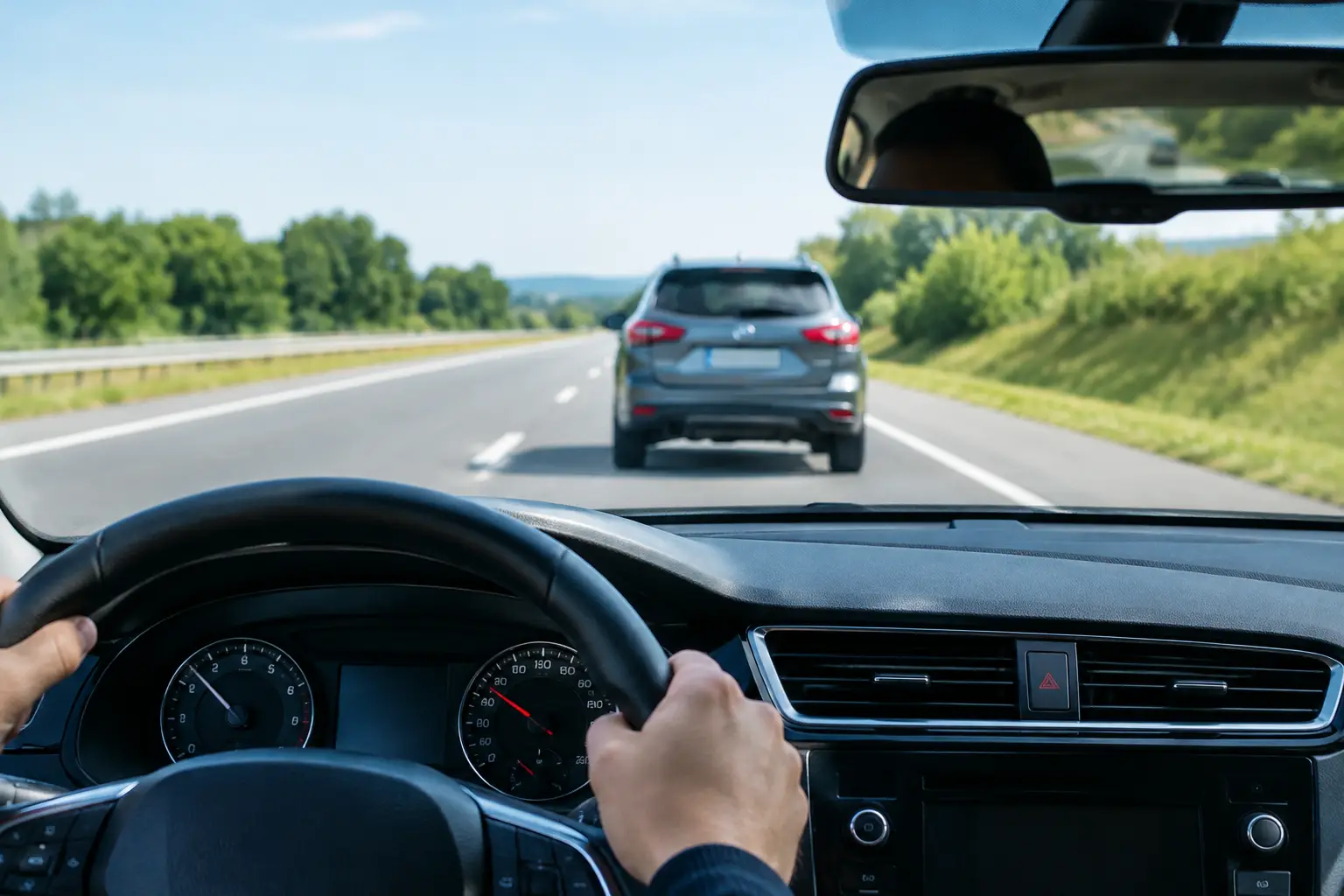
A driver ahead brakes suddenly near a Calgary intersection. The vehicle behind has only a car length of space, so the driver reacts late, brakes hard, and loses the chance to make a calm decision. Safe following distance techniques prevent that situation before it starts. They give you time to see, think, brake smoothly, and keep control when traffic changes without warning.
For new drivers, leaving space can feel awkward at first. Other drivers may move into the gap, and busy roads can make every lane feel crowded. Still, space is not wasted road. It is your safety margin. A consistent following distance is one of the clearest signs of a defensive, responsible driver.
Start With the Three-Second Rule
In normal, dry conditions, use at least three seconds between your vehicle and the one directly ahead. This is a practical baseline for city streets, highways, and road test driving. It is not measured in car lengths because car lengths do not account for speed.
Choose a fixed object ahead, such as a sign, light pole, bridge support, or pavement marking. When the rear of the vehicle ahead passes that object, begin counting: “one thousand one, one thousand two, one thousand three.” If you reach the object before finishing, you are following too closely. Ease off the accelerator and rebuild the gap.
The goal is not to brake sharply or create a dramatic opening. Simply reduce your speed gradually. A smooth adjustment protects the people in your vehicle and gives drivers behind you a clear, predictable signal.
Why seconds work better than car lengths
At 30 mph, one car length may seem reasonable. At 65 mph, that same distance disappears in a moment. A time-based gap increases naturally as your speed rises, which gives you more room to recognize a hazard and respond.
The three-second rule also helps you avoid copying the habits of aggressive drivers. You may see someone following closely and assume that is normal traffic flow. It is not a safe standard, and it leaves almost no room for a mistake.
Add Time When Conditions Change
Three seconds is a minimum for favorable conditions, not a permanent rule. Safe following distance techniques require you to adjust for traction, visibility, vehicle condition, and the actions of other road users.
In rain, add at least one extra second. On wet roads, braking distances increase and windshield spray can reduce your ability to see brake lights or hazards ahead. In snow, slush, ice, freezing rain, or packed winter roads, increase the gap well beyond three seconds. Depending on the surface and visibility, five, six, or more seconds may be appropriate.
Alberta drivers also need to consider sudden weather changes. A road can be dry at the start of a trip and slick a few blocks later near a shaded bridge, an overpass, or an intersection where snow has been polished by traffic. If your tires lose grip, a close following distance leaves you with no recovery space.
At night, increase your gap because your view of the road is shorter. The same applies in fog, smoke, heavy rain, or glare from low sun. If you cannot see far ahead, you should not follow as if you can. Slow down enough to keep your stopping distance within the space you can see.
Give larger vehicles more room
Increase your following distance behind trucks, buses, vans, and vehicles towing trailers. Large vehicles can block your view of traffic, signals, pedestrians, and debris ahead. By dropping back, you can see around the vehicle more effectively and reduce the risk of being caught in its blind spot.
A larger gap is especially useful when following a truck on wet or gravel-covered roads. Spray, dust, and debris can affect visibility quickly. Never follow closely just to take advantage of an opening to pass. Wait until you have clear sightlines, adequate time, and a legal passing opportunity.
Look Beyond the Rear Bumper
Following distance is not only about how far back you are. It is also about what you are watching. New drivers sometimes focus on the rear bumper directly ahead, then get surprised when traffic slows. Train your eyes to scan well ahead of the vehicle in front of you.
Look through its windows when possible, around its sides, and farther down the road. Watch for brake lights several vehicles ahead, changing traffic signals, merging vehicles, crosswalk activity, construction signs, and traffic congestion. This early information lets you release the accelerator sooner instead of reacting with a hard brake.
Keep checking mirrors as you scan ahead. If traffic behind you is close, avoid sudden changes whenever possible. Brake early and smoothly, then maintain a steady path. You cannot control another driver’s following distance, but you can make your own driving predictable and controlled.
Manage Tailgaters Without Creating a New Risk
Being followed too closely can make any driver anxious. The wrong response is to brake-check, speed up beyond the limit, or make sudden lane changes. Those choices increase risk and can turn a tense situation into a collision.
Instead, create more space in front of your vehicle. If you normally have a three-second gap, extend it. That added room allows you to slow gradually if traffic changes, rather than braking hard because of the tailgater behind you. Maintain the speed limit, keep a consistent pace, and move right or change lanes only when it is safe and legal to let the other vehicle pass.
On a two-lane road, do not feel pressured to drive faster than conditions allow. Use designated pullouts where available and follow local road rules. Your responsibility is to operate safely, not to match someone else’s impatience.
Use Space at Intersections and in Stop-and-Go Traffic
Safe spacing matters even when traffic is moving slowly. When stopping behind another vehicle, leave enough room to see its rear tires touching the pavement. This usually provides an escape path if a vehicle behind you approaches too quickly, and it keeps you from being pushed into the vehicle ahead in a rear-end collision.
At an intersection, avoid creeping so close that you lose visibility of pedestrians, cyclists, or signal changes. Be prepared for the vehicle ahead to stop unexpectedly, especially when turning, yielding, or responding to a yellow light.
In stop-and-go traffic, resist the urge to accelerate immediately every time the vehicle ahead moves. Let traffic roll forward, then use a gentle, steady pace to preserve a cushion. This can reduce unnecessary braking and make your drive less stressful.
Common Following-Distance Mistakes
The most common mistake is treating the gap as an invitation for another vehicle to enter. Someone may merge into your space, particularly on a busy freeway. That does not mean you should close the gap. Ease off, restore your buffer, and continue scanning.
Another mistake is relying only on anti-lock brakes, traction control, or automatic emergency braking. These features may help in certain situations, but they cannot create traction on ice or replace an alert driver. Your first line of defense is still adequate time and space.
Drivers also underestimate the effect of distractions. A two-second glance at a phone, navigation screen, or passenger can mean traveling a significant distance without watching the road. Set navigation and music before moving, keep your phone out of reach, and give driving your full attention.
Practice the Habit on Every Lesson
A safe following distance should become automatic, not something you remember only before a road test. During practice drives, say the count quietly to yourself when traffic is moving. Notice when conditions require more time. Ask yourself what you can see beyond the vehicle ahead and where you would steer if traffic stopped suddenly.
At Turn by Turn Driving School, instructors help students connect these small habits to real decisions in city traffic, on highways, and in changing weather. The objective is not simply to pass a test. It is to build the judgment needed to drive with safety and control long after licensing day.
Give yourself the space to make good decisions. A few extra seconds behind the vehicle ahead can be the difference between a calm stop and a preventable collision.
Comments are closed