



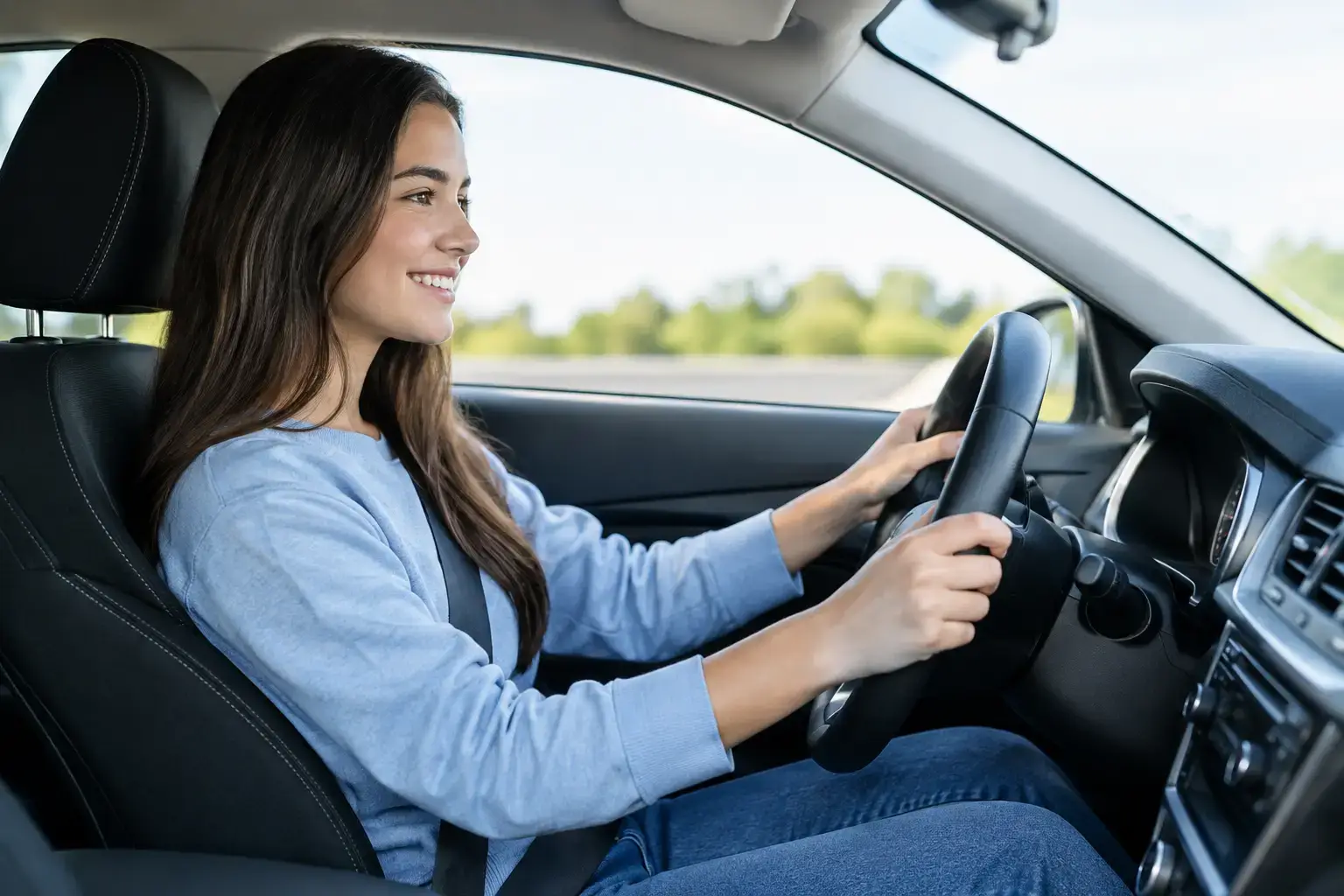
A vehicle can provide helpful backup, but it cannot replace a driver who is scanning ahead, checking mirrors, and making calm decisions early. The best car safety features give new drivers more time and information when something starts to go wrong. Used properly, they support the defensive driving habits that keep people safer long after the road test is over.
For first-time drivers, parents choosing a vehicle, and adults returning to the road, the goal is not to buy every available option. It is to understand which systems meaningfully reduce risk, where their limits are, and how to use them without becoming dependent on them.
Best Car Safety Features Start With Crash Protection
The most valuable safety equipment is often the least exciting. A well-designed vehicle structure, airbags, seat belts, and properly adjusted head restraints protect occupants when a collision cannot be avoided. These are not optional extras. They are the foundation of vehicle safety.
Look for a vehicle with front and side airbags, including side-curtain airbags that help protect occupants in a side impact or rollover. Also pay attention to the fit of the seat belt. The shoulder belt should cross the center of the chest and sit away from the neck. The lap belt should lie low across the hips, not across the stomach.
Head restraints matter more than many drivers realize. Set the top of the restraint close to the top of your head, with as little space as practical between the back of your head and the restraint. This can reduce the risk of neck injury in a rear-end collision.
Crash protection works only when drivers use it correctly. Every passenger should wear a seat belt on every trip, including short trips through familiar neighborhoods. New drivers should build that routine before putting the car in gear.
Automatic Emergency Braking Can Reduce Severe Mistakes
Automatic emergency braking uses cameras, radar, or both to watch for a potential collision with a vehicle, pedestrian, or cyclist. If the system determines that the driver has not responded quickly enough, it may warn the driver and apply the brakes.
For a new driver, this can be especially useful in stop-and-go traffic, at busy intersections, and when another vehicle brakes suddenly. A moment of distraction or delayed perception can turn a manageable situation into a collision. Automatic emergency braking may reduce the impact speed or prevent the crash altogether.
There is a clear limitation: the system may not detect every hazard in every condition. Heavy rain, snow, glare, darkness, a dirty windshield, and unusual road layouts can affect camera and radar performance. Drivers still need to maintain a safe following distance and keep their attention on the road. A warning is not permission to look away.
Forward collision warning often comes with automatic emergency braking. It alerts the driver when the vehicle is closing too quickly on traffic ahead. Treat that alert as a prompt to look, assess, and brake smoothly. Do not wait to see whether the vehicle will intervene.
Blind-Spot Monitoring Helps, but Shoulder Checks Still Matter
Blind-spot monitoring warns a driver when another road user is traveling alongside the vehicle in an area that may not be visible in the mirrors. The warning usually appears as a light in or near the side mirror. Some systems also add an audible alert or steering resistance if the driver signals toward an occupied lane.
This feature is useful on multi-lane roads, during highway merges, and in heavy traffic. It can help a new driver notice a car, motorcycle, or cyclist that might otherwise be missed.
However, blind-spot monitoring does not replace the proper lane-change routine. Before changing lanes, drivers should check mirrors, signal early, look over the shoulder toward the blind spot, and move only when the space is clearly safe. A system may miss a fast-approaching vehicle, a small motorcycle, or an object affected by weather or sensor blockage.
The same principle applies to rear cross-traffic alert. It can warn of traffic approaching from the side while backing out of a parking space, but the driver must still look in both directions and reverse slowly. Parking lots require patience because people, carts, children, and vehicles can appear quickly from behind larger vehicles.
Stability Control and Anti-Lock Brakes Support Vehicle Control
Electronic stability control helps a vehicle stay on its intended path when it begins to skid or lose traction. It can apply braking to individual wheels and reduce engine power to help correct a slide. This is particularly valuable on wet pavement, loose gravel, snow, or ice.
Anti-lock braking systems, commonly called ABS, help prevent the wheels from locking during hard braking. When drivers feel a pulsing brake pedal, they should continue pressing firmly and steer where they need to go. The pulsing is normal. Lifting off the brake can reduce the benefit of the system.
These features are highly effective, but they cannot create traction that is not there. Speed remains the biggest factor in whether a driver can stop or turn safely on a slippery road. A vehicle with all-wheel drive may help it move forward in poor conditions, but it does not allow it to stop faster than other vehicles. New drivers should leave extra space, brake earlier, and reduce speed whenever road conditions change.
Backup Cameras and Parking Sensors Improve Low-Speed Awareness
Backup cameras have become a standard feature in many newer vehicles, and they are valuable when used as part of a complete observation routine. They show what is directly behind the vehicle, where rear visibility can be limited.
A camera view is not a full view of the area around the vehicle. Wide-angle lenses can distort distance, and low objects or hazards to the side may not appear on the screen. Before reversing, drivers should check mirrors, look over both shoulders, and scan the area around the vehicle. Then they should back up slowly while continuing to observe.
Parking sensors add another layer of information by warning when the vehicle is close to an object. They are helpful for avoiding low-speed contact with poles, curbs, walls, and other vehicles. They do not make tight spaces risk-free. If the view is uncertain, stop, secure the vehicle, and check the space before continuing.
For learners, these features are best treated as confirmation tools. Your eyes, mirrors, and careful speed control remain the primary tools.
Lane Support Features Need an Alert Driver
Lane departure warning alerts a driver when the vehicle begins to drift over a lane marking without a turn signal. Lane-keeping assistance may provide gentle steering input to guide the vehicle back toward the center of the lane.
These systems can be useful during long drives, but they are not designed to take over steering. Lane markings may be faded, covered by snow, missing in construction zones, or difficult to read in direct sunlight. A driver who relies on lane support instead of looking well ahead can still drift into danger.
Adaptive cruise control is another feature that requires judgment. It can maintain a selected following distance by adjusting speed as traffic changes. On open highways, it may reduce workload. In busy traffic, curves, exits, poor weather, or areas with pedestrians and cyclists, drivers must remain fully engaged and ready to brake.
For a new driver, regular cruise control and adaptive cruise control should be introduced gradually. Learn how the system behaves on a clear, familiar route before using it in complicated traffic.
Choosing the Right Safety Features for Your Needs
When comparing vehicles, start with safety basics: strong crash protection, airbags, seat belts that fit properly, stability control, anti-lock brakes, and clear visibility. Then consider driver-assistance features that match the driving you expect to do most often.
A student who regularly drives on busy highways may benefit from blind-spot monitoring and forward collision warning. Someone who parks in crowded lots may value a backup camera, rear cross-traffic alert, and parking sensors. A driver who faces snow and changing road conditions needs good tires, working lights, dependable brakes, and the skills to adjust speed well before conditions become difficult.
Do not let a long feature list outweigh vehicle condition and fit. The driver should be able to reach the pedals comfortably, see clearly over the steering wheel, adjust mirrors properly, and operate controls without taking attention away from traffic. A safe vehicle is one the driver can control with confidence.
At Turn by Turn Driving School, we teach students to use vehicle technology as a support for observation, space management, and defensive decision-making. The safest habit is still simple: look well ahead, leave room around your vehicle, and act early when conditions begin to change. That approach will serve you in any vehicle, with any level of technology.
Comments are closed