



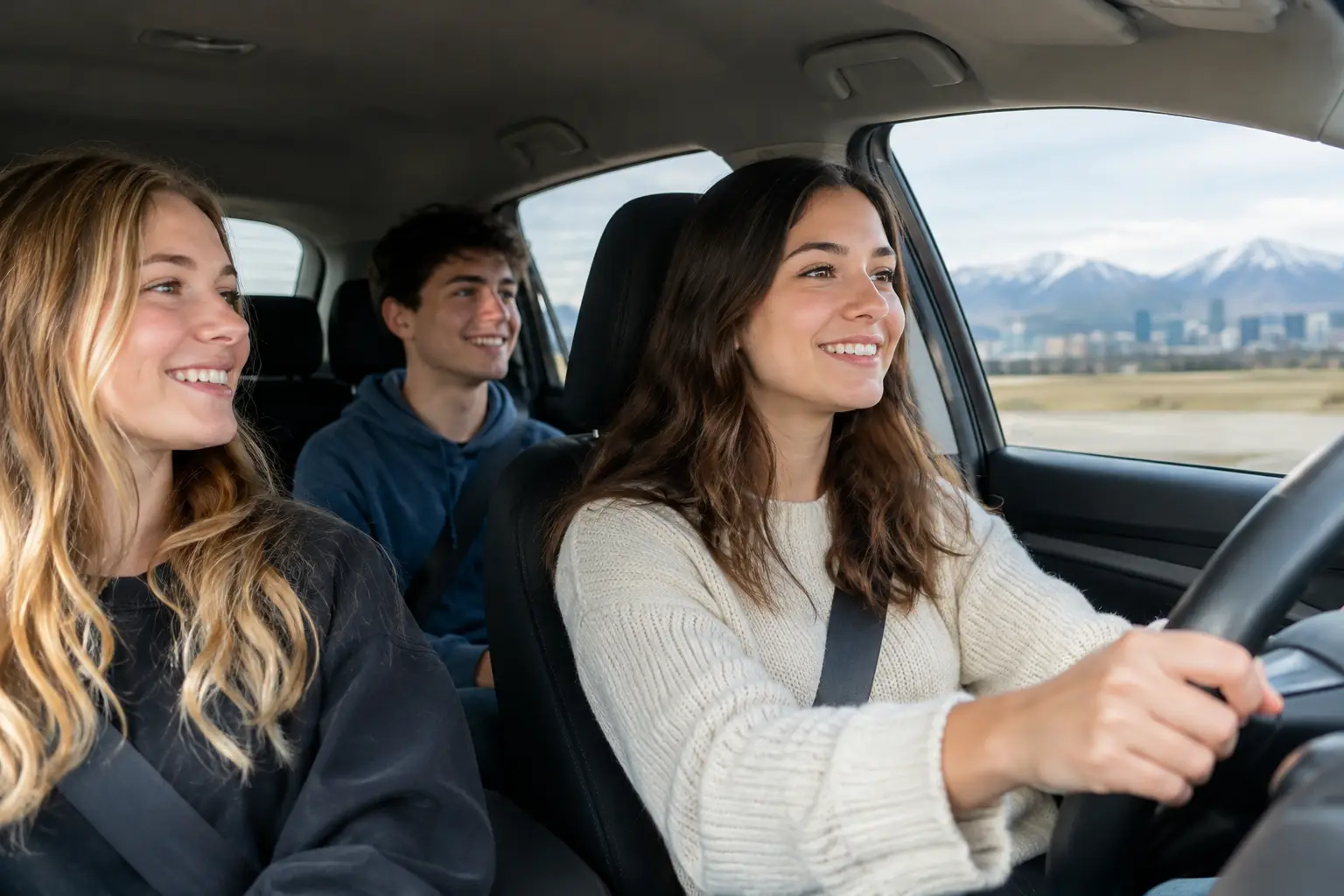
A full car can change a calm drive into a high-pressure situation in minutes. For new Alberta drivers, understanding GDL passenger limits is not just about avoiding a ticket. It is about knowing what your license allows, keeping every person protected, and making decisions that support safe driving habits long after the road test.
Many drivers hear that Graduated Driver Licensing has passenger restrictions and assume there is a fixed limit, such as one or two friends. Alberta’s rules are more specific than that. The limit depends on your seating positions and available seat belts, while your stage of licensing determines the other conditions you must follow.
Do Class 5 GDL Drivers Have a Passenger Limit?
A Class 5 GDL driver in Alberta does not have a separate numerical passenger cap simply because they are in the GDL program. You may carry passengers as long as every passenger has their own properly functioning seat belt and the vehicle is not carrying more people than it was designed to seat.
In practical terms, a five-seat vehicle can carry the driver and up to four passengers if all five seating positions have seat belts. A driver cannot place two people in one seat belt, carry someone in a cargo area, or add an extra person because the trip is short. Every occupant must be seated safely and restrained.
This rule applies whether you are driving classmates home, taking family members to an appointment, or sharing a ride with coworkers. Passenger capacity is determined by the vehicle’s available seating and restraint systems, not by how comfortable everyone believes they can fit.
Why GDL Passenger Limits Are Often Misunderstood
The confusion usually comes from mixing up Class 7 learner rules, Class 5 GDL conditions, and common restrictions used in other provinces or U.S. states. Alberta’s licensing system has stages, and each stage has different responsibilities.
A Class 7 learner must drive with a qualified supervising driver who is at least 18 years old and holds a full Class 5 license or higher. The supervisor must sit in the front passenger seat. Like all drivers, a Class 7 learner cannot carry more people than there are seat belts. Class 7 drivers also have restrictions that include no driving between midnight and 5 a.m. and a zero blood alcohol level.
Once you pass the Class 5 GDL road test, you are no longer required to have a supervising driver and can drive independently. You still must follow the conditions of the GDL program, including a zero alcohol and drug tolerance requirement. You must also remain below the demerit threshold that can trigger a suspension.
The key point is simple: a Class 5 GDL license does not create a one-passenger or two-passenger rule. However, safe passenger management matters more for a new driver because distractions can quickly affect observation, speed control, following distance, and decision-making.
Seat Belts Set the Legal Capacity
Seat belts are not optional equipment or a suggestion for longer drives. Alberta law requires drivers and passengers to wear seat belts when the vehicle is in motion. The driver is responsible for ensuring passengers under 16 are properly restrained. Passengers aged 16 and older are responsible for wearing their own seat belts, but a responsible driver should still confirm everyone is buckled before moving.
Before leaving, take a few seconds to check that each passenger has a seat, a seat belt, and enough space to sit upright. This matters particularly when carrying younger siblings, friends after a school event, or several people with backpacks and sports equipment.
Children must also use the appropriate child safety seat or booster seat based on Alberta requirements. A regular seat belt may not fit a young child safely, even if there is technically an available seat in the vehicle. If you are unsure whether a child is properly restrained, do not guess. Ask a parent or caregiver to confirm the correct restraint before the vehicle moves.
The Safety Issue Is Distraction, Not Just Capacity
A legally full car can still be the wrong choice for a new driver. More passengers can mean more conversation, louder music, sudden movements, phone activity, and pressure to make risky choices. None of these distractions change the seat belt rule, but they can change how safely you drive.
New drivers are still building the ability to scan intersections, judge gaps, manage blind spots, and recognize hazards early. Those skills require attention. When the vehicle becomes noisy or someone urges you to speed, you may have less mental space to process what is happening around you.
This does not mean Class 5 GDL drivers should never carry friends. It means you should assess the drive honestly. A familiar daytime route in good weather may be manageable with passengers. A first drive on icy roads, a busy downtown route, nighttime highway travel, or a trip when you are already tired may call for fewer distractions.
At Turn by Turn Driving School, students learn that defensive driving starts before the vehicle moves. Choosing who rides with you, setting expectations, and deciding when to say no are part of being a safe, responsible driver for life.
Set Expectations Before You Shift Into Drive
A confident driver does not need to argue with passengers while navigating traffic. Set clear ground rules before you leave. Tell passengers to buckle up, keep the noise at a manageable level, and avoid distracting you when you are approaching complex intersections, merging, parking, or following navigation instructions.
If someone is using your phone for music or directions, set it up while parked. Do not hand your phone around at a red light and assume that makes it risk-free. Your attention can still be pulled away from changing traffic signals, pedestrians, cyclists, or vehicles turning across your path.
It is also reasonable to ask passengers to help in a constructive way. A calm friend can confirm an address, watch for an entrance, or remind everyone to stay seated. The difference is that the driver remains in control. Passengers should support the drive, not direct it.
Common Passenger Situations for New Drivers
Carpooling after school is common, but it can create pressure to fit one more person into the vehicle. If every seat belt is already in use, the answer is no. Arrange another ride, make a second trip, or use another safe transportation option. A short distance does not reduce the risk or change the law.
Driving with family can feel easier because the passengers may be quieter and more understanding. Still, avoid allowing a family member to pressure you into a maneuver you are not ready to make, such as a difficult parallel parking space, a rushed left turn, or highway driving in poor conditions.
For drivers upgrading from an international license or returning to driving after time away, Alberta’s winter conditions can be an added factor. A full vehicle affects braking distance and vehicle handling, especially on snow or ice. Leave more following distance, brake gradually, and do not let passengers convince you to drive faster than conditions allow.
Protecting Your GDL Progress
Your Class 5 GDL stage is designed to give you time to gain experience under clear conditions. Violations, collisions, and unsafe habits can delay your progress toward a full Class 5 license. A passenger-related ticket, a seat belt issue, or a distracted-driving charge is more than an inconvenience. It can affect your record, your insurance costs, and your confidence behind the wheel.
Before each trip, make a quick driver check: Is everyone properly seated and buckled? Is the vehicle within its legal capacity? Are you rested, focused, and comfortable with the route and conditions? If any answer raises concern, adjust the plan before leaving.
Being the driver means making the final call. Your passengers may forget the rules, but you are the person responsible for the vehicle. That responsibility is not a burden – it is the judgment that helps you build real confidence, one safe trip at a time.
Comments are closed