



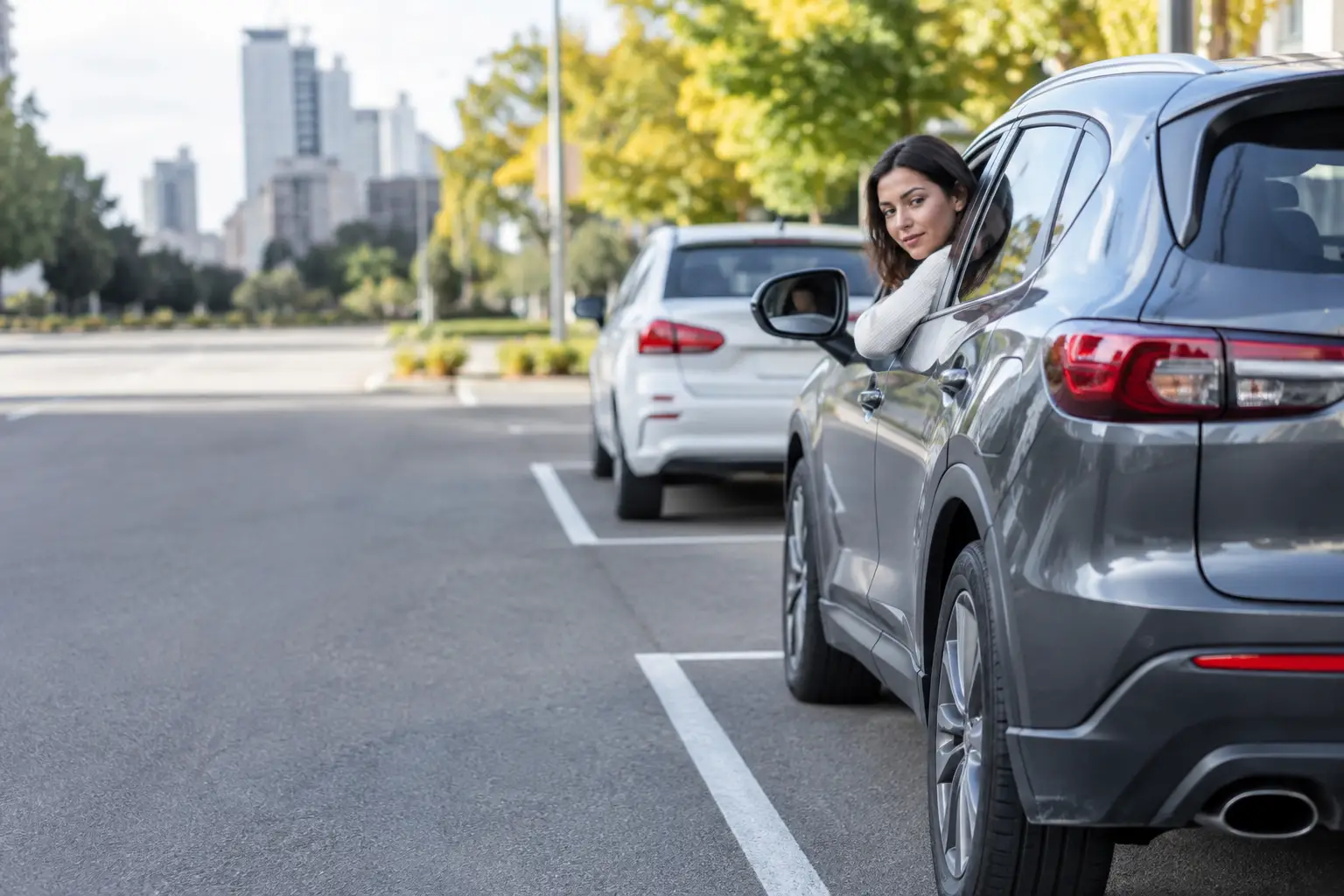
A parallel parking space can feel much smaller when an examiner is watching, traffic is waiting behind you, and you are trying to remember every step. Knowing how to parallel park in Alberta means more than getting the vehicle into the space. You need to control your speed, observe properly, signal clearly, and finish safely without touching the curb or interfering with traffic.
For Class 5 GDL road-test preparation, parallel parking is a practical demonstration of vehicle control and awareness. The goal is not to rush through a memorized trick. The goal is to show that you can position the vehicle safely and make calm corrections when the space, vehicle, or curb is different from the one you practiced with.
What Alberta Examiners Look for During Parallel Parking
Parallel parking may be included on an Alberta road test when conditions and location allow. An examiner is assessing your overall driving process, not just whether the vehicle ends up close to the curb.
Before you begin, they want to see proper observation. Check your rearview mirror, side mirrors, and blind spot. Signal in the direction you intend to park. Slow down smoothly and avoid stopping suddenly in a way that surprises the driver behind you.
During the maneuver, maintain very low speed and steady steering control. You should continue looking around the vehicle, especially toward the rear and the side where you are parking. A backup camera can support your awareness, but it does not replace mirror checks and shoulder checks.
When you are finished, the vehicle should be legally and safely positioned in the space. Avoid contacting the curb, leave appropriate space from it, and make sure you have not blocked a driveway, crosswalk, fire hydrant, or intersection. If you need to correct your position, do so carefully. One calm adjustment is better than forcing the vehicle into place.
How to Parallel Park in Alberta Step by Step
The reference points below are a starting point. Every vehicle has a different length, turning radius, mirror position, and rear window view. Practice in the same vehicle you plan to use for your road test whenever possible.
1. Choose a Space You Can Use Safely
Look for a space that gives you enough room to enter without forcing other traffic to brake or swerve. As a new driver, practice first with a space that is longer than your vehicle. You can reduce the available space as your control improves.
Check for people, cyclists, parked vehicles, driveways, and hazards near the curb. In Calgary, snowbanks, gravel, puddles, and uneven curbs can change the amount of room you have. Do not attempt a parking maneuver if you cannot see the area clearly.
2. Signal and Position Beside the Front Vehicle
Signal right when parking on the right side of the road. Check mirrors and your right blind spot, then pull up alongside the vehicle in front of the open space. Keep a safe side distance, usually about 2 to 3 feet, rather than crowding the parked vehicle.
Align your vehicle so your rear bumper is roughly even with the rear bumper of the vehicle beside you. This is a useful general reference, but do not treat it as an exact rule. A large SUV, pickup truck, or compact car will change where your best starting point is.
Stop smoothly. Keep your foot firmly on the brake, shift into reverse, and complete another full observation check before moving backward.
3. Reverse Slowly Into the Space
Begin backing up at walking speed. Turn the steering wheel toward the curb while continuing to check behind you and monitor the front corners of your vehicle. Your vehicle should enter the space on a diagonal angle.
Use your mirrors, but do not stare at one mirror for the entire maneuver. Scan from rearview mirror to side mirror to shoulder check. You need to know what is behind you, beside you, and ahead of you as the front of your vehicle swings outward.
A common mistake is reversing too quickly. Slow speed gives you time to observe, steer accurately, and stop if a pedestrian or vehicle enters the area.
4. Straighten as Your Rear Clears the Front Vehicle
When your vehicle is angled into the space and your rear has cleared the parked vehicle ahead, straighten the wheels. Continue reversing slowly until your vehicle is far enough into the space to bring the front end in without hitting the vehicle ahead.
There is no single mirror reference that works for every car. Instead, learn what a safe diagonal position looks like in your own vehicle. An instructor can help you identify repeatable reference points without making you dependent on a rigid formula.
5. Turn Away From the Curb to Bring the Front In
Once there is enough clearance, turn the steering wheel away from the curb. This moves the front of your vehicle into the space and brings the vehicle parallel with the curb.
Keep watching your front corner as it moves inward. Many learners focus entirely on the rear tire and forget that the front bumper can get close to the parked vehicle ahead. If the space becomes too tight or your position is not safe, stop and correct rather than guessing.
6. Center the Vehicle and Secure It
When your vehicle is parallel with the curb, straighten the wheels and adjust forward or backward if necessary. Leave reasonable room in front of and behind your vehicle so the other drivers can leave their spaces.
Finish close to the curb without touching it. Before exiting the vehicle after a real parking maneuver, secure the vehicle fully: shift into park, apply the parking brake when appropriate, and check for cyclists or traffic before opening the door.
Common Parallel Parking Errors and How to Fix Them
The most common issue is starting too far away from the parked vehicle. This often causes the rear of your vehicle to land too far from the curb. Begin at a consistent, safe side distance and practice using your mirrors to maintain it.
Starting too close creates a different problem. You may not have enough turning room and could risk scraping the vehicle beside you. If you feel crowded before you begin, reset your position before reversing.
Another frequent error is turning the steering wheel too early or too late. Early steering can bring your rear tire toward the curb too soon. Late steering can leave you angled outward. The solution is not to spin the wheel faster. Reduce your speed, pause when needed, and learn the visual cues for your vehicle.
Learners also lose marks when they forget observations. A clean parking position does not erase a missed shoulder check, an absent signal, or failure to watch for pedestrians. Build your scan routine into every attempt: signal, mirrors, blind spot, reverse, and continued observation.
Practice for Real Conditions, Not Just the Test
Start in a quiet area using cones or visible markers instead of practicing between vehicles. This lets you learn steering timing without the pressure of damaging another car. Once you can consistently enter and center the vehicle, move to legal curbside spaces with light traffic.
Practice on both sides of the road. Right-side parallel parking is more common, but left-side parking can be useful on one-way streets. It requires different observations and steering direction, so do not assume the same visual reference points will transfer perfectly.
Practice in daylight first, then in rain, dusk, and typical Calgary conditions when you are ready. Poor visibility, snow-covered curbs, and tight downtown spaces require more patience and a larger safety margin. If the conditions make the maneuver unsafe, find another legal space.
Structured in-car lessons can make this process faster because an Alberta-licensed instructor can identify whether your difficulty is position, steering timing, observation, or speed control. At Turn by Turn Driving School, parking practice is taught as part of broader road readiness: hazard detection, defensive driving, safe decision-making, and calm control under pressure.
The best parallel park is rarely the fastest one. Take the time to signal, scan, move slowly, and make a safe correction when needed. That is the habit that prepares you not only for an Alberta road test, but for the busy streets and changing conditions you will handle long after you earn your license.
Comments are closed