



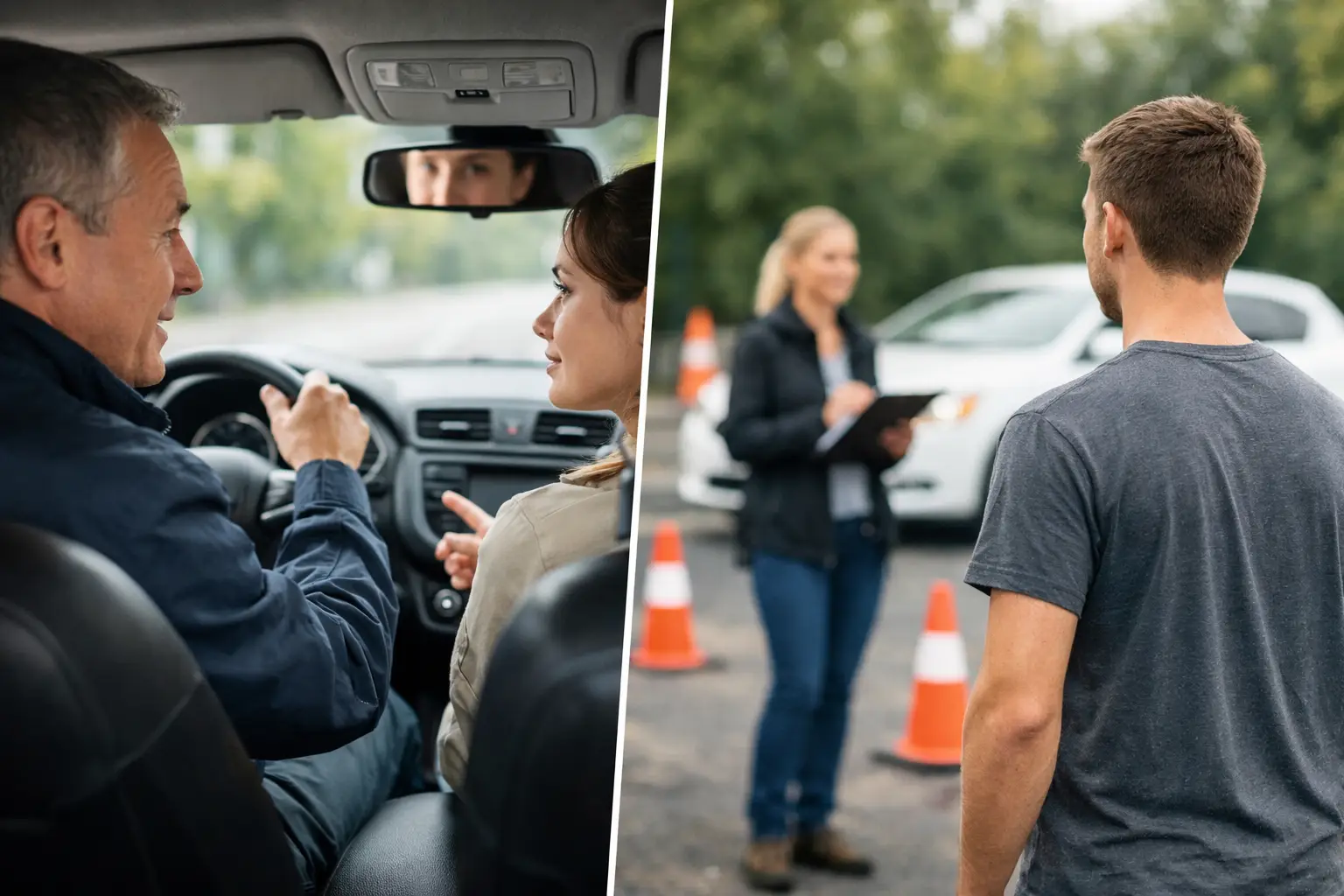
A driver can hold years of experience and still feel uncertain at a busy Calgary intersection, during a lane change on Deerfoot Trail, or when an examiner asks them to complete a parallel park. That is why the choice between refresher lessons versus road test prep matters. Both services provide instructor-led time behind the wheel, but they solve different problems. Choosing the right one means your training time is focused, practical, and matched to your licensing goal.
Refresher Lessons Versus Road Test Prep: The Core Difference
Refresher lessons are designed to improve everyday driving ability. Road test preparation is designed to evaluate and strengthen the skills most likely to affect a licensing road test. There is overlap, but the starting point and outcome are different.
A refresher lesson begins with the driver, not a checklist. An Alberta-licensed instructor observes how you manage the vehicle, scan for hazards, judge space, follow signs, and make decisions around other road users. From there, the lesson can focus on the gaps that need attention. For some drivers, that means rebuilding comfort after a long break from driving. For others, it means adjusting to Alberta rules, winter conditions, multi-lane traffic, or local road layouts after driving in another country.
Road test prep is more targeted. It helps a driver who is approaching a Class 5 GDL or full Class 5 road test understand what will be assessed and practice those skills under realistic test conditions. The instructor looks closely at observation, speed control, right-of-way decisions, lane positioning, parking maneuvers, turns, and defensive driving habits. The goal is not to memorize a route. It is to show safe, consistent control wherever the examiner directs you.
When a Refresher Lesson Is the Better Choice
A brush-up lesson is often the best first step when confidence has dropped or driving habits need to be reset. It is especially useful for returning drivers, internationally licensed drivers, and adults who have driven before but are unfamiliar with Alberta expectations.
For example, a driver who has not been behind the wheel for several years may know the rules in theory but feel tense when merging, changing lanes, or handling an uncontrolled intersection. A refresher lesson gives that driver room to rebuild calm decision-making without the immediate pressure of an upcoming test. The instructor can slow the process down, explain the reason behind each action, and repeat challenging situations until they feel manageable.
Internationally experienced drivers often benefit from this approach as well. Driving experience transfers, but local rules and road culture do not always transfer automatically. Right turns at red lights, playground and school zones, uncontrolled intersections, winter traction, transit lanes, and posted speed changes can require adjustments. A structured lesson helps identify those differences before they become unsafe habits or costly test errors.
Refresher training is also valuable when a driver plans to keep driving but is not currently booking a test. A parent returning to work, a newcomer building local confidence, or someone who wants help with highway driving can use lessons to strengthen real-world skills. The outcome is broader than passing an exam: safer, more responsible driving every day.
What a Refresher Lesson May Cover
The lesson plan should follow your needs, but it commonly includes vehicle control, smooth braking and steering, mirror use, shoulder checks, lane changes, intersection approach, merging, parking, and hazard detection. An instructor may also address defensive space management, such as keeping a safe following distance and recognizing when another driver is creating a risk before that risk reaches your lane.
The most useful refresher lessons include direct feedback. Being told that a lane change was completed safely is helpful. Being shown exactly when to check mirrors, when to shoulder check, and how to maintain speed while moving into the next lane gives you a repeatable process.
When Road Test Prep Is the Better Choice
Road test preparation fits drivers who already have a solid driving foundation and have a road test coming up. You may drive regularly, feel comfortable in traffic, and still be unsure whether your habits meet the standard expected during a Class 5 test.
This is common. Drivers can become comfortable with shortcuts that an examiner will notice, such as incomplete stops, late shoulder checks, unclear lane choices, rushed turns, or parking without enough observation. A road test prep lesson identifies those patterns before test day and gives you a chance to correct them under professional guidance.
A quality prep session is not simply a practice drive around the test area. It should feel like a structured assessment. Your instructor watches how you prepare to move, respond to signs and signals, scan intersections, communicate through positioning and signals, and recover when traffic does something unexpected. At the end, you should understand what is test-ready, what needs more practice, and whether booking or keeping the test date is realistic.
Skills That Often Affect Road Test Results
Many road test results come down to consistency rather than one dramatic mistake. Examiners need to see that the driver is alert, predictable, and in control throughout the drive. Common areas that need focused practice include complete stops, proper observation before turns and lane changes, speed selection, yielding decisions, parking, and maintaining a safe space around the vehicle.
The road test also measures judgment. A driver should not force a turn because they feel pressured by vehicles behind them. They should wait for a safe gap, maintain control, and follow the rules even when traffic feels busy. That is the same judgment that protects drivers, passengers, cyclists, and pedestrians after the license is issued.
Do You Need Both?
Sometimes, yes. The right path depends on how long you have been driving, how recently you drove, and how close you are to a road test.
If you are an experienced driver who has been away from driving for years, beginning with a refresher lesson is usually more productive. First rebuild the fundamentals and comfort level. Once the instructor sees consistent control, road test preparation can focus on the assessment details and final corrections.
If you drive often and have a test scheduled soon, road test prep may be enough. The instructor can use the first portion of the lesson to assess your baseline, then spend the remaining time on the skills that could affect your result. Drivers who are already safe but nervous often benefit from this focused structure because it replaces vague worry with specific practice.
For new drivers progressing from a Class 7 learner’s license toward Class 5 GDL, a complete training program may be the better fit than either standalone option. New drivers need time to build foundational habits across different traffic environments, not just a single session before the test. Structured in-car lessons, paired with classroom learning, create a clearer progression from rules and hazard awareness to real-road execution.
How to Choose the Right Starting Point
Ask yourself one honest question: am I trying to become comfortable and capable again, or am I already capable and preparing to prove it on a road test?
Choose refresher training if you avoid certain driving situations, feel rusty with basic controls, are adapting from another licensing system, or have not had recent practice in Alberta traffic. Choose road test prep if your test is approaching and you want an instructor to assess your readiness against the skills expected during the exam.
Be clear with the driving school when you book. Share your licensing stage, test date if you have one, previous driving experience, and the situations that make you uncomfortable. This allows the instructor to plan a lesson that uses your time well instead of delivering generic practice.
Turn by Turn Driving School approaches both services with the same safety-first standard: clear instruction, practical feedback, and training that supports confident decisions beyond test day. Convenient online booking also makes it easier to schedule lessons around work, school, and family commitments.
Make Practice Count Before You Test
A road test should not be the first time you discover that an intersection, lane change, or parking maneuver causes stress. Give yourself enough time to practice, receive feedback, and repeat the skills that need attention. Confidence is not pretending every situation is easy. It is knowing how to observe, decide, and respond with safety and control when the road becomes busy.
Comments are closed