



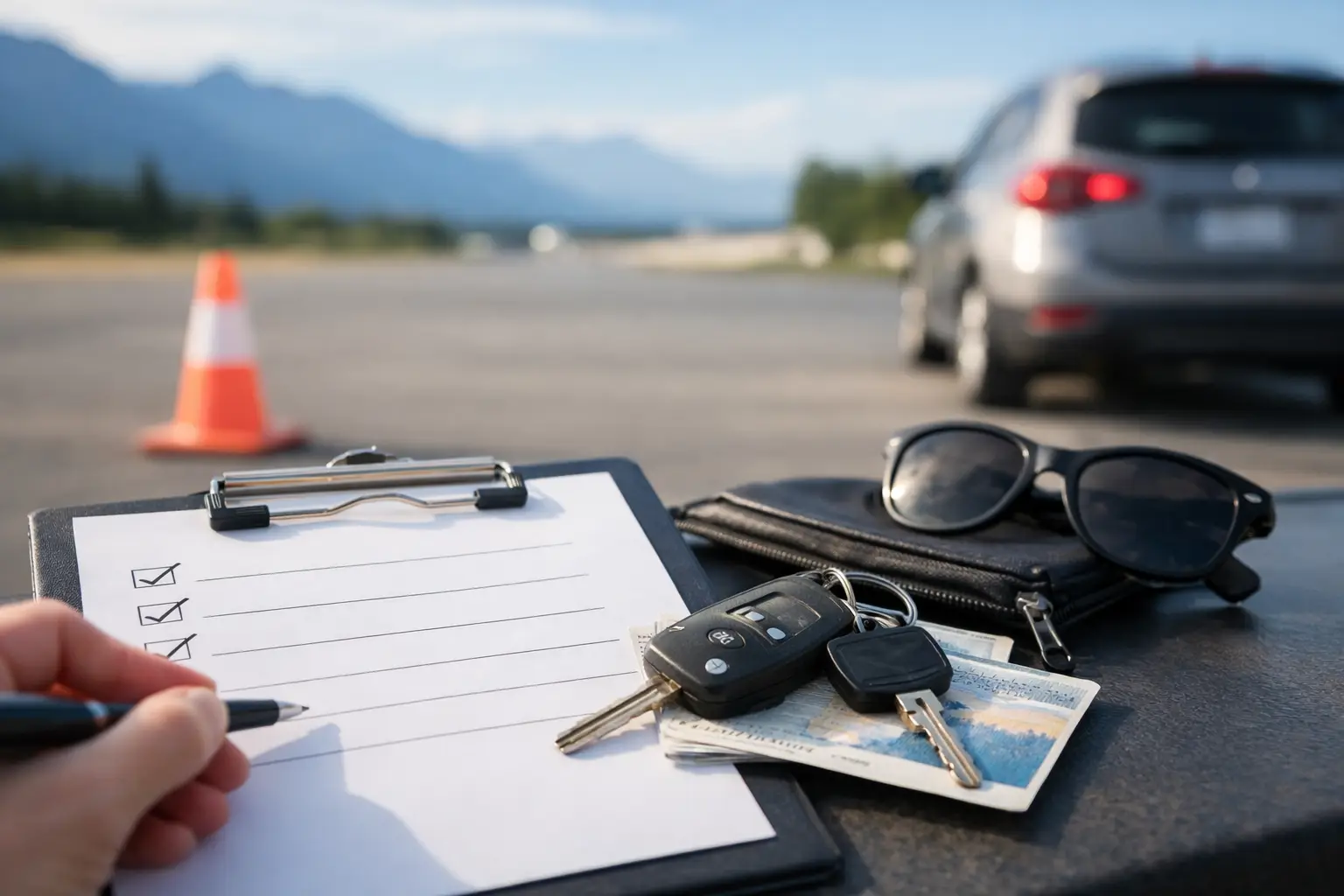
The night before a road test is when small mistakes start to feel big. A missing registration, a brake light that suddenly does not work, or uncertainty about a school zone can undo weeks of practice. That is why a clear road test preparation checklist Alberta Class 5 drivers can follow matters so much. Good preparation is not about cramming. It is about showing up organized, calm, and ready to drive with safety and control.
For most learners, the test itself is only one part of the challenge. The other part is managing nerves while proving consistent habits under observation. Examiners are not looking for perfection in every second. They are looking for safe judgment, proper vehicle control, awareness of hazards, and a driver who follows Alberta rules without needing prompts.
Why a road test preparation checklist Alberta Class 5 drivers use should be practical
A useful checklist does two jobs. First, it helps you avoid preventable issues before the test begins. Second, it tells you where to focus your final practice so your time on the road actually improves your result.
That means your preparation should cover three areas: your documents, your vehicle, and your driving habits. If one of those areas is weak, it can affect the entire appointment. You can drive well and still lose your test time if you arrive with the wrong paperwork or an unsafe vehicle.
Before test day: confirm the basics early
Start with eligibility and scheduling details well before the appointment. Make sure your license stage, identification, and booking information are correct. If you are upgrading from Class 5 GDL to the full Class 5, double-check that you meet Alberta’s timing and eligibility requirements before test day. If you are a newer driver preparing for a Class 5 GDL road test, confirm that your practice has covered the core maneuvers and everyday traffic situations the examiner expects to see.
Do not leave this until the last 24 hours. Administrative surprises create unnecessary stress, and stress shows up in your driving.
Documents to bring
Have your driver’s license ready and bring any required paperwork connected to the booking. If you are using your own vehicle, make sure registration and insurance are current and accessible. Keep these organized in one place so you are not searching through a glove box while the examiner waits.
It also helps to arrive early enough to check in without rushing. Ten calm minutes in the parking lot is better than stepping out of the car already flustered.
Your vehicle checklist matters more than most students think
A road test can be canceled if the vehicle is not roadworthy. This is one of the easiest parts of preparation to control, yet it gets overlooked all the time.
Walk around the vehicle the day before and again on test day. Check the brake lights, signal lights, headlights, and horn. Make sure the windshield is clean and free from cracks that interfere with visibility. Confirm that mirrors are properly adjusted and that the seats can be positioned for safe control.
Look at your tires as well. They should be in safe condition and properly inflated. Make sure there are no warning lights on the dashboard that suggest a safety issue. The vehicle should be reasonably clean inside too. That is not about appearance alone. A cluttered interior can interfere with pedals, visibility, or your ability to stay focused.
Test-day vehicle essentials
The fuel level should be sufficient for the appointment. The defroster and windshield wipers should work, especially in Calgary conditions where weather can change quickly. If the examiner asks for hand signals, you should know them, but your signal lights still need to work properly. Small equipment failures can turn into big problems at the wrong moment.
If you are borrowing a vehicle, do not assume everything is fine. Drive it in advance. Familiarity matters. The feel of the brakes, steering response, blind spots, and turning radius can affect your confidence more than expected.
The driving skills examiners notice first
Strong road test results usually come from basic habits done consistently. Students often worry most about parallel parking or a specific maneuver, but many tests are affected more by observation, speed control, and lane positioning.
Start with your scanning routine. Check mirrors regularly, look well ahead, and make shoulder checks at the right times. In Alberta road tests, this is a major part of showing that you are aware of surrounding traffic and not just reacting late.
Keep your speed appropriate and steady. Driving too fast is an obvious problem, but driving too slowly can also signal uncertainty or poor traffic flow judgment. The right speed depends on posted limits, road conditions, and the movement of traffic around you.
Stopping is another area where avoidable mistakes happen. Make full stops where required. Stop before the correct line or crosswalk, not in it. If your wheels are still rolling, it is not a complete stop.
Practice the maneuvers that commonly decide results
You do not need to rehearse random tricks. You do need to be comfortable with the maneuvers that show control, observation, and judgment.
Parking and low-speed control
Parallel parking, hill parking, and angle or regular parking should all feel familiar. The standard is not flashy. It is safe, controlled, and legal. Use proper observation throughout, signal when needed, and secure the vehicle correctly after parking.
If one maneuver still feels inconsistent, slow it down. Most parking errors happen because students rush the setup, forget to observe, or correct too late.
Intersections, turns, and lane changes
These are often more important than special maneuvers because they happen throughout the entire route. Practice right and left turns with correct lane choice, smooth steering, and proper speed. Make sure lane changes include mirrors, signal, shoulder check, and a controlled move when space is safe.
Examiners also watch how you handle uncontrolled intersections and pedestrian areas. Good drivers are alert early. They do not wait until the last second to decide.
Build a final practice session that actually helps
The day before the test is not the time for a marathon drive. One focused session is usually better than hours of tired, anxious practice. Spend that time on common road types, school or playground zones, parking, lane changes, and calm repetition of your weak areas.
If test nerves are high, practice a full mock road test. Follow directions from another person without asking for reassurance. This helps you get used to driving independently while someone observes. For many students, that alone reduces pressure.
Structured instruction can make a real difference here. A professional lesson close to the test date helps identify habits you may not notice on your own, especially if you learned from several different people with different standards. At Turn by Turn Driving School, road test preparation is built around that kind of focused, Alberta-specific correction and confidence building.
What to do on test day
Start with enough time. Rushing affects judgment, and it often leads to preventable mistakes before the test even begins. Eat something light, stay hydrated, and avoid loading yourself up with last-minute advice from friends and family. Too many voices create confusion.
Before you drive, set up the vehicle properly. Adjust your seat, mirrors, and steering position. Put your phone away completely. Take a breath before moving the car.
During the test, listen carefully to instructions. If you do not hear something clearly, ask politely for it to be repeated. That is better than guessing. Keep your attention on driving safely, not on trying to read the examiner’s reactions.
If you make a minor mistake, recover and continue. One imperfect turn does not automatically mean failure. What matters is whether you stay composed and keep making safe decisions.
Common mistakes that are preventable
Many unsuccessful tests come down to patterns, not one dramatic event. Drivers forget shoulder checks, roll through stop signs, speed in playground zones, turn into the wrong lane, or miss important signs because they are too focused on the examiner.
Another common issue is hesitation. Caution is good. Unnecessary hesitation that blocks traffic or shows poor decision-making is different. The goal is to drive decisively when it is safe, not timidly at all times.
There is also a trade-off with over-practicing one route. Familiarity can help, but memorizing roads does not build flexible driving. Since actual routes vary, your preparation should focus on skills that transfer to any neighborhood, intersection, or traffic pattern.
A final checklist you can review quickly
Before you leave for your appointment, confirm your license, booking details, registration, and insurance. Make sure the vehicle is fueled, clean, and mechanically ready. Check lights, signals, brakes, mirrors, tires, and windshield condition. Arrive early, set up your driving position, and remind yourself of the habits that matter most: scanning, shoulder checks, speed control, complete stops, correct lane use, and calm decision-making.
Confidence on a road test does not come from hoping for an easy route. It comes from knowing you prepared the right way, with enough structure to trust your training when it counts.
Comments are closed