



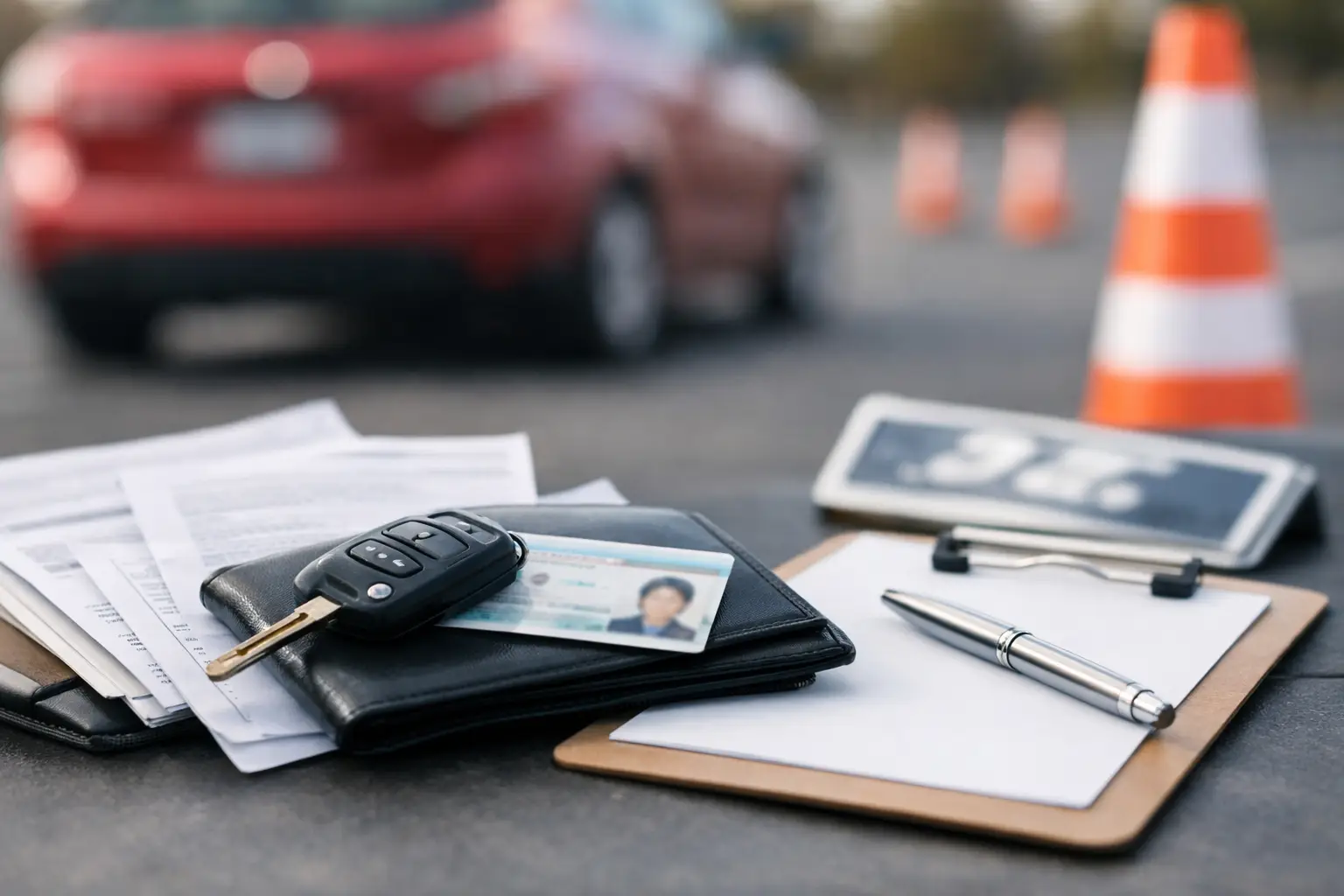
A road test can be canceled before you ever leave the parking lot if a required document is missing or the vehicle does not meet basic safety standards. If you are searching “what documents need road test,” the short answer is simple: arrive with your valid Alberta driver’s license, the vehicle’s registration and insurance, and a roadworthy vehicle.
The details matter, especially when you have spent weeks practicing and have a test appointment on the calendar. Use this guide to prepare for an Alberta Class 5 GDL or full Class 5 road test with fewer last-minute surprises.
What Documents Need for a Road Test?
For an Alberta road test, bring your valid Alberta driver’s license first. This is the document that confirms you are eligible for the test you booked. A Class 7 learner’s license is required for a Class 5 GDL road test. If you are taking the advanced road test to move from Class 5 GDL to a full Class 5 license, bring your valid Class 5 GDL license.
You also need proof that the test vehicle is legally on the road. Bring the vehicle registration and current insurance information. These documents should match the vehicle you will use for the test. If you are borrowing a parent’s, friend’s, or instructor’s vehicle, make sure you know where the registration and insurance documents are kept before test day.
A useful document checklist includes:
- Your valid Alberta driver’s license for the licensing stage you are testing for
- The vehicle registration certificate
- Current proof of vehicle insurance
- Your road test booking confirmation or appointment details
- Any payment receipt or test paperwork requested by the registry agent
Requirements and procedures can differ slightly between registry agent locations. Keep physical copies of key vehicle documents available whenever possible, and contact your registry agent ahead of time if you are unsure whether an electronic document will be accepted. Do not assume a photo of an expired insurance card or a screenshot of someone else’s registration will be enough.
Your driver’s license must be valid
Check the expiration date on your license well before the appointment. A road test examiner cannot proceed if your license is expired, suspended, damaged beyond recognition, or not valid for the test you booked.
New drivers should also confirm they are taking the right test. The Class 5 GDL road test is the next step for drivers who hold a Class 7 learner’s license. The advanced road test is for Class 5 GDL drivers who meet Alberta’s eligibility requirements and are ready to exit the GDL program. Booking the wrong test can cost time, money, and momentum.
If you have recently moved to Alberta or hold an international license, your situation may require additional licensing steps before you can take a road test. Do not wait until test week to sort out identification, license exchange, or eligibility questions with a registry agent.
Your Vehicle Is Part of the Road Test Requirement
Documents get you checked in, but the vehicle gets you onto the road. Before the test begins, the examiner will assess whether the vehicle is safe and legally equipped for use. If it is not, the test may be refused or canceled.
Your test vehicle should have working headlights, brake lights, turn signals, windshield wipers, horn, mirrors, seat belts, tires, and brakes. The windshield must give the driver a clear view. The vehicle also needs a valid license plate and enough fuel for the full route.
Take five minutes the day before to test the basics. Turn on the lights, press the brakes while someone checks the brake lights, use both turn signals, and make sure the windshield washer fluid works. Calgary weather can change quickly, so wipers and defrosting are not small details. A fogged or icy windshield is a safety problem, not just an inconvenience.
Borrowed, rental, and instructor vehicles
A borrowed vehicle is acceptable only if it is properly registered, insured, and safe to drive. The owner should know you are using it for a road test, and you should be comfortable with the controls before the appointment. Test day is not the time to figure out an unfamiliar parking brake, backup camera display, fuel door release, or windshield wiper setting.
Rental vehicles can involve restrictions set by the rental company, especially for younger drivers or learner drivers. Confirm the rental agreement permits road-test use and that the insurance coverage is in place. If there is any uncertainty, choose another vehicle rather than risk losing your appointment.
Using an instructor-provided vehicle can reduce the document and vehicle-preparation burden, but it does not replace your responsibility to bring your own valid driver’s license. At Turn by Turn Driving School, students can build road-test readiness through structured in-car lessons that focus on defensive driving, hazard detection, vehicle control, and the routines examiners expect to see.
Documents You Usually Do Not Need
Many drivers bring extra papers because they are worried something will be missing. Preparation is good, but not every driving-related document is needed at check-in.
You generally do not need to bring a completion certificate for a driving course to take a road test. A driver education course can strengthen your skills and may support insurance benefits when it meets the applicable requirements, but the course certificate is not your ticket into the examiner’s vehicle.
You also do not need a parent or guardian to sit in on the road test simply because you are under 18. However, younger drivers should make sure they have completed all licensing and consent requirements required at earlier stages. If a parent is providing the vehicle, confirm that the documents are in the glove box and are current.
Your test appointment confirmation may not always be treated as a primary identification document, but it is still worth bringing. It helps you verify the correct time, location, test type, and booking details. Save it on your phone and write down the essential information in case your battery runs low.
A Test-Day Routine That Prevents Delays
Plan to arrive early enough to park, settle in, and complete the check-in process without rushing. Aim for at least 15 minutes early, unless your booking instructions tell you otherwise. Arriving too early is manageable. Arriving late can mean losing the appointment.
Before leaving home, place your license, registration, and insurance together in one folder or envelope. Then inspect the vehicle one more time. Adjust the driver’s seat and mirrors when you arrive, but do not begin the test with a cluttered cabin, loose items rolling around the floor, or windows covered in frost.
Keep your mindset practical. The examiner is not looking for a perfect performance. They are assessing whether you can operate the vehicle safely, follow traffic laws, observe hazards, make sound decisions, and maintain control in real traffic. Missing a document or bringing an unsafe vehicle prevents them from assessing those skills at all.
Prepare Beyond the Paperwork
The best document checklist cannot replace driving preparation. A driver who has the correct paperwork but rushes through intersections, misses shoulder checks, or follows too closely is not ready for a Class 5 road test.
Use your practice time to build repeatable habits: scan well ahead, check mirrors regularly, make complete stops, choose safe gaps, control your speed, and communicate clearly with signals. For Calgary drivers, it also helps to practice lane changes, school and playground zones, busy intersections, residential areas, and changing weather conditions.
If you feel uncertain, a brush-up lesson before your appointment can be a smart decision. One focused session can identify habits that family practice may overlook, such as incomplete stops, late observations, poor lane positioning, or hesitation at uncontrolled intersections. Confidence comes from knowing what to do and doing it consistently.
Put your documents together the night before, give the vehicle a real safety check, and leave enough time to arrive calm. That preparation lets test day focus where it belongs: showing that you can drive with safety, control, and responsibility.
Comments are closed