



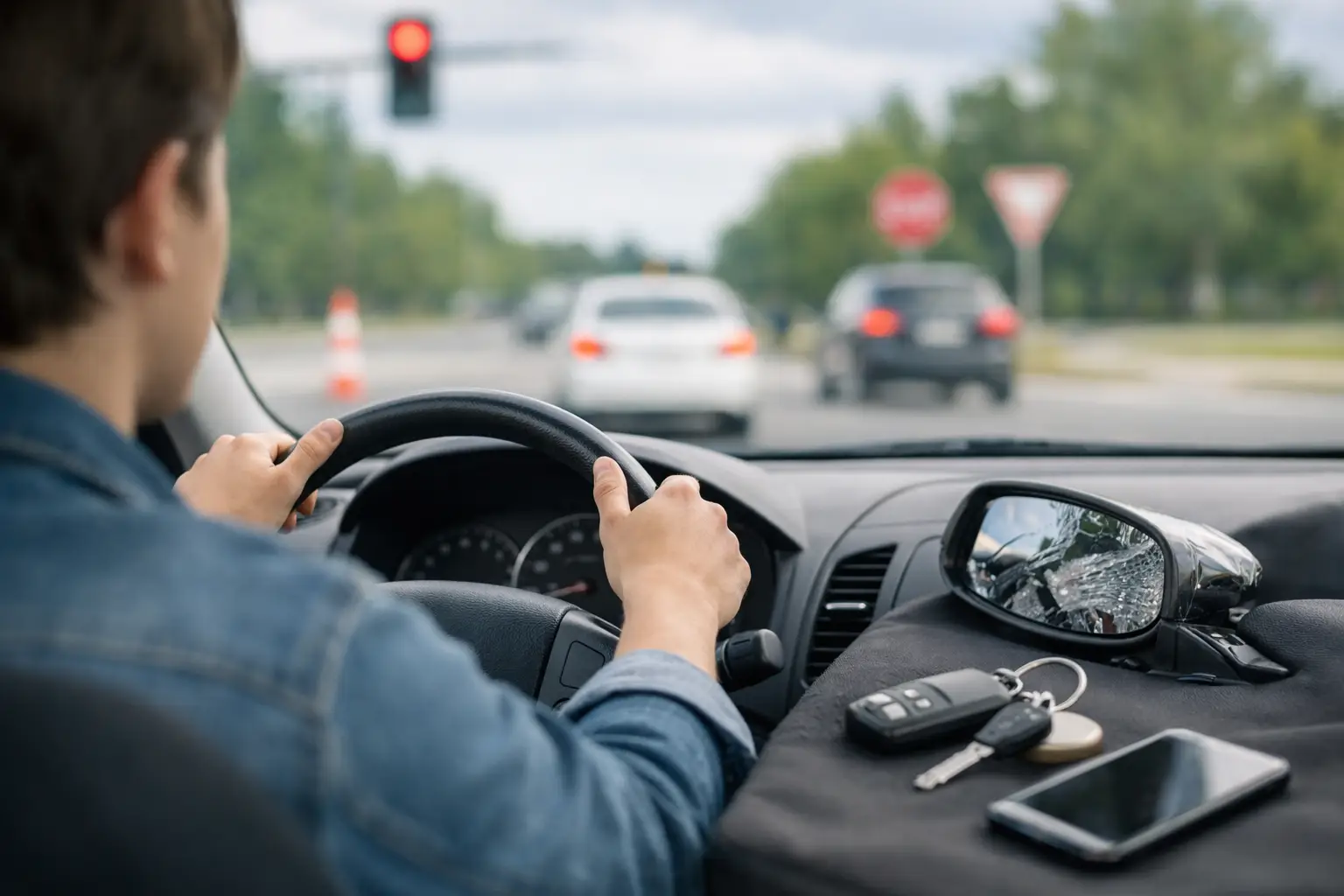
Most beginner drivers do not struggle because they are careless. They struggle because they are trying to manage too many things at once – steering, speed, signs, mirrors, pedestrians, and pressure from other traffic. That is exactly why learning the best beginner driving mistakes to avoid matters early. The habits you build in your first stage of driving tend to stay with you, and good habits are much easier to build than bad ones are to fix later.
A new driver does not need to be perfect on day one. They do need a clear process. When training is structured, students learn how to spot risks sooner, make calmer decisions, and drive with more control in real traffic, not just in quiet parking lots.
Why beginner mistakes happen so often
Most driving errors from new drivers are not about knowledge alone. Many students can explain a rule correctly but still miss it on the road because timing, observation, and decision-making are harder under pressure. A stop sign is simple in theory. It feels different when a car is behind you, a pedestrian is near the crosswalk, and you are trying to judge when to move.
That is why repetition matters. Beginner drivers need a step-by-step approach that turns rules into habits. When a student learns in a structured way, each lesson builds on the last one instead of leaving them to guess what to fix next.
The best beginner driving mistakes to avoid first
Some mistakes are common because they come from inexperience, not from lack of effort. These are the ones worth correcting early because they affect both safety and road test performance.
1. Looking too close to the front of the car
New drivers often focus only on what is directly ahead. That creates late reactions. If you are only watching the back of the car in front of you, you will brake late, notice lights late, and miss developing hazards at intersections.
A better habit is to keep your eyes moving. Scan well ahead, check mirrors regularly, and keep peripheral awareness of what is happening beside you. When you look farther up the road, your driving becomes smoother because you are planning instead of reacting.
2. Rolling through stops
Many beginners slow down at stop signs without making a full stop. Sometimes this happens because they are nervous about holding up traffic. Sometimes they simply misjudge what a complete stop feels like.
A full stop means the vehicle stops moving completely. Then you check left, right, and left again before proceeding when safe. This matters for road tests, but more importantly, it matters because residential streets, school zones, and parking lot exits often have hidden risks.
3. Driving too fast for conditions
Speeding is not the only problem. New drivers also drive too fast for turns, parking lots, wet roads, snow, heavy traffic, or limited visibility. The posted speed limit is not a target that fits every situation.
Control should come before pace. If you feel rushed, you are more likely to brake hard, turn late, or miss signs. A steady, controlled speed gives you time to scan, judge space, and respond correctly.
4. Turning without proper lane position
Wide right turns and short left turns are very common with beginners. These mistakes usually happen when the driver is focused only on clearing the corner instead of setting up the turn properly.
Good lane position starts before the turn. Approach in the correct part of your lane, reduce speed smoothly, look where you want the car to go, and finish in the proper lane. It sounds basic, but this is one of the clearest signs of whether a student is driving with planning and control.
5. Forgetting mirror and shoulder checks
Many new drivers check mirrors once and assume that is enough. It is not. Traffic changes quickly, especially before lane changes, turns, and merging.
Mirrors show part of the picture. Shoulder checks confirm what mirrors cannot. Skipping them can put you into the path of another vehicle, cyclist, or pedestrian. The goal is not to perform checks mechanically. The goal is to understand when and why they are necessary.
Best beginner driving mistakes to avoid in traffic
Once a student moves from quiet roads into busier traffic, a different set of errors tends to appear. These mistakes are often tied to confidence, timing, and pressure from surrounding drivers.
6. Following too closely
Tailgating is often unintentional for beginners. They are so focused on staying with traffic that they forget to protect their stopping distance. If the car ahead brakes suddenly, a new driver has less time to react and may panic.
Leaving enough space gives you options. It reduces stress, improves visibility, and gives you more time to make smooth decisions. In poor weather or on busy urban roads, that extra space becomes even more important.
7. Hesitating too long at the wrong time
Caution is good. Indecision is not. New drivers sometimes wait too long at four-way stops, during merges, or when making turns across traffic. That can confuse other drivers and create new risks.
This is where judgment develops through guided practice. You need to learn how to recognize a safe gap and commit to it. If you are always second-guessing, your driving becomes unpredictable. Predictable driving is safer for everyone around you.
8. Missing signs and lane markings
A student may know the rule but still miss the sign because they are overloaded. This often happens in unfamiliar areas or near complex intersections where there are multiple signals, lane arrows, and crosswalks.
The solution is not to stare harder at one thing. It is to improve your scan pattern. When you are trained to read the road early, you notice lane control signs, speed changes, and turn restrictions before you are already committed.
9. Braking too late or too hard
Late braking usually starts with late observation. If you notice the red light or stopped traffic too late, you brake sharply. That can unsettle the car and reduce control, especially in slippery conditions.
Smooth braking starts with early planning. Ease off the gas sooner, cover the brake when needed, and slow progressively. This creates a more controlled stop and shows that you are reading the road ahead, not just reacting at the last second.
10. Letting nerves control decisions
Anxious drivers often know what to do, but pressure changes how they act. They may rush a turn because someone is waiting behind them, freeze at a green light, or forget a routine they completed correctly in practice.
Confidence does not come from being told to relax. It comes from repetition, clear feedback, and learning a consistent driving process. That is why structured in-car lessons are so effective for beginners and returning drivers alike. When you know what steps to follow, nerves lose some of their power.
How to correct beginner mistakes before they become habits
The fastest way to improve is not to drive more without direction. It is to practice the right skills in the right order. Start with observation, speed control, stopping, and turning. Then build toward lane changes, merges, complex intersections, and independent decision-making.
It also helps to practice in 2-hour lessons or similarly focused sessions where one skill leads into the next. That gives students enough time to settle in, apply feedback, and repeat corrections while the lesson is still fresh. Short, inconsistent practice can help, but it often leaves gaps if no one is identifying the real cause of the mistake.
For example, a student who struggles with left turns may think the issue is steering. In many cases, the real problem is earlier – poor speed control, late observation, or incorrect lane position on approach. Good instruction identifies the root problem, not just the visible result.
What beginners should focus on before a road test
Road tests do not reward flashy driving. They reward safe, consistent, responsible driving. That means full stops, proper observation, controlled turns, stable speed, safe following distance, and clear responses to traffic signs and hazards.
If you are preparing for a test, focus on consistency rather than trying to impress the examiner. A calm, predictable drive is the goal. Review the areas where beginners usually lose marks, then practice them until the sequence feels normal. That includes scanning intersections, checking mirrors before slowing, using shoulder checks at the right times, and managing speed on every block, not just when you notice a sign.
For many learners, this is also where structured preparation makes the biggest difference. Turn by Turn Driving School builds training around real road skills, not just test-day tricks, so students can improve judgment, control, and long-term safety at the same time.
Good driving starts with small choices repeated correctly. If you can slow down, scan early, stop fully, and make decisions with control, you are already building the kind of habits that stay with you long after you pass your test.
Comments are closed