



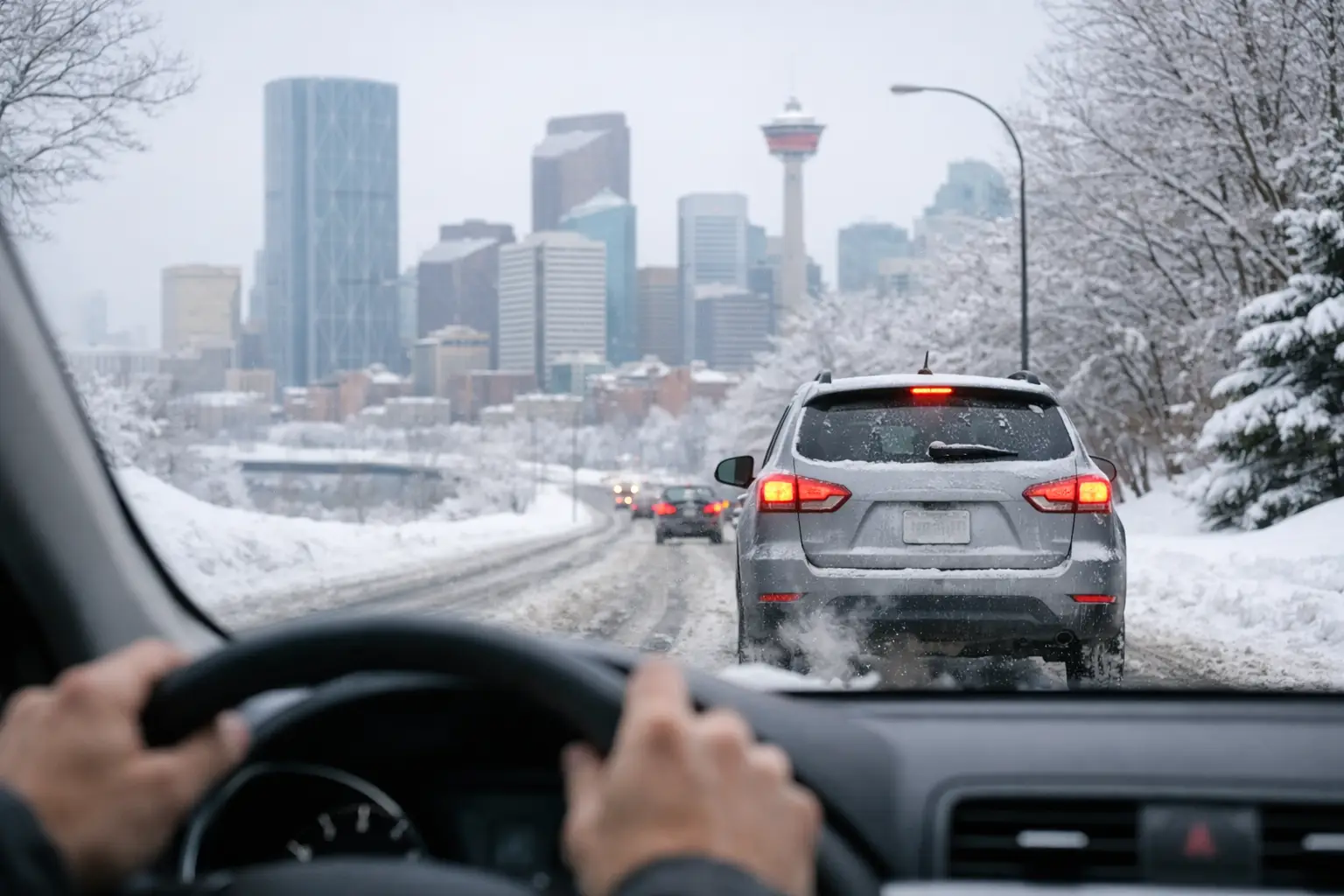
The first real Calgary snowfall changes the road faster than many new drivers expect. One afternoon you are driving on dry pavement, and the next morning you are dealing with black ice at intersections, rutted lanes, frozen windshields, and reduced visibility before sunrise. If you are learning how to drive safely in Calgary winter, the goal is not to feel fearless. The goal is to stay controlled, prepared, and consistent when conditions change.
Winter driving is less about quick reactions and more about better decisions made earlier. That means giving yourself more space, reducing speed before a problem starts, and understanding what your vehicle can and cannot do on snow and ice. Confidence comes from good habits, not guesswork.
How to drive safely in Calgary winter starts before you move
Safe winter driving begins in the parking spot, not at the first intersection. If your windows are partially cleared, your mirrors are iced over, or snow is sliding off the roof, you are already starting behind. Calgary weather can shift quickly, and a vehicle that is only half-prepared can become difficult to control within minutes.
Give yourself extra time to fully clear all windows, mirrors, lights, and the roof. Snow left on the roof can blow onto your windshield when you brake or onto another driver behind you. Let the defroster do its job, but do not rely on it to clear only a small viewing area. Full visibility matters in winter because hazards appear sooner and disappear faster.
Your tires matter just as much as visibility. Winter tires provide better grip in cold temperatures, even before deep snow arrives. All-season tires may be manageable in mild conditions, but they do not perform the same way once roads become icy or temperatures drop sharply. If you are serious about safe, responsible driving, winter tires are one of the clearest upgrades you can make.
It also helps to check washer fluid, wiper condition, battery strength, and tire pressure. Cold weather affects all of them. A weak battery or poor wipers may seem minor until you are stuck in a parking lot or driving into blowing snow at dusk.
Adjust your speed early, not late
One of the most common winter mistakes is driving for the speed limit instead of driving for the conditions. The posted speed limit assumes normal road conditions. Snow-packed roads, slush, ice, or poor visibility change that calculation immediately.
The safest drivers in winter start slowing down before they need to brake. That is especially true when approaching lights, stop signs, curves, school zones, bridge decks, and highway exits. If you wait until the normal braking point, you may discover too late that the surface has less traction than expected.
This is where many anxious drivers get caught. They are not driving recklessly, but they are driving as if the road will respond the same way it does in July. In winter, every action needs more distance. More following distance. More stopping distance. More time to steer smoothly.
A good rule is to increase your space cushion significantly and avoid sudden inputs. Hard braking, fast acceleration, and sharp steering all make it easier to lose traction. Smooth driving is controlled driving.
Braking and steering on snow and ice
If you want to know how to drive safely in Calgary winter, learn what smooth braking feels like. On a slippery road, the goal is to slow the vehicle without upsetting its balance. Press the brake firmly but progressively. If your vehicle has ABS, you may feel vibration or pulsing during hard braking. That is normal. Keep steady pressure on the brake and steer where you want the vehicle to go.
If the vehicle starts to skid, your response depends on the situation, but panic is what makes most skids worse. Take your foot off the accelerator, avoid overcorrecting, and look in the direction you want to travel. Your hands often follow your eyes. If you stare at the curb, the median, or the vehicle ahead, you increase the chance of steering into trouble instead of away from it.
Turns need the same patience. Slow down before the turn, not in the middle of it. Entering too fast and then braking while turning is a common reason drivers slide through corners. Finish most of your braking in a straight line, then steer gently through the curve.
Visibility is a safety skill, not a comfort issue
Winter visibility problems are not limited to heavy snow. Low sun glare, dirty slush spray, fogged windows, and early darkness all reduce the time you have to identify hazards. That makes scanning habits more important.
Keep your windshield clean inside and out. Use winter washer fluid that works in freezing temperatures. Turn on your headlights when visibility drops, even during the day. In many winter conditions, being seen matters as much as seeing clearly.
You also need to scan farther ahead than usual. Watch traffic flow, brake lights, lane changes, and problem areas such as shaded sections of road, overpasses, and intersections with polished ice. Calgary roads can look merely wet and still be dangerously slick. That is why hazard detection matters so much in winter. You need to identify what may happen next, not just react to what is happening now.
Hills, ruts, and Calgary-specific trouble spots
Calgary winter driving has a few patterns that catch inexperienced drivers off guard. Hills require momentum, but not speed. If you approach too slowly, you may lose traction and stall your climb. If you approach too fast, you may not be able to adjust safely if traffic slows near the top. The answer is controlled, steady throttle and enough following distance to keep moving without rushing.
Rutted lanes are another challenge. Packed snow can pull your tires and make lane changes feel unstable. Avoid fighting the wheel. Keep both hands on the steering wheel, stay relaxed, and make lane changes only when necessary and with extra space. Quick steering inputs on rutted or icy roads can unsettle the vehicle fast.
Intersections are often the iciest parts of the road because of repeated braking and acceleration from other vehicles. Treat them with caution even when the road between them feels manageable. Bridge decks and overpasses also freeze sooner than regular pavement, so approach them expecting less traction.
How to drive safely in Calgary winter when other drivers are not
Defensive driving becomes even more important in winter because your safety depends partly on other people’s judgment. Some drivers follow too closely, brake too late, or assume four-wheel drive means they can ignore road conditions. It cannot.
Your job is not to match the most aggressive driver around you. Your job is to preserve space and options. If someone is tailgating, avoid speeding up beyond what conditions allow. When safe, create an opportunity for them to pass. If traffic ahead looks unstable, ease off early and give yourself a larger buffer.
At merges and lane changes, expect delayed reactions from others. On icy roads, another driver may be physically unable to stop or move as quickly as they intend. That is why early signaling, gradual speed changes, and generous spacing are so effective. They give everyone more time to succeed.
New drivers should practice in low-pressure conditions
Winter skill builds best in stages. A new driver should not begin with rush-hour traffic during active snowfall if they have never practiced threshold braking, skid awareness, or reduced-traction turns. Start in lower-risk conditions with supervision from an experienced, Alberta-licensed instructor who can explain what the vehicle is doing and why.
An empty parking lot after light snowfall can be useful for feeling how the car responds to braking and steering, but practice should still be structured. Random exposure does not always build correct habits. Targeted instruction does. That is especially true for teenagers, nervous first-time drivers, internationally licensed drivers adjusting to Alberta winters, and adults returning to the road after time away.
At Turn by Turn Driving School, this is exactly why structured in-car training matters. Students do not just log hours. They learn how to make safer decisions, identify hazards earlier, and stay composed when road conditions are less forgiving.
What to keep in your car in winter
You do not need to overpack your vehicle, but a few practical items make sense in Calgary winter. A snow brush and ice scraper are essential. It is also smart to carry extra washer fluid, a phone charger, gloves, and warm outerwear in case of delays.
For longer drives or colder periods, a small emergency kit can help. The right setup depends on how far you travel, where you park, and whether you commute outside the city. The point is preparation, not panic. Winter driving is more manageable when you have planned for inconvenience before it becomes a problem.
Driving safely in winter is not about perfection. It is about building repeatable habits that protect you, your passengers, and everyone else on the road. If you slow down early, leave more space, keep the vehicle properly prepared, and stay focused on visibility and traction, you give yourself the best chance to drive with safety and control when Calgary winter shows up at full strength.
Comments are closed