



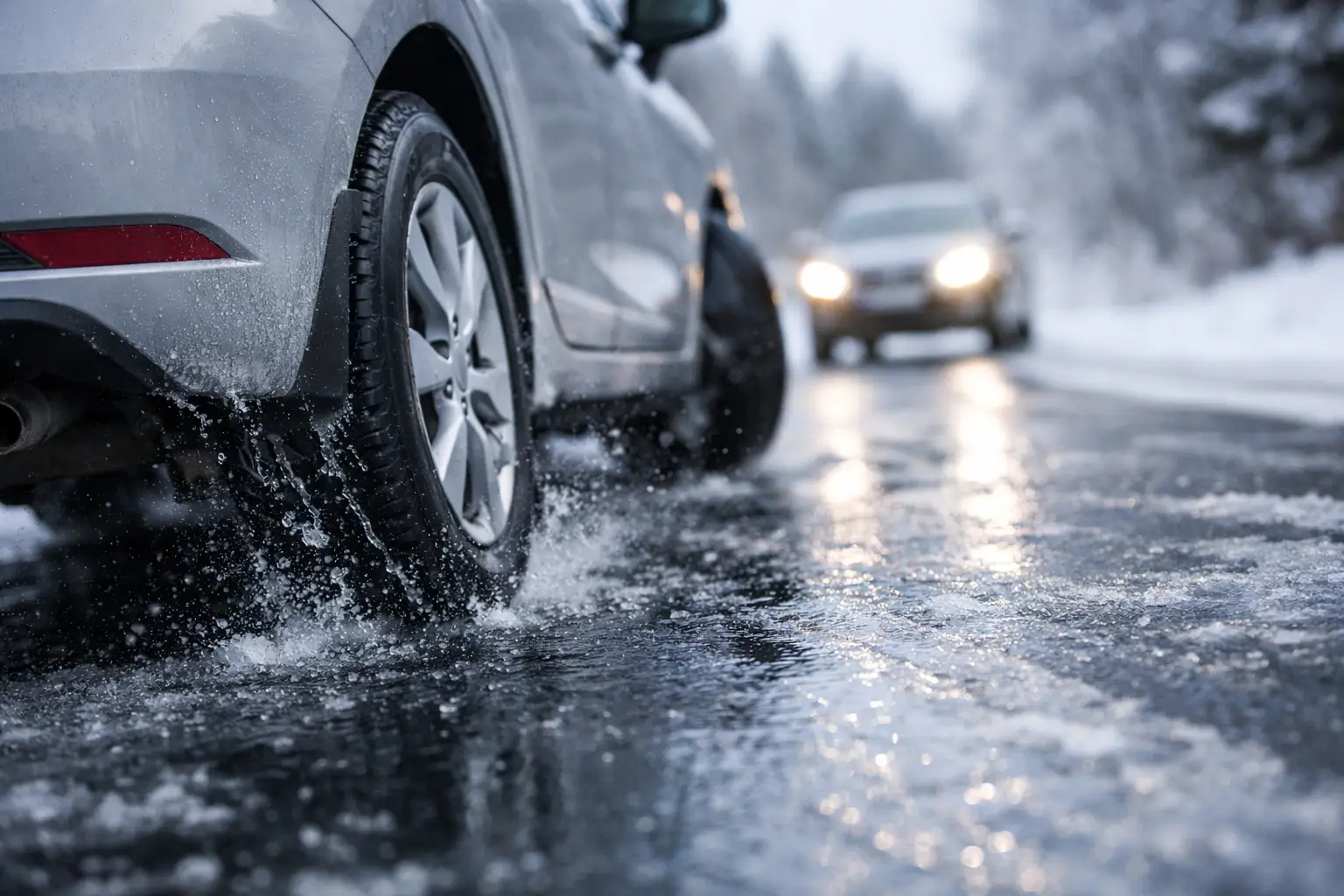
A clear road can become a dangerous one in a single second. Black ice often looks like ordinary wet pavement, but it can remove nearly all tire grip without warning. Knowing how to handle black ice is not about making a dramatic recovery. It is about recognizing the change early, staying calm, and making small, controlled inputs that give your vehicle the best chance to regain traction.
For new drivers, returning drivers, and anyone driving through a cold-weather season, this is one of the most valuable defensive-driving skills to practice. The goal is simple: learn to drive with safety and control before the road demands it.
What Black Ice Is and Why It Is So Dangerous
Black ice is a thin, transparent layer of ice that forms on pavement. Because the dark road surface shows through it, it may look black, wet, or simply shiny. It is especially common when temperatures are near freezing and moisture from rain, melting snow, fog, or condensation refreezes.
You are most likely to encounter it on bridges, overpasses, shaded streets, entrance and exit ramps, and roads near bodies of water. These surfaces can freeze before the rest of the roadway because cold air reaches them from above and below. Early mornings, evenings, and sudden temperature drops deserve extra caution.
The danger is not just that the ice is hard to see. A vehicle can feel stable on dry or wet pavement and then lose traction instantly when it reaches a frozen patch. Braking, turning, or accelerating aggressively at that moment can cause the vehicle to skid.
How to Recognize Black Ice Before You Reach It
You will not always see black ice in time, but strong hazard detection gives you more opportunities to adjust before traction disappears. Watch for pavement that looks darker, glossier, or more reflective than nearby lanes. A road that appears wet when temperatures are at or below freezing should be treated as potentially icy.
Pay attention to your vehicle as well. If road spray suddenly disappears, if your tires become unusually quiet, or if your steering feels light and less connected to the road, reduce your inputs immediately. Your vehicle may already be on ice.
Roadside clues matter. Frost on guardrails, ice on parked vehicles, and snow buildup along the shoulder are reminders that the road surface may be colder than the air temperature shown on your dashboard. Do not assume a plowed road is a fully safe road.
What to Do When Your Vehicle Hits Black Ice
The first rule is to avoid sudden actions. Do not slam on the brakes, jerk the steering wheel, or quickly lift and reapply the accelerator. Those reactions can transfer weight abruptly and make a skid worse.
Instead, ease off the accelerator and keep both hands steady on the wheel. Look where you want the vehicle to go, not at the ditch, guardrail, or vehicle you fear hitting. Your hands tend to follow your eyes, so keep your focus on the safest open path ahead.
If the car is traveling straight and you have room, keep the wheels pointed straight while allowing the vehicle to slow naturally. Avoid using cruise control in icy conditions because you need immediate, direct control of your speed.
If your vehicle begins to skid, steer gently in the direction you want the front of the vehicle to travel. Do not overcorrect. A rapid turn in the opposite direction can lead to a second skid or a spin. The correction should be smooth, small, and patient.
As traction returns, continue driving gently. Many drivers regain grip and then react too strongly, causing the vehicle to slide in the other direction. Staying calm through the entire recovery matters as much as the first response.
If You Need to Brake
If your vehicle has anti-lock brakes, press the brake pedal firmly and steadily when braking is necessary. You may feel vibration or pulsing through the pedal. That is the anti-lock system working to help prevent the wheels from locking. Keep pressure on the pedal and steer toward a safe path if needed.
If you drive an older vehicle without anti-lock brakes, use controlled threshold braking. Apply brake pressure until just before the wheels lock, ease off if they begin to skid, then reapply. This takes practice, which is why winter driving instruction and supervised practice in a safe location can be valuable.
Even with anti-lock brakes, stopping distance on ice can be far longer than expected. The system can help you maintain steering control, but it cannot create traction where there is very little available.
Slow Down Before the Ice, Not After It
The safest response to black ice begins before you encounter it. Reduce your speed when conditions suggest ice may be present, even if the posted speed limit is higher. A speed limit is not a guarantee that the road is safe at that speed in every weather condition.
Increase your following distance significantly. On dry pavement, a few seconds of space may be enough for normal driving. In winter conditions, leave much more room so you can slow gradually rather than brake hard. This is particularly important near intersections, school zones, ramps, and traffic that may stop unexpectedly.
Make every control input more gradual. Accelerate slowly, brake earlier, and turn with less steering angle. Smooth driving gives tires the best chance to maintain the limited grip available. Sharp movements ask too much from the tires at once.
It also helps to choose your route carefully. Major roads may be treated more quickly than quiet residential streets, but bridges, ramps, and shaded sections can still freeze. If conditions are severe and your trip is not necessary, delaying it is often the most responsible decision.
Prepare Your Vehicle for Winter Traction
Driver skill matters, but tires are the connection between your vehicle and the road. Tires with worn tread, incorrect pressure, or poor cold-weather performance reduce your margin for error. Check tire pressure regularly because it drops as temperatures fall.
Winter tires are designed with rubber compounds and tread patterns that perform better in cold conditions than all-season tires. They do not make black ice safe, and they do not replace cautious driving. They can, however, improve traction during cold-weather braking, turning, and acceleration.
Before leaving, clear all snow and ice from your windows, mirrors, lights, roof, and hood. Good visibility supports earlier hazard recognition. Keep your fuel level adequate, carry a charged phone, and make sure windshield washer fluid is rated for freezing temperatures.
Common Mistakes That Make a Slide Worse
Black ice creates stress, and stress can lead drivers to react faster than they think. Avoid these four common mistakes:
- Braking hard the moment the vehicle feels unstable.
- Looking at the hazard instead of the safe space ahead.
- Turning the wheel sharply or correcting back and forth.
- Following too closely because the road appears merely wet.
The better approach is controlled and deliberate: reduce speed, keep your eyes up, steer smoothly, and give yourself space. These habits are useful on every winter drive, not only when black ice is visible.
How to Build Confidence on Icy Roads
Confidence is not pretending winter roads are harmless. It is knowing what to look for and having a practiced response when conditions change. New drivers should begin by practicing smooth braking, steady steering, and safe following distances in ordinary conditions. Those skills become essential when traction is limited.
A structured lesson with an experienced instructor can help drivers understand how a vehicle responds to reduced traction without learning through a frightening real-world mistake. Turn by Turn Driving School teaches defensive driving and hazard detection as practical skills that support safe, responsible driving for life.
If a road looks questionable, treat it cautiously. Arriving a few minutes later is always preferable to discovering too late that the pavement was ice, not water.
When to Stop Driving
There are conditions where the right choice is not to continue. If freezing rain is actively falling, visibility is poor, roads have not been treated, or you feel unable to maintain safe control, pull over at a safe location or postpone the trip. This is not a lack of confidence. It is sound risk management.
Black ice rewards preparation and patience. Give yourself more time, leave more space, and make every action behind the wheel calm and intentional. Those choices protect not only you, but everyone sharing the road with you.
Comments are closed