



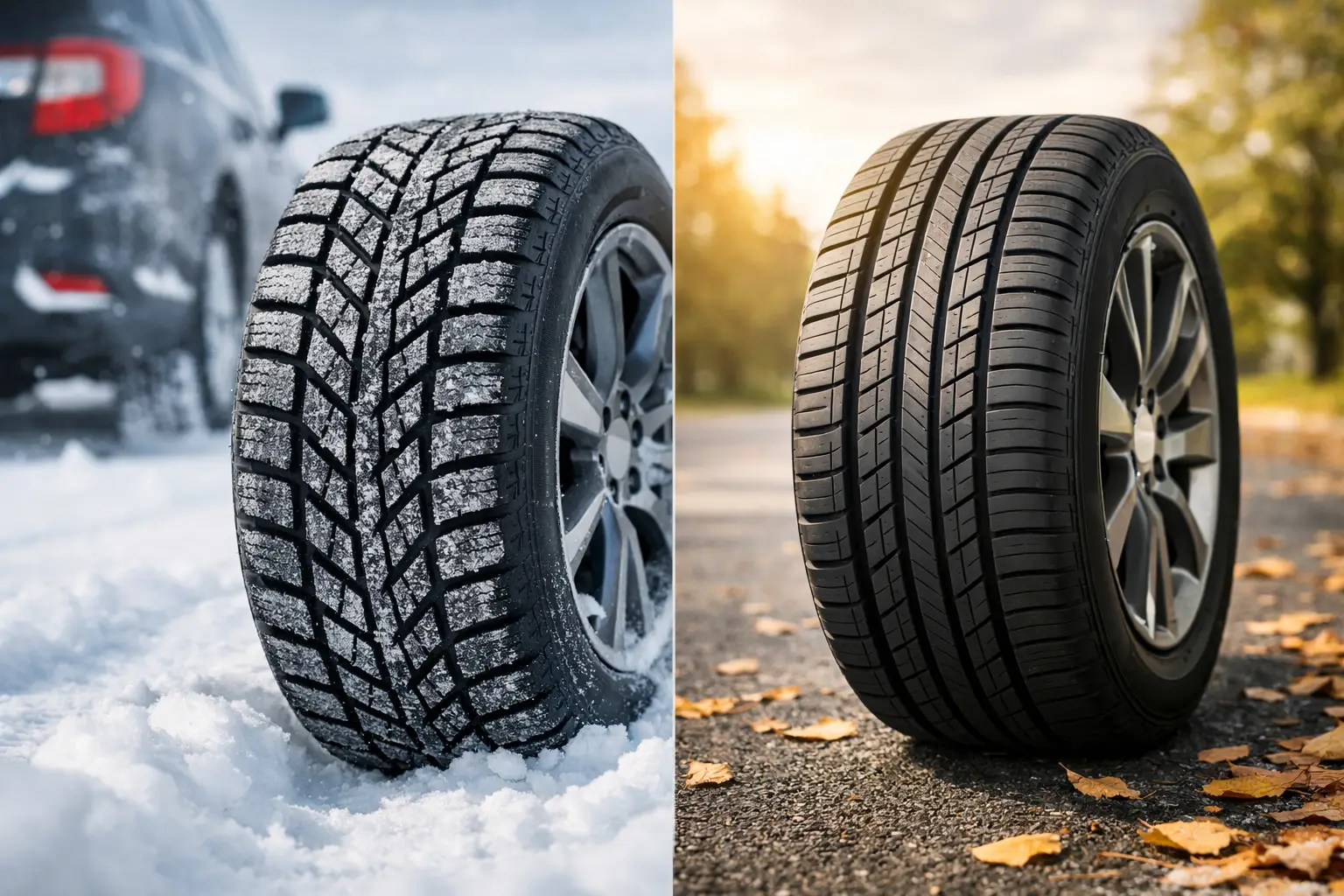
A clear road can become a low-grip road in one shaded intersection. That is why the winter tires versus all season decision is not just about whether snow is falling. It affects how your vehicle brakes at a red light, turns onto a residential street, and recovers when conditions change faster than expected.
For new drivers, returning drivers, and families sharing a vehicle, the right tire choice supports safer decisions behind the wheel. It does not replace defensive driving, space management, or smooth control inputs. It gives those skills a better foundation when temperatures drop.
Winter tires versus all season: the practical difference
The main difference is the rubber compound and tread design. Winter tires are built to stay flexible in cold temperatures, generally below about 45 F or 7 C. Flexible rubber can conform better to the road surface, helping the tire maintain grip on cold pavement, packed snow, slush, and ice.
All-season tires are designed as a compromise for a wide range of conditions. They can provide reliable everyday performance in mild weather, rain, and light snow. However, as the temperature falls, their rubber becomes firmer than a dedicated winter tire. On a cold, slick road, that can mean longer stopping distances and less predictable traction when accelerating or turning.
Winter tires also use deeper tread channels and many small cuts called sipes. These features help move snow and water away from the contact patch, which is the small area where the tire meets the road. More effective contact means more available grip, but only when the driver uses it wisely.
A tire with the three-peak mountain snowflake symbol has met a recognized winter traction standard. That marking is more meaningful for winter use than a simple M+S designation, which appears on many all-season tires. Check the sidewall rather than relying on a tire’s name or advertising description.
When all-season tires may be enough
All-season tires can be a reasonable choice for drivers who live in consistently mild climates, drive mostly on well-maintained roads, and rarely face freezing temperatures or snow-covered pavement. They also avoid the cost and storage needs of maintaining a second set of tires.
For Calgary-area driving, conditions often do not fit that predictable pattern. A day can begin dry, turn icy after sunset, and include snow-packed side streets the next morning. Commuters may travel before roads are fully cleared, while students and shift workers may return home when temperatures have fallen sharply.
If your driving is limited to occasional short trips and you can stay home during poor conditions, high-quality all-season tires with strong tread depth may be workable. The trade-off is reduced safety margin. You will need to be more selective about when you drive and more conservative every time the road is cold or slippery.
Do not confuse all-season tires with all-weather tires. All-weather tires are designed for year-round use but carry the three-peak mountain snowflake symbol. They can be a useful middle option for some drivers, although dedicated winter tires generally offer stronger cold-weather performance. The best choice depends on your vehicle, travel schedule, route, and willingness to adjust plans during severe weather.
Why winter tires build a larger safety margin
Winter tires are not only for deep snow. Their value is often most noticeable on cold, dry-looking pavement and at intersections polished by traffic. Those are situations where drivers may assume the road has normal grip, then discover it does not when they need to brake.
A larger safety margin matters most when a situation develops quickly. A pedestrian steps into a crosswalk, a vehicle ahead stops unexpectedly, or your car begins to slide as you enter a turn. Better tire traction can help, but it cannot overcome excessive speed, following too closely, or abrupt steering.
At Turn by Turn Driving School, winter driving instruction emphasizes the habits that work with your tires: look well ahead, reduce speed before the hazard, maintain a generous following distance, and make one smooth control input at a time. Braking, steering, and accelerating all ask for grip. Asking the tires to do all three aggressively at once is a common cause of a skid.
Winter tires can also make it easier to start from a stop on snow or climb a slippery hill. That added traction should never encourage faster driving. Treat it as a reserve that helps you manage the unexpected, not permission to take the same corner at summer speed.
Choose tires based on your real driving routine
Start with the trips you cannot easily postpone. Consider your commute, school schedule, road test appointments, family responsibilities, and the routes you drive outside city limits. A driver who regularly travels early mornings, late evenings, hills, highways, or unplowed residential streets has a stronger case for dedicated winter tires.
Next, consider your vehicle. Front-wheel drive, rear-wheel drive, all-wheel drive, and four-wheel drive distribute power differently, but none changes the grip available when braking or turning. All-wheel drive may help a vehicle move forward, yet it does not shorten stopping distance on ice. Every vehicle benefits from tires that match the weather.
Budget is a real consideration. A second set of tires involves purchase, installation, seasonal changeovers, and storage. Yet using winter tires during cold months can also reduce wear on your all-season or summer tires. Think about the full cost alongside the potential cost of a collision, a missed day of work, or the stress of feeling out of control in traffic.
For the most consistent handling, install winter tires as a complete set of four. Putting winter tires only on the drive wheels can create an imbalance: the vehicle may accelerate better but lose rear or front-end stability during a turn or stop. Four matching tires help the vehicle respond more predictably.
Tire condition matters as much as tire type
A winter tire that is worn out, underinflated, or damaged will not deliver the performance you expect. Before winter driving season, check tread depth, look for cracks or bulges, and have the tires inspected if you notice vibration, pulling, or repeated pressure loss.
Check tire pressure when the tires are cold. Pressure drops as air temperature falls, and underinflation can reduce handling precision, increase tire wear, and affect fuel use. Use the pressure listed on the vehicle’s driver-side door placard, not the maximum pressure printed on the tire sidewall.
Tire age also deserves attention. Rubber changes over time, even if tread remains. A tire professional can help assess whether an older set remains suitable for winter use. Store seasonal tires in a cool, dry location away from direct sunlight and chemicals, and label their original positions to make rotation easier.
Safe winter driving still requires a plan
The right tires give you more grip, not unlimited grip. Before leaving, clear all snow and ice from the windows, mirrors, lights, roof, and hood. Give yourself extra time so you are not pressured to rush. If road conditions are severe, delaying the trip is often the safest decision.
On the road, increase following distance well beyond your normal dry-road gap. Brake early and gently, especially before curves and intersections. Look where you want the vehicle to go, avoid sudden corrections, and ease off the accelerator if you feel a loss of traction. If your vehicle has anti-lock brakes, press firmly and steadily rather than pumping the brake pedal.
Drivers gain confidence when they understand both their equipment and their limits. Choose tires that fit your winter routine, keep them in good condition, and practice calm, deliberate control. That approach will serve you long after the snow has melted.
Comments are closed