


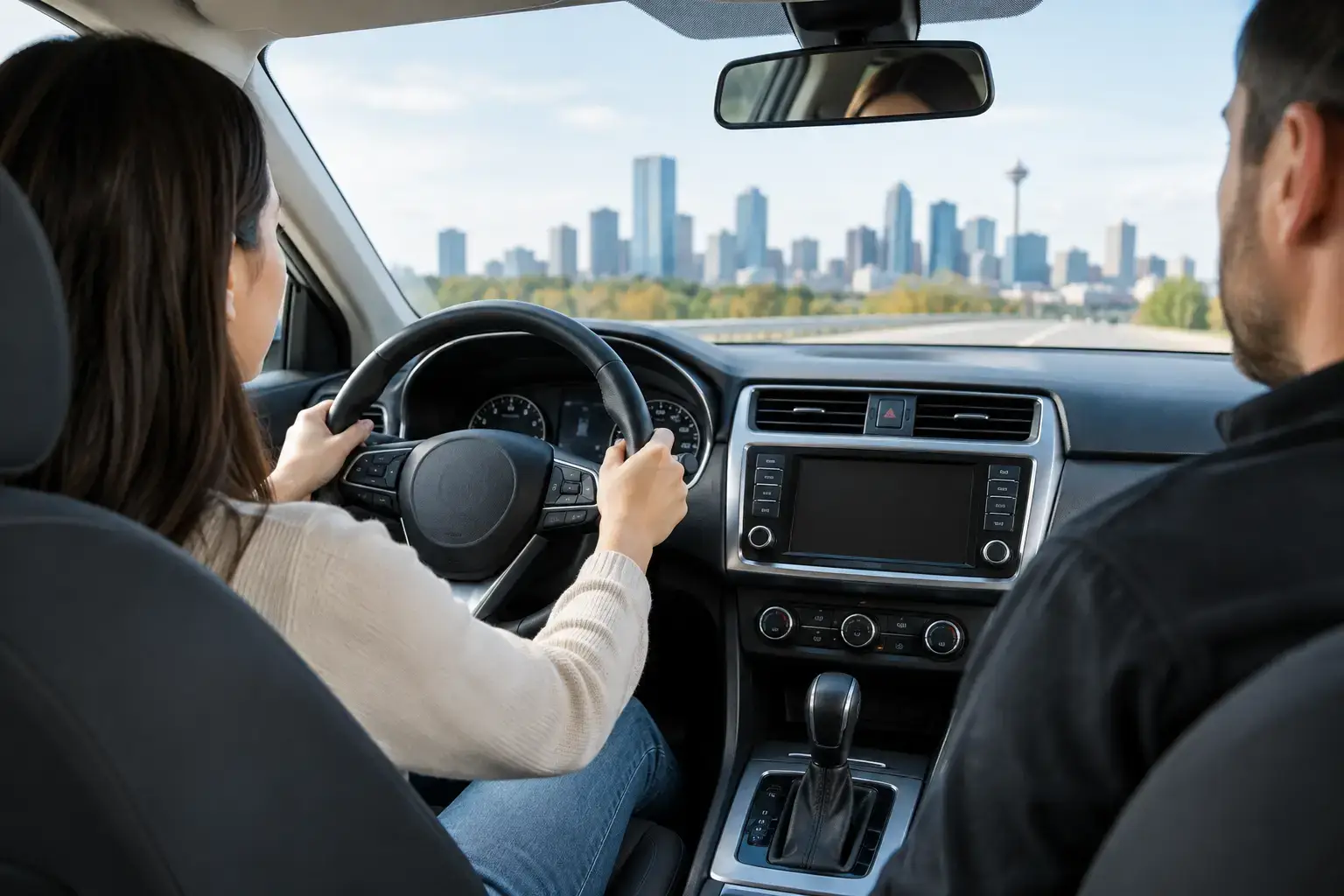
A busy merge onto Deerfoot Trail, a slippery residential intersection after the first snowfall, or a tight parking stall near campus can feel like a lot when you are new to driving. Automatic transmission driving lessons reduce the mechanical workload so you can give proper attention to traffic, space, speed, and hazards. The goal is not simply to make driving feel easier. It is to build the control and judgment needed to become a safe, responsible driver for life.
What Automatic Transmission Driving Lessons Teach
An automatic vehicle does not require a clutch pedal or manual gear changes, but it still requires active, disciplined driving. New drivers must learn how the vehicle responds when they select Park, Reverse, Neutral, Drive, or Low, how firmly to use the brake and accelerator, and how to maintain smooth control in changing traffic.
The real value of professional instruction is what happens beyond the gear selector. An Alberta-licensed instructor helps you develop a consistent visual routine: check mirrors, scan ahead, identify escape space, manage your speed, and make decisions early. These habits matter on every drive, whether you are turning through a busy Calgary intersection or navigating a quiet neighborhood with children, cyclists, and parked vehicles.
Automatic lessons are especially helpful for learners who feel overwhelmed by too many tasks at once. Without clutch timing and gear selection competing for attention, you can focus on lane position, right-of-way rules, steering accuracy, and defensive driving. That does not make the training less serious. It creates more room to learn the road correctly from the start.
Your First Lessons Should Build Control Before Speed
Confidence is earned through repetition, not rushed through a single lesson. A structured program begins with the fundamentals and adds complexity when you are ready. During early in-car training, your instructor will typically assess your starting point and work on seating position, mirror setup, pedal control, steering, signaling, and basic observation.
From there, lessons should progress through real driving situations. You may practice residential turns, controlled intersections, lane changes, parking, traffic circles, highway entries, and higher-speed road positioning. Calgary driving also requires sound judgment around changing weather and road surfaces. Smooth braking and increased following distance become even more important when visibility drops or roads are wet, icy, or packed with snow.
Two-hour lessons are often more productive than short sessions because they give you time to settle in, practice a skill repeatedly, and apply it in more than one setting. A student may begin with quiet streets, then move toward busier routes once their control and observation improve. The instructor can correct errors immediately before they become habits.
A good lesson does not leave you guessing what to practice next. You should understand what went well, what needs attention, and how the next session will build on your progress. That clear structure is valuable for teens learning their first driving routine, adults returning after time away, and internationally licensed drivers adjusting to Alberta road rules.
Automatic or Manual: Choose the Training That Fits Your Goal
For many new drivers, an automatic vehicle is the practical choice. Most daily driving in Calgary involves stop-and-go traffic, multi-lane roads, parking lots, and winter conditions where attention should stay on the road. Automatic training allows students to develop safe decision-making without the added challenge of coordinating a clutch.
Manual transmission training may still suit drivers who expect to operate a manual vehicle regularly or who want that additional skill. It requires more time to become comfortable with starts, shifting, hill control, and clutch engagement. Neither path replaces the need for hazard detection, courtesy, patience, or defensive driving.
Your decision should reflect the vehicle you are most likely to drive after licensing and the way you learn best. If your household vehicle is automatic and your immediate goal is to gain reliable road skills and prepare for your Class 5 road test, automatic instruction is often the most direct route. Before booking a test, confirm the current Alberta licensing requirements and ensure that the vehicle you use meets all road test standards.
Road Test Preparation Is More Than a Practice Route
Students sometimes assume road test preparation means memorizing turns near the testing center. Familiarity with local routes can help reduce anxiety, but it cannot replace sound driving habits. Examiners assess how you observe, communicate, control speed, position the vehicle, and respond to real traffic conditions.
Focused automatic transmission driving lessons should prepare you for the decisions behind each maneuver. Before a lane change, are you checking mirrors, signaling early, checking blind spots, and moving only when there is enough space? At an intersection, are you scanning for pedestrians and vehicles that may enter late? When parking, are you controlling the vehicle slowly and observing all around it rather than staring at the curb?
A road test can also expose small habits that informal practice may miss. Rolling through a stop sign, braking late, drifting within a lane, failing to scan an intersection, or entering a turn too quickly can affect both safety and test results. Professional feedback gives you time to correct these patterns before test day.
At Turn by Turn Driving School, higher-tier training packages combine self-paced online classroom learning with scheduled in-car lessons, giving students a clear path from Alberta rules to real-road execution. Online learning can fit around school or work, while instructor-led lessons turn that knowledge into calm, repeatable action behind the wheel.
Support for New, Returning, and International Drivers
A first-time learner may need help building every driving routine from the ground up. That includes knowing when to shoulder check, how to judge stopping distance, and how to stay composed when traffic behind them feels impatient. The right instructor creates a controlled learning environment while maintaining clear standards for safety and responsibility.
Returning drivers often have a different need. They may hold a license but avoid highways, feel uneasy after a collision, or have not driven through a Canadian winter in years. Brush-up lessons can focus on the situations that cause the most stress, whether that is parking, merging, lane changes, or rebuilding confidence at higher speeds.
Internationally licensed drivers may already have considerable experience, but local road rules, signage, school-zone expectations, and test procedures can differ from what they know. A personalized assessment is useful because it avoids treating an experienced driver like a complete beginner while still addressing the Alberta-specific habits they need to demonstrate.
How to Get More From Each Lesson
Come prepared to learn, not to perform perfectly. Wear comfortable footwear that allows you to feel the pedals, bring any required documentation, and arrive rested enough to concentrate. If a maneuver feels confusing, ask why the procedure matters. Understanding the reason behind a mirror check or a following-distance adjustment makes the habit easier to keep.
Between lessons, practice only within your current skill level and license conditions. Repeating the correct routine is helpful; repeatedly practicing a mistake is not. Keep a short record of the feedback you receive, then use your next drive to work on one or two specific goals instead of trying to improve everything at once.
The most capable drivers are rarely the ones trying to impress others with speed or confidence. They are the drivers who notice risks early, leave themselves room to respond, and make steady decisions even when the road becomes unpredictable. Start with control, stay patient with your progress, and let every lesson move you closer to driving independently with care.
Comments are closed