



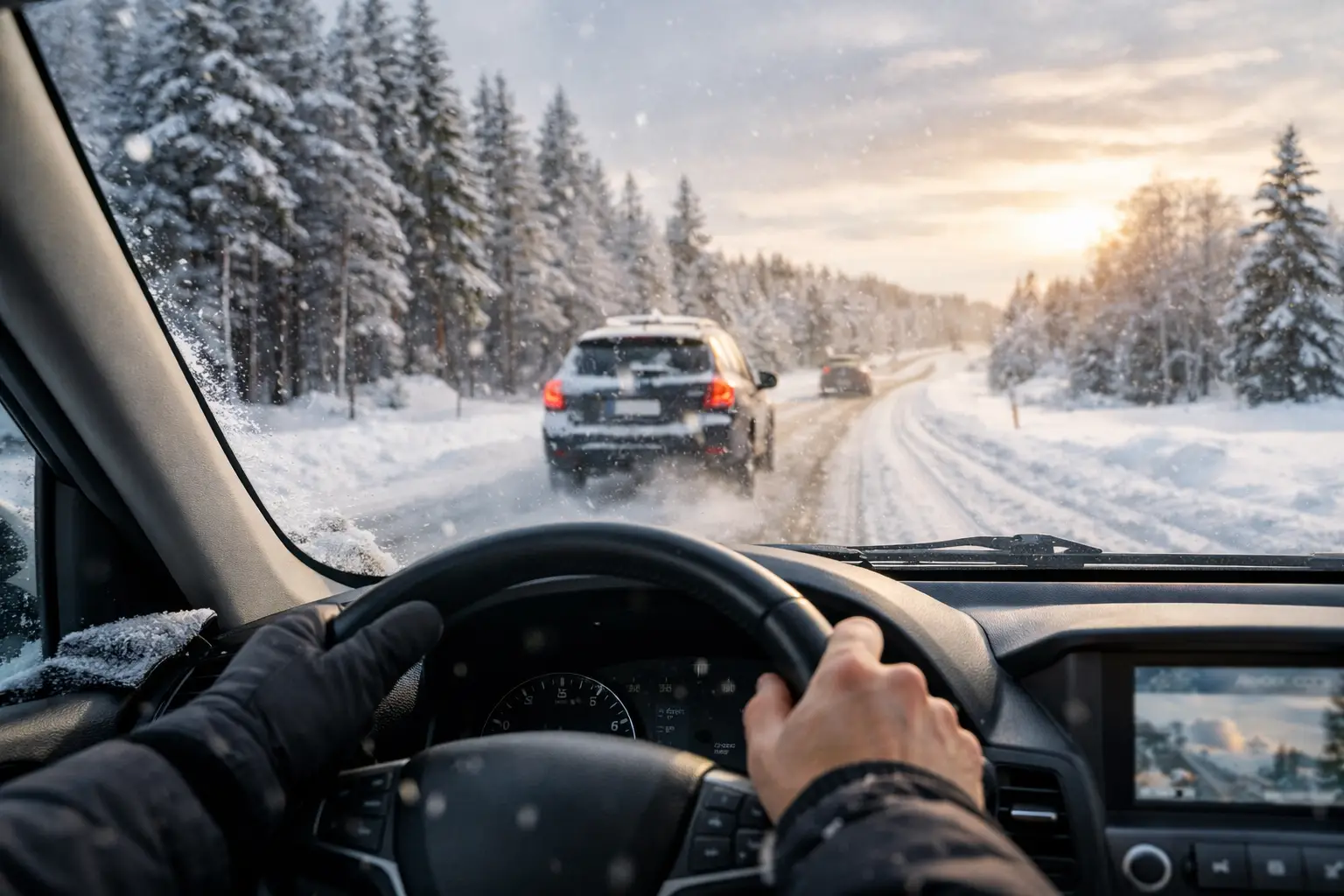
The first hard freeze of the season changes the road before it looks dangerous. A lane that felt routine yesterday can become polished, slick, and unpredictable overnight. That is why the best winter driving habits are not about reacting at the last second. They are about building a calm, repeatable system before snow, ice, and reduced visibility put you under pressure.
For new drivers, winter often exposes every weak habit at once – following too closely, braking too late, steering too abruptly, and assuming other drivers will behave predictably. For experienced drivers, winter can create a different problem: overconfidence. In both cases, the safest approach is the same. Slow the process down, give yourself more space, and make every input deliberate.
Why the best winter driving habits matter more than vehicle features
Drivers often place too much trust in all-wheel drive, winter tires, traction control, or anti-lock brakes. Those features help, but they do not erase physics. All-wheel drive may help you move forward from a stop, but it does not help you stop faster on ice. Anti-lock brakes can help you maintain steering control during hard braking, but they cannot create traction where little traction exists.
Strong winter driving comes from judgment first, vehicle capability second. If you choose a safe speed, leave enough following distance, and scan for hazards early, your vehicle systems can support good decisions. If you drive too fast for conditions, those same systems have limited room to help.
Start every trip with a winter mindset
One of the best winter driving habits is adjusting your expectations before you shift into drive. In good weather, drivers often assume the car will respond immediately and predictably. In winter, every action takes longer. Acceleration is slower, braking distance is longer, lane changes require more care, and visibility can disappear quickly.
That means your first decision is not how fast you can go. It is whether the trip needs more time, a different route, or a later departure. Rushing is one of the most common factors behind winter mistakes. When drivers feel behind schedule, they brake late, force turns, and accept small gaps that are no longer safe on snowy pavement.
Before heading out, clear all windows, mirrors, lights, and cameras completely. A small patch of frost left on the windshield matters more in winter because pedestrians, lane markings, and brake lights may already be harder to see. Set the cabin up before moving so you are not adjusting defrost, gloves, or navigation while traction is limited.
Smooth inputs keep the car balanced
Winter driving rewards smoothness. Abrupt steering, hard throttle, and sudden braking all ask too much from tires that already have less grip available. A balanced vehicle is easier to control, so your goal is to avoid any sharp transfer of weight.
When accelerating from a stop, press the pedal gently and let the vehicle build speed gradually. If the tires spin, adding more throttle usually makes the problem worse. Ease off, let the tires regain grip, and try again with less input.
The same principle applies to steering. Turn into curves earlier and more gradually than you would on dry roads. If you make a sudden correction mid-turn, the vehicle can become unsettled. In winter, small and early is usually safer than large and late.
Increase following distance more than you think you need
On dry pavement, many drivers already follow too closely. In winter, that habit becomes dangerous very quickly. Snow, slush, black ice, and packed intersections can dramatically increase stopping distance, even when your tires are in good condition.
A useful rule is to expand your gap well beyond what feels normal. If traffic is moving steadily but roads are slick, extra following distance gives you time to brake gradually instead of reacting sharply. This also protects you from other drivers who may lose traction unexpectedly.
It helps to think beyond the vehicle directly ahead. Scan several vehicles forward if possible. If brake lights begin to ripple through traffic, you want to ease off the accelerator early instead of arriving at a slowing pack with limited traction and fewer options.
Brake early, gently, and in a straight line when possible
Many winter skids begin with braking too late. Drivers approach a red light, stop sign, or slowing traffic at a familiar speed, then realize the road surface is not offering the grip they expected. By then, hard braking can trigger a loss of control.
A better habit is to begin slowing earlier and lighter. Gentle, progressive braking gives tires more opportunity to maintain traction. If your vehicle has anti-lock brakes, you may feel vibration or pulsing during hard braking. That is normal, but it is still better not to rely on an emergency stop if you could have slowed sooner.
Whenever possible, complete most of your braking before entering a turn. Asking tires to brake and turn aggressively at the same time can exceed available grip. Straight-line braking is generally more stable, especially on snow or ice.
Watch for the places where winter traction changes fast
Not all winter surfaces behave the same way. A road can offer decent grip in one block and become slick at the next intersection. Bridges, overpasses, shaded areas, and streets with polished packed snow often freeze first or stay icy longer. Intersections are especially risky because constant braking and acceleration from other vehicles can compress snow into a slick surface.
This is where hazard detection matters. If the pavement looks darker, shinier, or unusually smooth, treat it as a possible low-traction area. If several vehicles ahead are stopping with visible hesitation, sliding slightly, or leaving unusually wide gaps, those are useful warning signs.
Confidence should come from reading the road early, not from assuming conditions are uniform.
Choose speed based on conditions, not the posted limit
Posted speed limits are set for normal conditions, not snow-packed roads or freezing rain. One of the best winter driving habits is accepting that a legally posted speed can still be too fast.
That does not mean driving so slowly that you create a different hazard. It means matching your speed to traction, visibility, traffic flow, and road design. On a wide, cleared roadway with good winter tires and strong visibility, moderate reduction may be enough. On an untreated residential street with ruts and glare ice, much lower speeds may be necessary.
This is one of those areas where judgment matters. Conditions can change within the same trip, so the correct speed at the start of your drive may not be the correct speed ten minutes later.
Leave extra room at intersections and while turning
Intersections ask a lot from drivers in winter. You may need to judge cross traffic, manage reduced stopping ability, and turn across worn, slippery tracks left by other vehicles. If you rush this process, your margin for error drops quickly.
Approach intersections with enough space and time to stop smoothly. When turning, reduce speed before the turn and accelerate gently only after the vehicle is pointed where you want to go. If your front tires begin to slide through the turn, adding more steering usually will not help. Often the better response is to ease off and let the tires regain traction.
At uncontrolled or partially blocked intersections, assume visibility is worse for everyone. Other drivers may also misjudge stopping distance.
Stay predictable around other drivers
Winter roads are stressful, and stressed drivers make inconsistent choices. Some drive too fast, some brake too early, and some change lanes abruptly to avoid snow buildup or slower traffic. You cannot control their decisions, but you can avoid adding uncertainty.
Signal early. Change lanes gradually. Leave enough room so others are not forced to react sharply to you. If a driver is following too closely, avoid the temptation to teach a lesson with sudden braking. Increase your own following distance and create more space ahead.
Defensive winter driving is not passive. It is active planning with enough margin to handle other people’s mistakes.
Practice recovery skills before you need them
Good habits matter most when traction drops unexpectedly. If your vehicle begins to skid, panic tends to make things worse. Drivers often slam the brakes, oversteer, or stare at the obstacle they want to avoid.
A better response starts with looking where you want the vehicle to go. Then steer smoothly in that direction and avoid abrupt inputs. Depending on the type of skid and the vehicle, easing off the accelerator may help the tires regain grip. The exact correction can vary, which is why controlled practice with a qualified instructor is valuable, especially for new or returning drivers.
Structured winter training helps turn theory into repeatable behavior. That is one reason many students at Turn by Turn Driving School build confidence faster with instructor-led practice than with informal experience alone. Clear coaching, measured practice, and local winter road exposure create better habits before a high-pressure moment forces a decision.
Build habits, not just confidence
Confidence is useful only when it rests on correct technique. The safest winter drivers are usually not the most aggressive or the most experienced-looking. They are the ones who prepare early, scan consistently, leave space, and keep the car balanced through every stop, turn, and lane change.
Winter driving gets easier when your habits become structured enough to hold up under stress. Give yourself time, stay deliberate, and let every trip reinforce the kind of judgment that keeps you safe long after the weather improves.
Comments are closed