



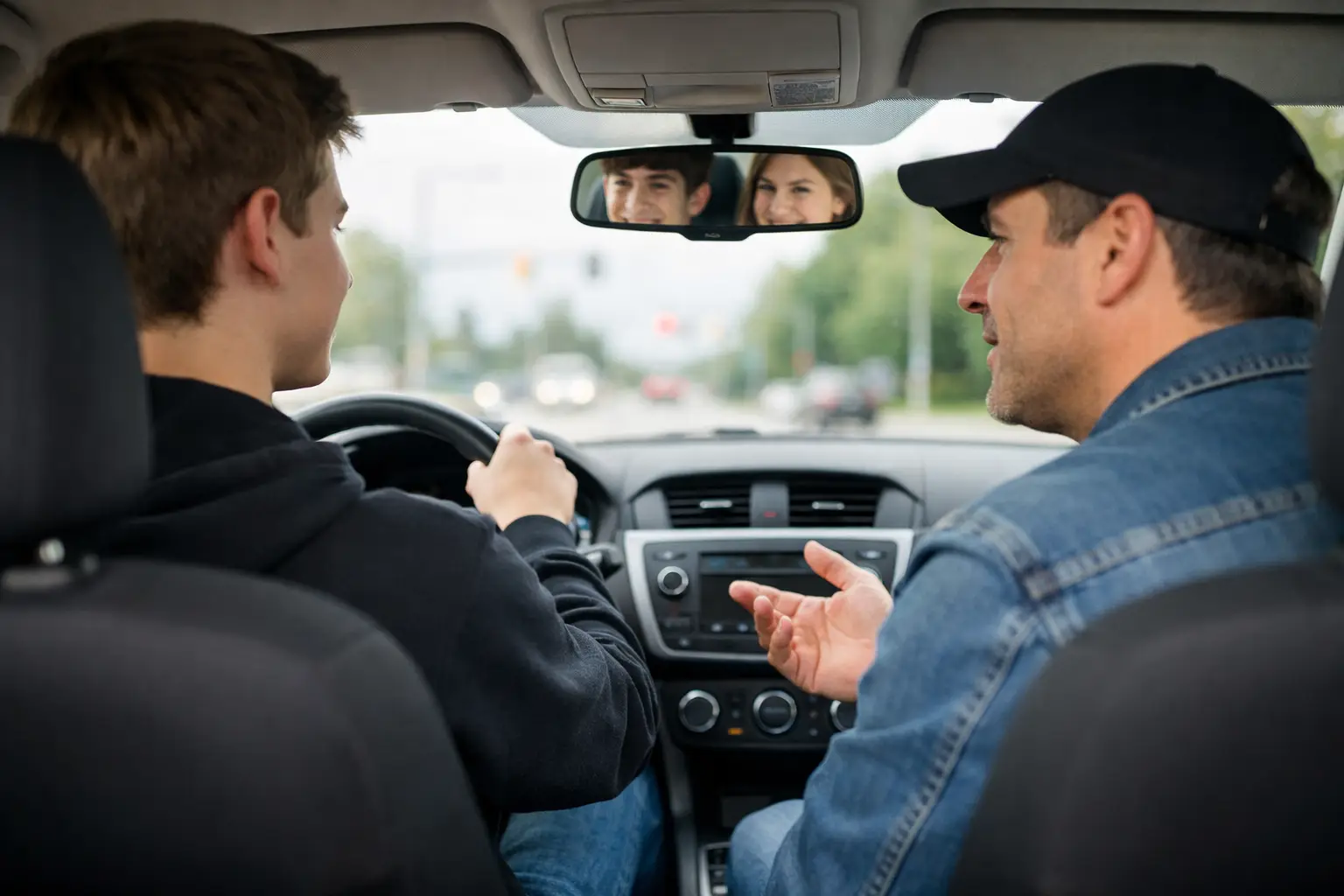
A Class 7 learner’s licence gives you valuable time behind the wheel, but it does not mean you can drive with just anyone in the passenger seat. Alberta learner licence passengers rules are designed to make each practice drive safer, more focused, and more productive. The person beside you has a real responsibility: they are there to supervise, guide, and help you make sound decisions before you are ready to drive independently.
For new drivers, knowing who may ride with you removes uncertainty before a family practice session, a trip to school, or an evening drive around Calgary. It also prevents avoidable mistakes that can lead to fines, unsafe driving, or a delayed licensing journey.
Who Must Sit With a Class 7 Driver?
When driving with an Alberta Class 7 learner’s licence, you must have a qualified supervising driver seated in the front passenger seat. This supervisor must be at least 18 years old and hold a valid, non-GDL Class 5 or higher Alberta driver’s licence.
That non-GDL requirement matters. A driver who still holds a Class 5 GDL licence is not qualified to supervise a Class 7 learner. Neither is another Class 7 learner. Before heading out, confirm that the supervising driver has progressed to a full Class 5 licence and is comfortable taking responsibility for the drive.
The supervisor must also be capable of supervising properly. They cannot be impaired by alcohol, cannabis, medication, or any other substance. Alberta rules require the accompanying driver to have a blood alcohol level of zero. Even when the learner is doing the driving, the supervising driver must be alert, sober, and ready to provide calm direction.
A good supervisor is more than a licensed adult filling a seat. They should watch traffic conditions, help identify hazards early, explain decisions without distracting the driver, and step in verbally before a situation becomes unsafe. That is especially useful when practicing lane changes, merges, left turns, school zones, and busy intersections.
Can Learner Licence Passengers Ride in the Back Seat?
Yes, a Class 7 driver may carry additional passengers, provided there are enough working seat belts for every person in the vehicle. No passenger may ride without a seat belt, and no one should share a seat belt.
Still, legal capacity and smart practice are not always the same thing. A full vehicle can make early practice sessions much harder. Friends talking in the back seat, music playing, or passengers giving conflicting directions can overload a new driver who is still learning to scan, steer smoothly, manage speed, and check mirrors.
For most beginners, start with only the qualified supervisor in the vehicle. Once basic vehicle control feels consistent, add one quiet passenger for short, familiar trips. Save crowded vehicles, long highway drives, and demanding winter conditions until the learner has gained more experience and the supervising driver believes the added distraction will not compromise safety.
The front passenger seat is reserved for the qualified supervisor. A friend, sibling, or partner cannot sit in that position while the qualified driver sits in the back. The supervisor needs to be close enough to observe the road, communicate clearly, and help the learner respond to changing conditions.
Class 7 Restrictions That Affect Every Passenger Trip
Passenger rules are only one part of driving with a Class 7 licence. The following restrictions apply whenever a learner is behind the wheel in Alberta:
- You must be accompanied by a qualified supervising driver in the front passenger seat.
- You cannot drive between midnight and 5 a.m.
- You must have a blood alcohol level of zero, with no alcohol or drugs in your system.
- You cannot have more passengers than there are seat belts in the vehicle.
- You may not drive a vehicle carrying passengers for hire.
These rules are not just road-test details to memorize. They shape how you should plan your practice. If a part-time job ends after midnight, for example, arrange another way home. If friends want a late-night ride, the answer must be no. Building the habit of planning ahead is part of becoming a safe, responsible driver for life.
Choose a Supervisor Who Helps You Learn
The best supervising driver is patient, predictable, and familiar with Alberta road rules. They should give instructions early enough for you to act safely. “At the next set of lights, we will turn right” is helpful. “Turn right now” when you are already at the intersection can create panic and unsafe braking.
It helps to agree on expectations before starting the car. Decide on the route, the skills you will practice, and how feedback will be given. A learner may need reminders, but constant criticism can reduce confidence and pull attention away from the road. Keep feedback specific: mention speed control, mirror checks, lane position, or timing at an intersection.
Family practice is valuable because it provides regular experience in familiar areas. However, it may not cover every skill needed for the Class 5 GDL road test. Different supervisors may teach different habits, and some experienced drivers have habits that do not meet current road-test expectations. Professional instruction gives students structured practice, objective feedback, and coaching based on defensive driving principles.
At Turn by Turn Driving School, Alberta-licensed instructors help students build skills in planned two-hour in-car lessons. That structure gives learners time to practice hazard detection, observation routines, parking, lane changes, and road-test maneuvers without relying only on informal advice from family or friends.
Make Passenger Safety Part of Your Practice Routine
Before every drive, take a minute to set up the vehicle and the people inside it. Adjust your seat, mirrors, and head restraint. Confirm that everyone is seated and buckled. Put phones away, keep the music low, and let passengers know that the driver needs a calm environment.
As your skills improve, use passengers carefully to practice real-world responsibility. You can learn how vehicle weight affects braking, why smooth acceleration matters to people riding with you, and how to maintain a safe following distance when carrying others. These are useful experiences, but they should be added gradually rather than all at once.
Weather also changes the decision. Calgary roads can shift quickly from dry pavement to snow, ice, slush, or reduced visibility. On difficult days, it may be wiser to practice with only your supervisor or postpone the drive. Confidence grows through successful repetition, not by being pushed into conditions beyond your current ability.
Questions Learners Often Ask
Can my parent supervise me with a GDL licence?
No. Your parent, guardian, or any other supervising driver must hold a full, non-GDL Class 5 licence or a higher class of licence, be at least 18, and sit in the front passenger seat.
Can I drive my friends to school?
You can carry friends if a qualified supervising driver is seated beside you and every person has a seat belt. However, assess whether the trip is appropriate for your current skill level. A busy school drop-off area may be more challenging than it appears.
Does the supervising driver need to be the vehicle owner?
No. The supervisor does not need to own the vehicle. The vehicle must be properly registered, insured, safe to operate, and equipped with enough seat belts for everyone inside.
Every drive with a learner’s licence is practice for a bigger responsibility: carrying yourself and others safely when you earn independent driving privileges. Choose your supervisor carefully, limit distractions, and use each trip to build calm, repeatable driving habits that will serve you long after the road test.
Comments are closed