



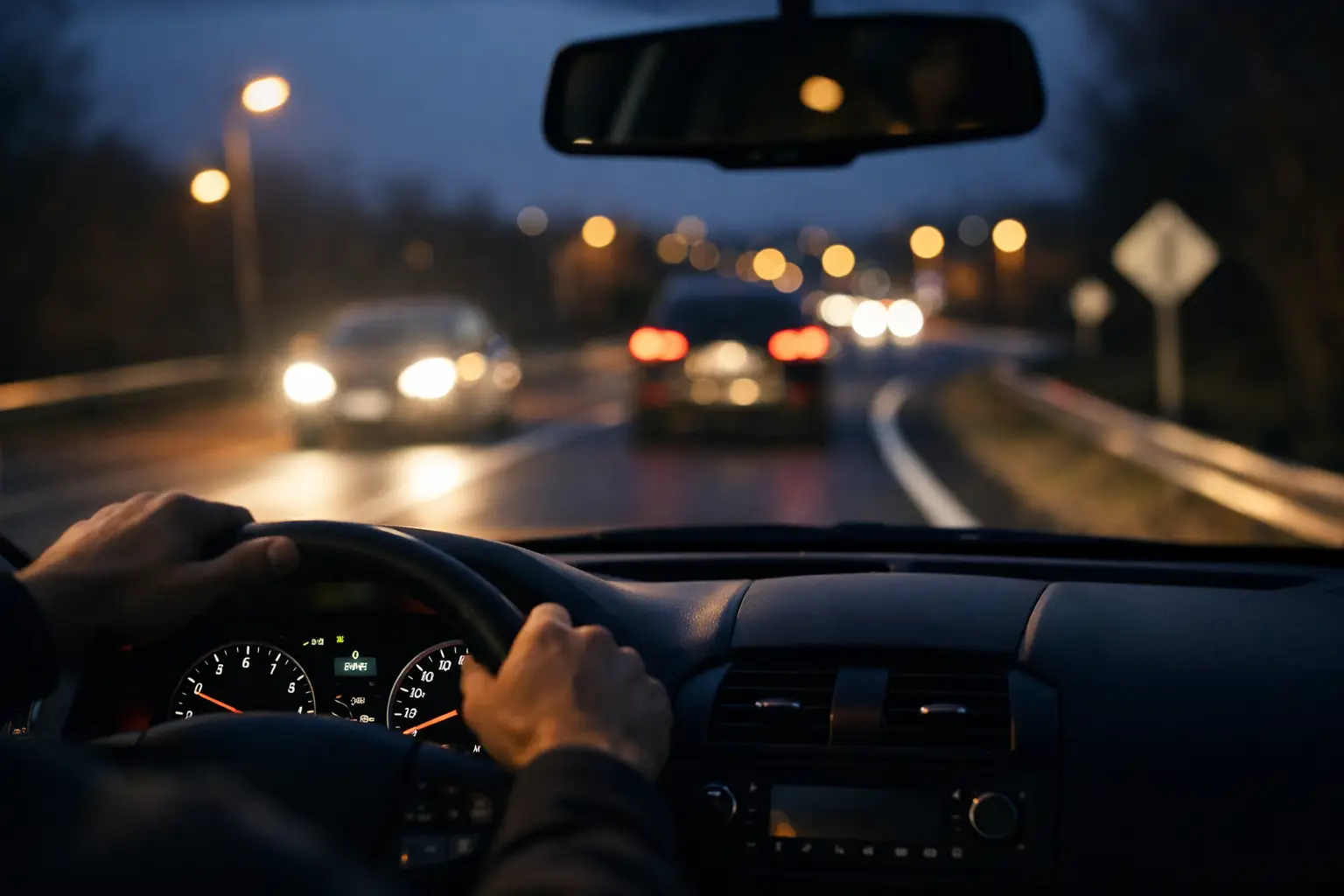
A familiar Calgary street can feel like a different road after sunset. Headlights shorten what you can see, glare can hide pedestrians and lane markings, and tiredness can slow decisions at exactly the wrong moment. Night driving safety is not about being fearful of driving after dark. It is about using better habits, more space, and steady observation to stay in control.
For new drivers, nighttime practice should be a planned part of learning, not an afterthought. The skills that help you pass a road test matter every day, but low-light conditions demand more deliberate scanning, smoother control, and stronger hazard awareness.
Why Driving at Night Requires a Different Approach
Your headlights do not light the road as far ahead as you may think, especially on unlit streets, rural roads, or during rain and snow. At highway speed, a hazard may appear in your visible path before you have enough distance to recognize it, react, and stop. That is why speed must match visibility, not simply the posted limit.
Depth perception and peripheral vision are also reduced in the dark. A cyclist may blend into the background. A pedestrian in dark clothing may be visible only at the edge of a crosswalk. Curves, construction barriers, and patches of ice can be harder to judge. On Calgary roads, winter darkness can add snow glare, frosted windows, and slippery intersections to the challenge.
The practical response is simple: give yourself more time. Look farther ahead, reduce speed when visibility drops, and leave a larger following distance. A safe driver does not wait until a hazard is obvious before making room for it.
Prepare the Vehicle Before You Start
Night driving begins before the vehicle moves. A dirty windshield can scatter light from streetlamps and oncoming traffic, creating glare that makes it harder to see. Clean both the inside and outside of the windshield, side windows, mirrors, headlights, and taillights. In winter, remove all snow and ice, not only a small viewing area.
Check that your headlights, brake lights, signal lights, and license plate lights work. If one headlight is out, replace it promptly. Your vehicle may still move safely enough to reach a repair shop, but reduced lighting affects both what you can see and how well other road users can see you.
Before leaving, set your mirrors, seat position, climate controls, and navigation. Adjusting these while moving takes your eyes and attention away from the road. Keep interior lighting low as well. A bright dashboard or phone screen can reduce your ability to see into darker areas ahead.
A quick pre-drive routine helps:
- Clear every window, mirror, light, and camera lens.
- Confirm headlights and taillights are operating properly.
- Set mirrors, climate controls, and route guidance before moving.
- Put your phone away or use hands-free navigation only when necessary.
Use Your Eyes Strategically
Good night driving safety depends on where and how you look. Keep your eyes moving rather than staring only at the vehicle ahead. Scan the road far ahead, check mirrors regularly, and look through turns instead of directly at the pavement in front of the hood.
When oncoming headlights create glare, do not look directly into them. Shift your focus toward the right edge of your lane or the road shoulder while maintaining awareness of the vehicle’s position. This gives your eyes a stable reference point until the vehicle passes. Avoid closing your eyes, looking down, or making sudden steering corrections.
At intersections, scan carefully before proceeding, even when you have the right-of-way. At night, it can be harder to judge an approaching vehicle’s speed or notice a person crossing late. Look left, center, right, and left again before entering. This habit is especially valuable at poorly lit intersections and when turning across traffic.
Use high beams when conditions allow, particularly on dark rural roads. However, switch to low beams when following another vehicle closely or when meeting oncoming traffic. High beams can improve your view, but they can also blind other drivers and create a hazard. If fog, heavy snow, or rain reflects light back toward you, low beams are usually the better choice.
Manage Speed and Following Space
A posted speed limit is the maximum allowed under ideal conditions. Darkness, wet pavement, snow, road work, fatigue, and traffic may require a slower speed. This is not hesitation. It is defensive driving.
Use a following distance of at least three seconds in normal dry conditions, then add more space at night or when roads are slippery. Pick a fixed object such as a sign or light pole. When the vehicle ahead passes it, count the seconds until you reach the same point. If the gap is too short, ease off the accelerator and rebuild space gradually.
More following distance gives you a clearer view around the vehicle ahead and a greater chance to respond smoothly. It also reduces the urge to brake hard when traffic changes suddenly. Smooth acceleration, early braking, and controlled steering are key to maintaining traction after dark.
Be especially cautious near crosswalks, bus stops, school zones, entertainment districts, and parking lots. People may step into the roadway unexpectedly, and vehicles may back out with limited visibility. Slow down before entering these areas rather than reacting after someone appears in your headlights.
Recognize Fatigue Before It Takes Control
Fatigue can affect driving as seriously as distraction. A tired driver may miss signs, drift within the lane, follow too closely, or take longer to react to a brake light. Opening a window or turning up music may feel helpful for a moment, but neither replaces rest.
If you notice repeated yawning, heavy eyelids, difficulty remembering the last few miles, or delayed responses, find a safe place to stop. Do not push through because you are close to home. For teen drivers and anyone balancing school, work, or late shifts, this decision can be one of the most important safety choices of the trip.
Alcohol, cannabis, and some prescription or over-the-counter medications can further reduce night vision, coordination, and reaction time. Never drive impaired, and check medication warnings before getting behind the wheel. If there is any doubt about your ability to drive alertly, arrange another ride.
Practice Night Driving in Stages
Confidence grows fastest when practice is structured. Start on familiar, well-lit roads in light traffic with an experienced supervising driver or qualified instructor. Practice turns, lane changes, mirror checks, stops, and parking without adding complicated traffic conditions all at once.
Next, add busier streets, highway merges, and different weather conditions when it is safe to do so. Practice identifying potential hazards early: a vehicle waiting to turn, a person near a curb, brake lights ahead, or a dark area where a road edge disappears. Talk through what you see and what you would do if the situation changed.
For drivers preparing for Alberta’s Class 5 GDL or full Class 5 road test, nighttime practice also supports better daytime performance. It strengthens visual scanning, speed control, lane position, and decision-making. At Turn by Turn Driving School, instructor-led lessons can help students build these habits with clear feedback and local road experience.
Stay Predictable for Other Road Users
At night, other drivers depend more heavily on your lights and signals to understand your intentions. Signal early, brake gradually when possible, and avoid sudden lane changes. Keep a safe lane position and check mirrors and blind spots before moving laterally.
Do not assume another driver has seen you simply because their headlights are pointed in your direction. This matters around large trucks, at busy intersections, and when driving beside vehicles with tinted windows or limited sight lines. Make space instead of competing for it.
The goal is not to drive slowly everywhere. The goal is to drive at a speed and with a level of attention that gives you time to see, decide, and respond. Each calm, deliberate choice after dark builds the confidence needed to become a safe, responsible driver for life.
Comments are closed