


The first real snow drive usually changes how a new driver thinks about the road. A route that felt simple in dry weather can suddenly demand earlier braking, smoother steering, and much better observation. That is exactly why a winter driving lesson guide matters. Winter is not just the same drive with colder air. It changes traction, visibility, stopping distance, and decision-making in ways new and returning drivers need to practice deliberately.
For many learners, the hardest part is not the snow itself. It is the uncertainty. You may know the rules, but still feel unsure about how the vehicle will respond on packed snow, black ice, or slush. A structured approach helps. When winter training is broken into clear skills, practice becomes more predictable, and confidence starts to come from control rather than guesswork.
What a winter driving lesson guide should actually teach
A good winter lesson is not a collection of vague reminders to slow down and be careful. It should teach you how to adjust speed before a turn, how to increase following distance, how to brake without upsetting the vehicle, and how to recognize low-traction surfaces before the tires tell you.
That means instruction has to go beyond vehicle basics. In winter, hazard detection becomes more important because the road can change from clear pavement to ice within a few car lengths. Snowbanks can shrink visibility at intersections. Tire spray can hide lane markings. Even experienced drivers sometimes react too late because they are reading the road as if conditions were stable. They are not.
For new drivers, the value of winter practice is that it connects theory to real-road execution. You are not just hearing that stopping distances increase. You feel it. You learn what smooth inputs actually mean when grip is limited. You start to understand why defensive driving is less about being nervous and more about staying ahead of the vehicle and the traffic around you.
Start with the vehicle before you start the lesson
Any practical winter driving lesson guide should begin before the engine is in gear. If the vehicle is not prepared, the lesson becomes harder than it needs to be. Clear all snow and ice from the windshield, side windows, mirrors, lights, roof, and hood. Partial clearing is not enough. Snow blowing off the roof can block your own visibility or create problems for drivers behind you.
Tires matter as much as driver skill. Winter tires improve traction, but they do not create unlimited grip. That distinction is important for learners. Some students become overconfident when the vehicle feels more planted. Others assume winter tires will compensate for late braking. They will not. Good equipment supports good decisions. It does not replace them.
You also want a comfortable driving position, warm enough cabin visibility, and no fogging issues before moving off. If you are tense, cold, and peering through a half-cleared windshield, your attention is already divided.
The core skills every winter lesson should cover
Smooth acceleration and gentle steering
In dry conditions, small mistakes can go unnoticed. In winter, the car often responds immediately. Hard acceleration can spin the wheels. Abrupt steering can reduce grip when you need it most. A proper lesson teaches students to apply power gradually and make steering inputs early and smoothly.
This is especially important when turning from a stop, merging into traffic, or climbing a slick incline. If the tires are already working hard for traction, asking for a sudden change in direction or speed can exceed available grip quickly.
Braking earlier than feels necessary
One of the first winter adjustments is learning to brake sooner than your instincts suggest. New drivers often wait for the same reference points they use in dry weather, then discover the vehicle keeps moving longer than expected. Winter instruction should create safe opportunities to feel that difference at lower speeds first, then build from there.
The goal is not timid driving. The goal is planned driving. Controlled braking in a straight line, with space ahead, gives you more options. Late braking in winter usually removes them.
Increasing following distance
Extra following distance sounds simple, but many learners do not understand how much extra space is needed until they see the stopping gap in real conditions. Snow, slush, and ice all extend stopping distance differently. Packed snow may feel predictable. Black ice may not announce itself at all.
A skilled instructor will help students match spacing to conditions instead of relying on a fixed habit. Traffic speed, road temperature, visibility, and tire condition all affect what a safe gap looks like.
Winter driving lesson guide for intersections, hills, and turns
Winter trouble often shows up in specific locations. Intersections become polished by repeated braking. Hills expose poor speed management. Curves punish late decisions. These are the areas where structured lessons are especially useful.
At intersections, students should learn to assess not just the traffic signal but the surface leading up to it. If the road looks shiny or compacted, prepare for reduced grip early. On hills, momentum matters, but so does restraint. Too little speed and you may struggle to climb. Too much speed and you may lose control on the descent or crest.
Turns require the same principle every time – slow before the turn, steer smoothly through it, and accelerate gently once the vehicle is settled. Many winter skids begin because the driver tries to do too much at once.
What to do if the vehicle starts to skid
This is one of the biggest anxiety points for learners, and it is where calm, direct instruction matters. If the vehicle skids, the first job is to avoid making it worse. Panic braking, oversteering, or snapping off the accelerator can unsettle the car further depending on the situation.
Students should be taught to look where they want the vehicle to go, reduce inputs, and steer smoothly. The exact response depends on the type of skid and the vehicle’s systems, which is why guided practice is so valuable. Reading about skids helps. Feeling the early signs of lost traction in a controlled lesson teaches much more.
It also helps to understand that not every skid becomes a major loss of control. Many are small traction warnings. The driver who recognizes them early usually has better outcomes than the driver who reacts late and aggressively.
Why winter lessons help returning and internationally licensed drivers too
Winter training is not only for teenagers or first-time drivers. Adults returning to driving after a long break often need time to rebuild judgment in poor conditions. Internationally licensed drivers may have strong general driving experience but limited exposure to snow-packed roads, icy residential streets, or winter-specific visibility issues.
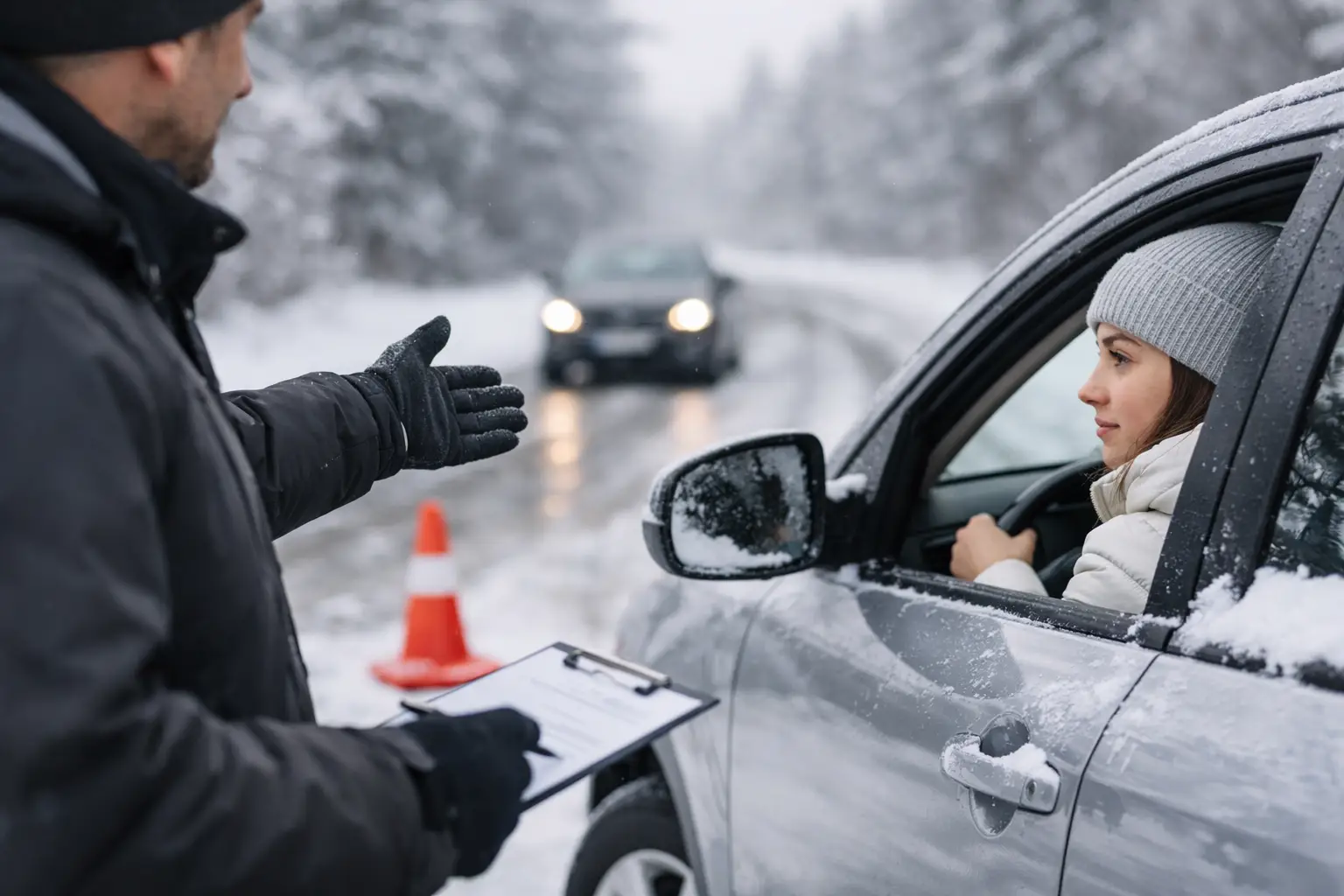
That is where structured, instructor-led lessons make a real difference. You can focus on local road habits, winter hazards, and test-level driving standards without having to sort through conflicting advice from friends and family. The learning is more efficient because it is organized around actual road conditions and clear performance goals.
For students balancing school, work, or family responsibilities, predictable scheduling also matters. A lesson plan that moves from online theory into focused in-car sessions gives drivers a clear path to build skill without wasting time.
Building confidence the right way
Confidence in winter should come from repetition, observation, and good habits. It should not come from one successful drive after a snowfall. Conditions change too quickly for that. A driver who feels confident on light snow may still need more practice in freezing rain, rutted slush, or nighttime glare.
That is why the best training is progressive. Start in lower-risk conditions. Practice scanning, spacing, braking, and lane positioning. Add more complex traffic situations as control improves. At Turn by Turn Driving School, that structured approach is central to helping students become safe, responsible drivers for life.
A winter driving lesson guide is useful because it brings order to a season that often feels unpredictable. You do not need to know everything on day one. You do need a clear process, honest feedback, and enough guided practice to make safe decisions when the road stops being forgiving. The more deliberately you train now, the calmer and more capable you will feel when winter roads ask more from you.
Comments are closed